

In the realm of real - time control systems, the feedback unit is a crucial component that often goes unnoticed, yet it plays a star role in ensuring operation accuracy and stability. I'm a supplier of feedback units, and through years of experience in the industry, I've gained a deep understanding of how these nifty devices function within real - time control systems.
Let's start by getting familiar with what real - time control systems are all about. In simple terms, these are systems that must process input data and generate responses in a very short, well - defined time frame. Applications for real - time control systems are everywhere, from industrial automation and robotics to aerospace and automotive systems. For instance, in an automotive anti - lock braking system, the sensors need to detect wheel speed changes instantaneously, and the system has to respond quickly to prevent the wheels from locking up during braking.
So, where does the feedback unit fit into this picture? At its core, a feedback unit is like the ears and eyes of a real - time control system. It's responsible for collecting information about the system's actual output and sending it back to the controller. This information is then compared with the desired or setpoint values, and based on the difference, the controller can make necessary adjustments to ensure the system operates as expected.
Let's break down the working process of a feedback unit step - by - step. First off, there's the data acquisition phase. This is when the feedback unit starts gathering data from various sources in the system. These sources can be sensors for measuring things such as temperature, pressure, speed, or position. For example, in a manufacturing plant's conveyor belt system, speed sensors are used to measure how fast the belt is moving. The feedback unit interfaces with these sensors and retrieves the relevant data.
Once the data is acquired, the feedback unit enters the pre - processing stage. The raw data collected from sensors might be noisy, or it could be in a format that's not suitable for direct comparison with the setpoint values. So, the feedback unit filters out any unwanted noise and converts the data into a standard form. This pre - processing makes the data easier to work with and more accurate for the subsequent steps.
Next up is the comparison process. The feedback unit takes the pre - processed data and compares it with the setpoint values. The setpoint is the desired value that the system should be operating at. For example, if you're setting the temperature of an industrial oven to 200 degrees Celsius, 200 degrees is the setpoint. The difference between the actual value (measured by the feedback unit) and the setpoint is called the error. If the oven's actual temperature is 190 degrees, the error is 10 degrees.
The feedback unit then sends this error information to the controller. The controller, which is usually a microprocessor or a PLC (Programmable Logic Controller), uses this error data to decide what action to take. It might adjust the input to the system to minimize the error. In the case of the oven, if there's a 10 - degree error, the controller could increase the power supplied to the heating elements to raise the temperature.
One of the key components of a feedback unit is the analog - to - digital converter (ADC). Since many sensors in real - time control systems produce analog signals, and digital controllers work with digital data, the ADC is used to convert the analog signals from sensors into digital form. This conversion allows the feedback unit to accurately process and transmit the data to the controller.
Now, let's talk about the types of feedback used in real - time control systems. There are mainly two types: positive feedback and negative feedback. Positive feedback is less common in real - time control as it tends to amplify errors and can make the system unstable. In positive feedback, the error signal is used to increase the input to the system, which can lead to a runaway effect. For example, if a gain in a system causes an increase in output, positive feedback will further increase the input, leading to an even larger output.
On the other hand, negative feedback is the workhorse of real - time control systems. In negative feedback, the error signal is used to reduce the difference between the actual output and the setpoint. For instance, if the speed of a motor is lower than the set speed, the controller will increase the power to the motor to bring the speed up. Negative feedback helps in maintaining system stability and accuracy.
As a feedback unit supplier, I've seen firsthand how these components interact with other parts of real - time control systems. For example, the feedback unit often works in tandem with Brake Unit. In a high - speed industrial machine, the brake unit can be used to stop the machine quickly when an error is detected. The feedback unit continuously monitors the speed and position of the machine, and when it detects a problem, it sends a signal to the brake unit to take action.
Another important component is the LED Digital Panel. The LED digital panel can display real - time information about the system, such as the current output value, the setpoint, and the error. The feedback unit can transmit the processed data to the LED digital panel, allowing operators to keep an eye on the system's performance at a glance.
The reliability of a feedback unit is crucial in real - time control systems. These systems often operate in harsh environments, with factors like high temperatures, vibrations, and electrical noise. That's why feedback units are designed to be rugged and durable. They use high - quality components and advanced shielding techniques to protect against interference.
When it comes to choosing a feedback unit for a real - time control system, there are several factors to consider. First, accuracy is of utmost importance. The feedback unit should be able to measure values precisely, otherwise, the system's performance will be affected. Second, the response time is key. In real - time systems, any delay in getting feedback can lead to incorrect control actions. Lastly, the compatibility with other system components is necessary. The feedback unit must be able to interface smoothly with sensors, controllers, and other devices in the system.
As a supplier of Feedback Unit, I offer a wide range of feedback units that are designed to meet the diverse needs of real - time control systems. Whether you're working on a small - scale automation project or a large - scale industrial application, I have feedback units that can provide accurate and reliable data.

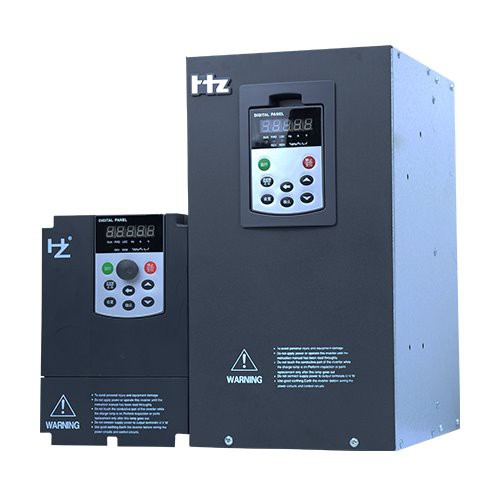
If you're in the market for a feedback unit for your real - time control system, I encourage you to reach out for a chat. We can discuss your specific requirements and find the best solution for your project. Understanding how feedback units work is essential for optimizing the performance of your real - time control system, and I'm here to help you every step of the way.
References:
- Dorf, R. C., & Bishop, R. H. (2016). Modern Control Systems. Pearson.
- Nise, N. S. (2015). Control Systems Engineering. Wiley.