

Hey there! As a supplier of 7.5KW VFDs (Variable Frequency Drives), I've been getting a lot of questions lately about how to improve the dynamic response performance of these drives. So, I thought I'd share some tips and tricks that I've picked up over the years.
First off, let's talk about what dynamic response performance actually means. In simple terms, it's how quickly and accurately a VFD can adjust the speed and torque of a motor in response to changes in load or other operating conditions. A VFD with good dynamic response performance can help improve the efficiency, reliability, and overall performance of your motor-driven system.
Now, let's get into the nitty-gritty of how to improve the dynamic response performance of a 7.5KW VFD.
1. Choose the Right VFD for Your Application
The first step in improving the dynamic response performance of a 7.5KW VFD is to choose the right drive for your application. Not all VFDs are created equal, and different drives are designed to perform better in different applications.
For example, if you're using the VFD to control a motor that requires high torque at low speeds, you'll want to choose a drive that has a high starting torque and good low-speed performance. On the other hand, if you're using the VFD to control a motor that requires high-speed operation, you'll want to choose a drive that has a high maximum speed and good high-speed performance.
At our company, we offer a wide range of 7.5KW VFDs that are designed to meet the needs of different applications. Whether you need a drive for a simple fan or pump application, or a more complex industrial process, we've got you covered.
2. Optimize the VFD Settings
Once you've chosen the right VFD for your application, the next step is to optimize the drive settings. The settings of a VFD can have a significant impact on its dynamic response performance, so it's important to take the time to configure them correctly.
Some of the key settings that you'll want to adjust include the acceleration and deceleration times, the torque limit, the speed reference gain, and the PID control parameters. These settings will vary depending on your application, so it's important to consult the VFD manual or a qualified technician for guidance.
In general, you'll want to set the acceleration and deceleration times as short as possible without causing the motor to overheat or trip the VFD's protection circuits. You'll also want to set the torque limit to a value that's high enough to meet the requirements of your application, but not so high that it causes the motor to draw excessive current.
The speed reference gain and PID control parameters are used to adjust the VFD's response to changes in the speed reference signal. You'll want to set these parameters to values that provide a fast and stable response without causing the motor to oscillate or overshoot.
3. Use High-Quality Components
Another important factor that can affect the dynamic response performance of a 7.5KW VFD is the quality of the components used in the drive. Using high-quality components can help improve the reliability, efficiency, and overall performance of the VFD.
Some of the key components that you'll want to pay attention to include the power semiconductors, the capacitors, the inductors, and the control board. These components should be selected based on their quality, reliability, and performance characteristics.

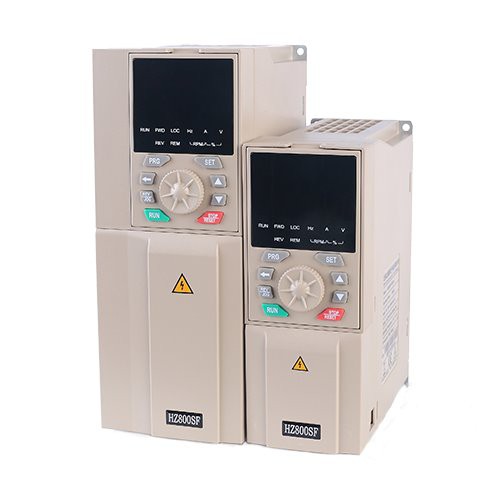
At our company, we use only the highest-quality components in our 7.5KW VFDs to ensure that they provide the best possible performance and reliability. We also subject our drives to rigorous testing and quality control procedures to ensure that they meet our strict standards.
4. Implement Feedback Control
Feedback control is a technique that's used to improve the accuracy and stability of a VFD's speed and torque control. By using a feedback device, such as an encoder or a tachometer, to measure the actual speed or torque of the motor, the VFD can adjust its output to maintain the desired speed or torque.
There are several types of feedback control that can be used with a VFD, including open-loop control, closed-loop control, and vector control. Open-loop control is the simplest type of feedback control, and it's used to control the speed of the motor based on a fixed speed reference signal. Closed-loop control is more accurate than open-loop control, and it's used to control the speed or torque of the motor based on the actual speed or torque measured by the feedback device. Vector control is the most advanced type of feedback control, and it's used to control the speed and torque of the motor with high precision and accuracy.
The type of feedback control that you choose will depend on your application and the level of performance that you require. In general, closed-loop control and vector control are recommended for applications that require high accuracy and stability.
5. Maintain the VFD Regularly
Finally, it's important to maintain the VFD regularly to ensure that it continues to perform at its best. Regular maintenance can help prevent problems from occurring, and it can also extend the lifespan of the VFD.
Some of the key maintenance tasks that you'll want to perform include cleaning the VFD, checking the connections, inspecting the components, and testing the performance. You should also follow the manufacturer's recommended maintenance schedule and procedures to ensure that the VFD is maintained properly.
At our company, we offer a comprehensive maintenance service for our 7.5KW VFDs. Our experienced technicians can perform all of the necessary maintenance tasks, and they can also provide you with advice and support on how to keep your VFD running smoothly.
In conclusion, improving the dynamic response performance of a 7.5KW VFD requires a combination of careful selection, optimization, and maintenance. By following the tips and tricks that I've outlined in this blog post, you can ensure that your VFD provides the best possible performance and reliability.
If you're interested in learning more about our 7.5KW VFDs or our maintenance services, please don't hesitate to contact us. We'd be happy to answer any questions that you may have and to help you choose the right VFD for your application.
We also offer a range of other VFDs, including Single Phase VFD Drive, 37KW VFD, and 30KW VFD. These drives are designed to meet the needs of different applications, and they offer a range of features and benefits to help you improve the performance and efficiency of your motor-driven system.
So, what are you waiting for? Contact us today to learn more about our VFDs and to start improving the dynamic response performance of your motor-driven system.
References
- "Variable Frequency Drives: Principles and Applications" by Bimal K. Bose
- "Power Electronics: Converters, Applications, and Design" by Ned Mohan, Tore M. Undeland, and William P. Robbins
- "Electric Motor Drives: Modeling, Analysis, and Control" by Huseyin A. Toliyat and Thomas A. Lipo