

Hey there! As a supplier of 18.5KW VFDs (Variable Frequency Drives), I've had my fair share of customers asking about how to improve the response speed of these drives. It's a crucial aspect, especially in industrial settings where every second counts. So, let's dive right into it and explore some practical ways to boost that response speed.
Understanding the Basics
First off, let's quickly go over what a 18.5KW VFD does. It's a device that controls the speed of an electric motor by adjusting the frequency and voltage supplied to it. This allows for precise control of the motor's speed, torque, and acceleration, which is super handy in a variety of applications. But sometimes, the response speed might not be as quick as we'd like it to be. There could be several reasons for this, including improper settings, outdated firmware, or even issues with the motor itself.
Optimizing the VFD Settings
One of the first things you can do is to optimize the settings on your 18.5KW VFD. This involves adjusting parameters such as the acceleration and deceleration times, the torque boost, and the PID control settings.
Acceleration and Deceleration Times
The acceleration and deceleration times determine how quickly the VFD ramps up or down the motor's speed. If these times are set too long, the response speed will be slow. On the other hand, if they're set too short, the motor might experience excessive stress or even trip the VFD's protection circuits. So, it's important to find the right balance.
To adjust these settings, you'll need to access the VFD's parameter menu. Look for parameters related to acceleration and deceleration times, usually labeled as "ACC" and "DEC". Start by reducing these times gradually and test the motor's performance. Keep an eye on the motor's current and temperature to make sure it's not overloading.
Torque Boost
The torque boost setting provides additional torque at low speeds to help the motor start and run smoothly. If the torque boost is set too low, the motor might struggle to start or lose speed under load. On the other hand, if it's set too high, it can cause the motor to draw excessive current and overheat.
To optimize the torque boost setting, you'll need to measure the motor's current and torque at different speeds. Start by setting the torque boost to a low value and gradually increase it until the motor starts and runs smoothly without drawing excessive current.
PID Control Settings
PID (Proportional-Integral-Derivative) control is a common method used in VFDs to maintain a constant speed or torque. The PID control settings determine how quickly the VFD adjusts the motor's speed or torque in response to changes in the load.
To optimize the PID control settings, you'll need to tune the proportional, integral, and derivative gains. This can be a bit tricky, as it requires some knowledge of control theory. However, most modern VFDs come with auto-tuning features that can automatically adjust the PID gains for you. If your VFD has this feature, use it to simplify the tuning process.
Updating the Firmware
Another important step in improving the response speed of your 18.5KW VFD is to update the firmware. Firmware updates often include bug fixes, performance improvements, and new features that can enhance the VFD's performance.

To update the firmware, you'll need to download the latest version from the manufacturer's website. Make sure to follow the manufacturer's instructions carefully to avoid any issues. Once you've downloaded the firmware, you can use a USB drive or a serial communication cable to transfer it to the VFD.
Checking the Motor and Wiring
The motor and wiring can also have a significant impact on the response speed of your 18.5KW VFD. Make sure the motor is properly sized for the application and that it's in good condition. Check for any signs of wear or damage, such as loose connections, frayed wires, or overheating.
If you suspect that the motor or wiring is causing the slow response speed, you may need to have it inspected by a qualified electrician. They can perform tests to determine the cause of the problem and recommend the appropriate repairs or replacements.
Using High-Quality Components
Using high-quality components can also help improve the response speed of your 18.5KW VFD. This includes using high-quality capacitors, resistors, and other electronic components. These components are designed to have lower resistance and capacitance, which can reduce the amount of time it takes for the VFD to respond to changes in the load.
When selecting components for your VFD, make sure to choose ones that are rated for the appropriate voltage and current. You should also look for components that have a low ESR (Equivalent Series Resistance) and a high ripple current rating. These features can help improve the performance and reliability of the VFD.
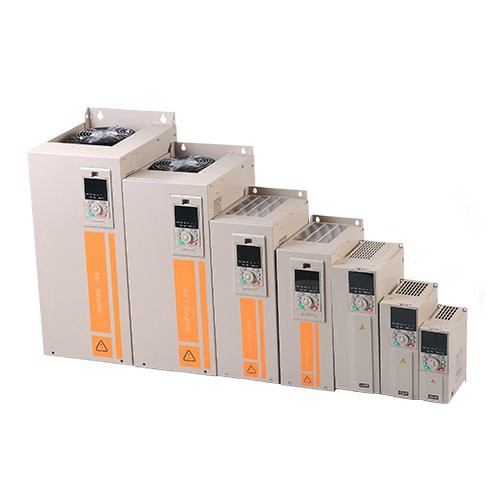
Consider a Vector Control VFD
If you're looking for even better response speed and performance, you might want to consider upgrading to a Vector Control VFD. Vector control VFDs use advanced algorithms to provide precise control of the motor's torque and speed. This allows for faster response times and better performance, especially in applications where high torque and speed accuracy are required.
Vector control VFDs also offer other benefits, such as improved energy efficiency, reduced motor noise, and better motor protection. However, they are typically more expensive than standard VFDs, so you'll need to weigh the benefits against the cost.
Using a Frequency Drive Controller
In some cases, using a Frequency Drive Controller can also help improve the response speed of your 18.5KW VFD. A frequency drive controller is a device that allows you to control the VFD remotely using a computer or a mobile device. This can be useful in applications where you need to make quick adjustments to the VFD's settings.
Frequency drive controllers also offer other features, such as data logging, remote monitoring, and diagnostic capabilities. These features can help you troubleshoot problems quickly and improve the overall performance of the VFD.
Conclusion
Improving the response speed of a 18.5KW VFD requires a combination of proper settings, firmware updates, and high-quality components. By following the tips outlined in this blog post, you can optimize the performance of your VFD and ensure that it responds quickly and accurately to changes in the load.
If you're still having trouble improving the response speed of your VFD, or if you have any other questions or concerns, don't hesitate to contact us. We're a leading supplier of 18.5KW VFDs and we're here to help you find the right solution for your application. Whether you're looking for a Variable Speed Drive for Single Phase Motor or a high-performance Vector Control VFD, we've got you covered.
Let's work together to get the most out of your VFD and take your industrial processes to the next level!
References
- "Variable Frequency Drives: Principles, Operation, and Application" by Dan Hart
- "Electric Motor Handbook" by Arnold E. Fitzgerald, Charles Kingsley Jr., and Stephen D. Umans