

Hey there! As a VFD parts supplier, I've seen a whole bunch of folks scratching their heads, wondering about the different types of VFD parts out there. Well, you're in luck because I'm gonna break it down for you.
Let's start with the basics. A Variable Frequency Drive, or VFD for short, is a device that controls the speed of an AC motor by adjusting the frequency and voltage supplied to it. It's like the conductor of an orchestra, making sure everything runs smoothly. And just like an orchestra has different instruments, a VFD has different parts that all play a crucial role.
One of the most common parts you'll come across is the LCD Panel. This little guy is like the control center of the VFD. It's where you can set all the different parameters, like the speed, the acceleration time, and the deceleration time. You can easily see what's going on with the drive, and it makes it super easy to make adjustments. If you've ever used a microwave or a DVD player, you know how useful a display can be. Well, the LCD panel on a VFD is just like that, but for controlling a motor.
Another important part is the rectifier. The rectifier is responsible for converting the AC power from the mains into DC power. It's like a translator that takes the AC language and turns it into DC, which the rest of the VFD can understand. Without a rectifier, the VFD wouldn't be able to work properly because the rest of the components are designed to work with DC power. There are different types of rectifiers, like the diode rectifier and the thyristor rectifier, each with its own advantages and disadvantages.
Next up is the inverter. The inverter is like the opposite of the rectifier. It takes the DC power that the rectifier has created and converts it back into AC power at the desired frequency and voltage. This is how the VFD can control the speed of the motor. By changing the frequency of the AC power, the VFD can make the motor run faster or slower. It's a pretty neat trick, and it's what makes VFDs so versatile.
Now, let's talk about the Braking Resistance for VFD. When a motor is running, it has a lot of kinetic energy. And when you want to stop the motor quickly, you need to get rid of that energy somehow. That's where the braking resistor comes in. It's like a big heat sink that absorbs the energy from the motor and dissipates it as heat. Without a braking resistor, the VFD could get damaged because the energy would have nowhere to go. It's an essential part for applications where you need to stop the motor quickly, like in a conveyor belt system or an elevator.
Then we have the control board. The control board is like the brain of the VFD. It's responsible for making all the decisions and coordinating the different functions of the drive. It receives signals from the LCD panel and the various sensors, and then it sends out commands to the rectifier, the inverter, and the other components. It's a complex piece of technology, but without it, the VFD would be nothing more than a pile of parts.
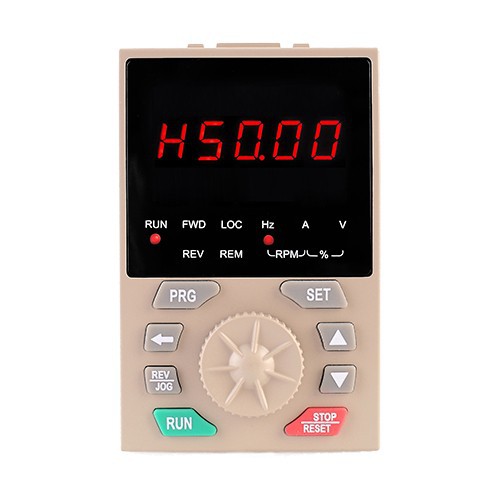
Another common part is the LED Digital Panel. Similar to the LCD panel, the LED digital panel provides a visual display of the VFD's parameters. It's often more rugged and easier to read in bright environments. Some people prefer the LED digital panel because it gives a clear, sharp display of the information. You can see the speed, the current, and other important data at a glance.
Capacitors are also a vital part of the VFD. They store electrical energy and help to smooth out the voltage fluctuations in the DC circuit. Think of them as little batteries that can give a boost when needed. Without capacitors, the VFD would be more prone to voltage spikes and dips, which could damage the other components.
And let's not forget about the fuses. Fuses are like the safety guards of the VFD. They protect the drive from overcurrent situations. If there's too much current flowing through the circuit, the fuse will blow, cutting off the power and preventing any damage to the other parts. It's a simple but effective way to keep the VFD safe.
There are also various sensors in a VFD. For example, there are temperature sensors that monitor the temperature of the components. If the temperature gets too high, the VFD can adjust its operation or shut down to prevent damage. There are also current sensors that measure the amount of current flowing through the circuit, and voltage sensors that monitor the voltage. These sensors are crucial for the proper functioning and safety of the VFD.
Now that you have a good idea of the common types of VFD parts, you might be wondering where to get them. Well, that's where I come in! As a VFD parts supplier, I've got all the parts you need, from the smallest capacitor to the largest control board. Whether you're looking to repair an existing VFD or build a new one from scratch, I can help you find the right parts for the job.
If you're interested in purchasing VFD parts, just reach out. We can have a chat about your specific needs, and I'll do my best to provide you with the best solutions at competitive prices. Don't hesitate to contact me if you have any questions or need more information. I'm here to make sure you get the right parts for your VFD.
References

- "Variable Frequency Drives: Principles, Operation, and Application" by Thomas H. Lipo
- "Industrial Electronics Handbook" by Timothy L. Schultze