

Hey there! I'm a supplier of Feedback Units, and today I'm gonna spill the beans on the key components that make up these nifty devices. Whether you're in the industrial sector or just a tech enthusiast, understanding these components can help you make better decisions when it comes to purchasing and using Feedback Units.
1. Sensors
Sensors are the eyes and ears of a Feedback Unit. They're responsible for gathering data about the system's performance and sending it back to the control unit. There are several types of sensors commonly used in Feedback Units, each with its own unique function.
-
Position Sensors: These sensors are used to determine the position of a moving part, such as a motor shaft or a robotic arm. They can be optical, magnetic, or mechanical. For example, an optical encoder uses a light source and a detector to measure the rotation of a shaft. It's like having a super - accurate GPS for your machine parts!
-
Speed Sensors: As the name suggests, speed sensors measure how fast a component is moving. They're crucial in applications where maintaining a specific speed is essential, like in conveyor belts or electric vehicles. A common type of speed sensor is the tachometer, which can be either analog or digital.
-
Temperature Sensors: Temperature can have a big impact on the performance and lifespan of a system. Temperature sensors monitor the heat generated by various components, such as motors and power electronics. If the temperature gets too high, the Feedback Unit can trigger an alarm or adjust the system's operation to prevent damage.
2. Signal Conditioning Circuits
Once the sensors collect the data, it's often in a raw form that needs to be processed before it can be used effectively. That's where signal conditioning circuits come in.
These circuits perform several important functions. First, they amplify the weak signals from the sensors so that they can be easily detected and analyzed. They also filter out any noise or interference that might be present in the signal. Noise can come from a variety of sources, like electromagnetic interference (EMI) from other electrical devices.
For example, if a position sensor sends a very low - voltage signal, the signal conditioning circuit will boost that voltage to a level that the control unit can work with. It's like turning up the volume on a faint radio signal so you can hear it clearly.
3. Control Unit
The control unit is the brain of the Feedback Unit. It receives the processed signals from the sensors via the signal conditioning circuits and makes decisions based on that data.
It compares the actual performance of the system (as measured by the sensors) with the desired performance. If there's a difference, or an error, the control unit will generate a control signal to correct it. For instance, if a motor is supposed to run at a certain speed but the speed sensor indicates that it's running too slow, the control unit will send a signal to increase the power supplied to the motor.
The control unit can be a simple microcontroller or a more complex programmable logic controller (PLC), depending on the application's requirements. It can also store and execute pre - programmed control algorithms, which define how the system should respond to different situations.
4. Actuators
Actuators are the muscles of the Feedback Unit. They take the control signals from the control unit and convert them into physical actions.
- Motors: Electric motors are one of the most common types of actuators. They can be used to drive conveyor belts, rotate machinery, or move robotic arms. The control unit can adjust the speed, torque, and direction of the motor based on the feedback it receives from the sensors.
- Valves: In fluid control systems, valves are used as actuators. They can regulate the flow of liquids or gases. For example, in a heating system, a valve can be adjusted to control the amount of hot water flowing through a radiator.
5. Power Supply
A stable power supply is essential for the proper functioning of all the components in a Feedback Unit. Without it, the sensors won't be able to collect data, the control unit won't be able to make decisions, and the actuators won't be able to perform their tasks.
The power supply needs to provide the right voltage and current levels to each component. It also needs to be able to handle any power fluctuations or surges that might occur. Some Feedback Units are designed to work with a specific type of power source, such as AC or DC, while others can be configured to work with different types.
Additional Components
Braking Resistance for VFD
In variable frequency drive (VFD) systems, Braking Resistance for VFD is an important component. When a motor driven by a VFD decelerates, it generates energy that needs to be dissipated. The braking resistance absorbs this energy and converts it into heat, preventing damage to the VFD and other components.
Brake Unit
A Brake Unit works in conjunction with the braking resistance. It controls the flow of energy from the motor to the braking resistance. It ensures that the braking process is smooth and efficient, and it can also protect the system from over - voltage conditions.
LED Digital Panel
A LED Digital Panel is a useful component for providing visual feedback to the operator. It can display important information such as the system's speed, temperature, and error messages. It makes it easy for the operator to monitor the system's performance at a glance.
Why Choose Our Feedback Units?
Our Feedback Units are designed with high - quality components to ensure reliable and accurate performance. We use the latest sensor technologies to provide precise data, and our signal conditioning circuits are optimized to minimize noise and interference.
Our control units are powerful and flexible, allowing for easy customization to meet different application requirements. And our actuators are built to last, with high - torque motors and durable valves.

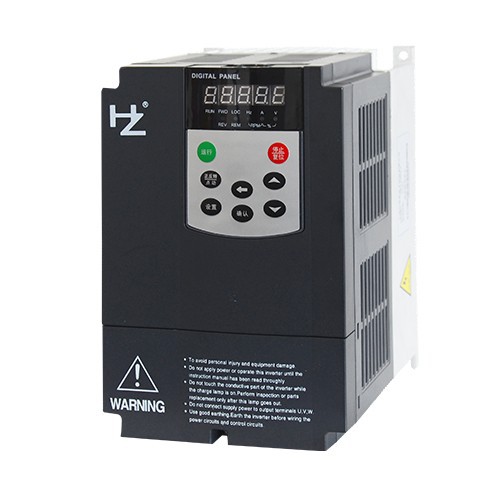
We also offer excellent customer support. If you have any questions about our Feedback Units or need help with installation and configuration, our team of experts is always ready to assist you.
Contact Us for Purchase and洽谈
If you're interested in purchasing our Feedback Units or have any questions about how they can fit into your system, don't hesitate to reach out. We're eager to start a conversation with you and find the best solution for your needs.
References
- Dorf, R. C., & Bishop, R. H. (2016). Modern Control Systems. Pearson.
- Nise, N. S. (2015). Control Systems Engineering. Wiley.