

As a trusted VFD parts supplier, I've witnessed firsthand the critical role that Variable Frequency Drives (VFDs) play in various industrial and commercial applications. A VFD is an essential device that controls the speed and torque of an electric motor by varying the frequency and voltage supplied to the motor. However, like any complex electronic equipment, VFDs can experience issues due to faulty parts. Recognizing the signs of a faulty VFD part is crucial for maintaining the efficiency and reliability of your equipment. In this blog, I'll share some common signs that indicate a VFD part may be malfunctioning.
Overheating
One of the most obvious signs of a faulty VFD part is overheating. VFDs generate heat during normal operation, but excessive heat can be a sign of a problem. Overheating can be caused by several factors, including a malfunctioning cooling fan, blocked ventilation ports, or a faulty power module. If you notice that your VFD is running hotter than usual or if you can smell burning electronics, it's important to shut down the system immediately and investigate the cause.
Overheating can not only damage the VFD itself but also lead to premature failure of other components in the system. For example, high temperatures can cause the insulation on the motor windings to break down, leading to short circuits and motor failure. To prevent overheating, make sure that the VFD is properly installed in a well-ventilated area and that the cooling fan is functioning correctly. Regularly clean the ventilation ports to remove any dust or debris that may block the airflow.
Tripping of Circuit Breakers
Another common sign of a faulty VFD part is the tripping of circuit breakers. Circuit breakers are designed to protect the electrical system from overloads and short circuits. If the VFD is drawing too much current or if there is a short circuit in the system, the circuit breaker will trip to prevent damage to the equipment.
There are several reasons why a VFD may cause a circuit breaker to trip. One possible cause is a faulty power module. The power module is responsible for converting the DC voltage from the input into the AC voltage required by the motor. If the power module is malfunctioning, it may draw too much current or cause a short circuit, leading to the tripping of the circuit breaker.
Another possible cause is a problem with the motor. If the motor is overloaded or if there is a mechanical problem with the motor, it may draw too much current, causing the circuit breaker to trip. To troubleshoot the problem, you can try resetting the circuit breaker and then restarting the VFD. If the circuit breaker trips again, it's important to check the VFD and the motor for any signs of damage or malfunction.
Erratic Motor Operation
Erratic motor operation is another sign that a VFD part may be faulty. If the motor is running at an inconsistent speed, stalling, or vibrating excessively, it could be due to a problem with the VFD. Erratic motor operation can be caused by several factors, including a faulty control board, a problem with the feedback system, or a malfunctioning power module.
The control board is responsible for regulating the speed and torque of the motor. If the control board is malfunctioning, it may send incorrect signals to the power module, leading to erratic motor operation. The feedback system is used to monitor the speed and position of the motor and provide feedback to the control board. If the feedback system is not working correctly, the control board may not be able to accurately regulate the speed and torque of the motor.
To diagnose the problem, you can use a multimeter to check the voltage and current at various points in the VFD and the motor. You can also use a diagnostic tool to read the error codes stored in the VFD's memory. These error codes can provide valuable information about the cause of the problem and help you to identify the faulty part.
Display Errors
Most modern VFDs are equipped with an LCD panel that displays various information about the operation of the drive, such as the speed, torque, and current. If the LCD panel is displaying error messages or if the display is blank or distorted, it could be a sign of a faulty VFD part.
Display errors can be caused by several factors, including a faulty LCD panel, a problem with the control board, or a loose connection. To troubleshoot the problem, you can try resetting the VFD and then checking the connections between the LCD panel and the control board. If the problem persists, it may be necessary to replace the LCD panel or the control board. You can find a high - quality LCD Panel on our website to replace the faulty one.
Inconsistent Output Voltage
The output voltage of the VFD should be consistent and within the specified range. If the output voltage is fluctuating or if it is outside the specified range, it could be a sign of a faulty VFD part. Inconsistent output voltage can cause the motor to run at an inconsistent speed or to overheat, leading to premature motor failure.
There are several reasons why the output voltage of the VFD may be inconsistent. One possible cause is a problem with the power module. As mentioned earlier, the power module is responsible for converting the DC voltage from the input into the AC voltage required by the motor. If the power module is malfunctioning, it may not be able to produce a consistent output voltage.
Another possible cause is a problem with the control board. The control board is responsible for regulating the output voltage of the VFD. If the control board is malfunctioning, it may not be able to accurately regulate the output voltage, leading to fluctuations. To measure the output voltage of the VFD, you can use a multimeter. If the output voltage is inconsistent, it's important to check the power module and the control board for any signs of damage or malfunction.
Faulty Braking System
In some applications, VFDs are equipped with a braking system to stop the motor quickly. The braking system consists of a Brake Unit and a Braking Resistance for VFD. If the braking system is not working correctly, it could be a sign of a faulty VFD part.
A faulty braking system can cause several problems. For example, if the brake unit is not releasing properly, the motor may not be able to start or may experience excessive wear and tear. If the braking resistance is not functioning correctly, the motor may not be able to stop quickly, leading to safety hazards.

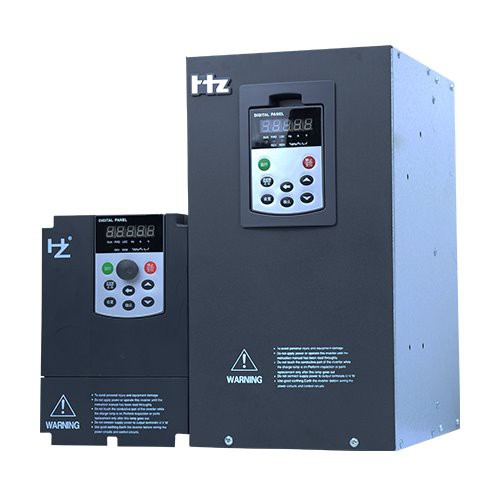
To check the braking system, you can use a multimeter to measure the resistance of the braking resistor. If the resistance is outside the specified range, it may be necessary to replace the braking resistor. You can also check the operation of the brake unit by testing it with a test bench. If the brake unit is not functioning correctly, it may be necessary to replace it.
Unusual Noises
Unusual noises coming from the VFD or the motor can also be a sign of a faulty VFD part. These noises can include humming, buzzing, or clicking sounds. Unusual noises can be caused by several factors, including loose connections, faulty components, or mechanical problems with the motor.
If you hear unusual noises coming from the VFD or the motor, it's important to shut down the system immediately and investigate the cause. Loose connections can cause arcing, which can lead to electrical fires. Faulty components can cause the VFD to malfunction, leading to erratic motor operation or premature failure. Mechanical problems with the motor can cause excessive vibration, which can damage the motor and other components in the system.
Conclusion
Recognizing the signs of a faulty VFD part is crucial for maintaining the efficiency and reliability of your equipment. By being aware of these signs, you can take proactive measures to prevent costly downtime and equipment damage. If you suspect that a VFD part is faulty, it's important to consult with a qualified technician or contact us for professional assistance.
As a VFD parts supplier, we offer a wide range of high - quality VFD parts, including power modules, control boards, LCD panels, brake units, and braking resistors. Our parts are sourced from reputable manufacturers and are rigorously tested to ensure their quality and reliability. If you are experiencing problems with your VFD or if you need to replace a faulty part, we are here to help. Contact us today to discuss your requirements and to get a quote for the parts you need. We look forward to serving you and helping you keep your VFD systems running smoothly.
References
- "Variable Frequency Drives: Selection, Application, and Troubleshooting" by Dan Hebert
- "Industrial Motor Control" by Tim W. Miller
- Manufacturer's manuals for various VFD models