

As a VFD (Variable Frequency Drive) supplier, I've witnessed firsthand the transformative impact of VFDs across various industries. One of the most crucial yet often overlooked features of a VFD is its power factor correction function. In this blog post, I'll delve into what power factor correction is, why it matters, and how a VFD can effectively correct the power factor.
Understanding Power Factor
Before we explore the power factor correction function of a VFD, it's essential to understand what power factor is. Power factor (PF) is a measure of how effectively electrical power is being used in an AC (alternating current) circuit. It is defined as the ratio of real power (P), which is the power that actually does useful work, to apparent power (S), which is the product of the voltage and current in the circuit.
Mathematically, power factor is expressed as:
[ PF = \frac{P}{S} ]
The value of power factor ranges from 0 to 1. A power factor of 1 indicates that all the electrical power supplied to the circuit is being used effectively, while a power factor less than 1 means that some of the power is being wasted. This wasted power is known as reactive power (Q), which is required to establish and maintain the magnetic fields in inductive loads such as motors, transformers, and solenoids.
Why Power Factor Correction Matters
A low power factor can have several negative consequences for both industrial and commercial users. Firstly, it increases the amount of current flowing through the electrical system, which in turn leads to higher energy losses in the form of heat. These losses not only waste energy but also increase the operating costs of the electrical system.
Secondly, a low power factor can cause voltage drops in the electrical system, which can affect the performance of electrical equipment. This can lead to reduced efficiency, increased maintenance costs, and even premature equipment failure.
Finally, many utility companies charge customers a penalty for having a low power factor. This is because a low power factor requires the utility company to generate and transmit more power than necessary to meet the customer's real power requirements. By improving the power factor, customers can reduce their energy bills and avoid these penalties.
How a VFD Corrects the Power Factor
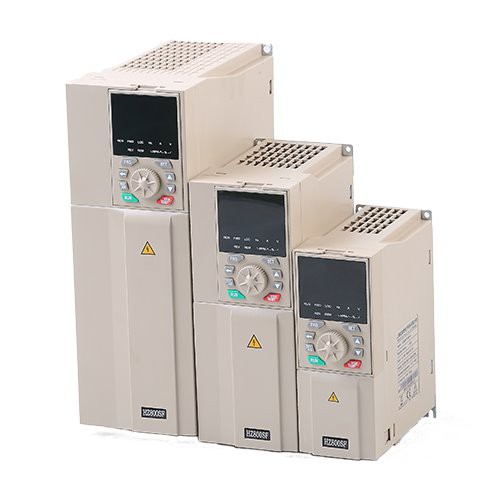
A VFD is a device that controls the speed and torque of an AC motor by varying the frequency and voltage of the electrical supply. In addition to its speed control capabilities, a VFD can also correct the power factor of the electrical system.
Most VFDs use a rectifier circuit to convert the AC input voltage to DC voltage, which is then inverted back to AC voltage at the desired frequency and voltage. The rectifier circuit typically consists of diodes or thyristors, which draw current in a non-linear manner. This non-linear current draw can cause the power factor of the electrical system to decrease.
To correct the power factor, many modern VFDs are equipped with a power factor correction (PFC) circuit. The PFC circuit is designed to shape the input current waveform to closely match the input voltage waveform, thereby improving the power factor. There are two main types of PFC circuits: passive and active.

Passive Power Factor Correction
Passive PFC circuits use inductors and capacitors to filter the input current and reduce the harmonic content. These circuits are relatively simple and inexpensive, but they can only achieve a power factor of around 0.9. Passive PFC circuits are typically used in low-power applications where the cost is a major consideration.
Active Power Factor Correction
Active PFC circuits use a switching converter to control the input current and maintain a power factor close to 1. These circuits are more complex and expensive than passive PFC circuits, but they can achieve a higher power factor and better harmonic performance. Active PFC circuits are typically used in high-power applications where energy efficiency and power quality are critical.
Benefits of Power Factor Correction with a VFD
By correcting the power factor, a VFD can provide several benefits to the user. Firstly, it can reduce the energy consumption of the electrical system by minimizing the reactive power and improving the overall efficiency. This can lead to significant cost savings over the life of the equipment.
Secondly, power factor correction can improve the power quality of the electrical system by reducing the harmonic distortion and voltage fluctuations. This can help to protect the electrical equipment from damage and improve its reliability and performance.
Finally, power factor correction can help the user to avoid the penalties charged by the utility company for having a low power factor. By maintaining a high power factor, the user can reduce their energy bills and improve their bottom line.
Applications of VFDs with Power Factor Correction
VFDs with power factor correction are widely used in various industries, including manufacturing, HVAC (heating, ventilation, and air conditioning), water treatment, and transportation. Some of the common applications of VFDs with power factor correction include:
- Motor Control: VFDs are commonly used to control the speed and torque of AC motors in industrial applications. By correcting the power factor, a VFD can improve the efficiency of the motor and reduce the energy consumption.
- HVAC Systems: VFDs are used to control the speed of fans and pumps in HVAC systems. By adjusting the speed of the equipment to match the load requirements, a VFD can reduce the energy consumption and improve the comfort level in the building.
- Water Treatment Plants: VFDs are used to control the speed of pumps and blowers in water treatment plants. By optimizing the operation of the equipment, a VFD can reduce the energy consumption and improve the quality of the treated water.
- Transportation: VFDs are used to control the speed of electric vehicles and trains. By improving the power factor, a VFD can increase the range and efficiency of the vehicle and reduce the charging time.
Conclusion
In conclusion, the power factor correction function of a VFD is a crucial feature that can provide significant benefits to the user. By correcting the power factor, a VFD can reduce the energy consumption, improve the power quality, and avoid the penalties charged by the utility company. As a VFD supplier, I highly recommend considering a VFD with power factor correction for your next project.
If you're interested in learning more about our VFD products, including 30KW VFD, VFD Single Phase To 3 Phase, and Single To Three Phase VFD, please don't hesitate to contact us. Our team of experts is ready to assist you in selecting the right VFD for your specific application and to provide you with the best possible service and support.
References
- Chapman, S. J. (2012). Electric Machinery Fundamentals (5th ed.). McGraw-Hill.
- Dorf, R. C., & Svoboda, J. A. (2014). Introduction to Electric Circuits (9th ed.). Wiley.
- Mohan, N., Undeland, T. M., & Robbins, W. P. (2012). Power Electronics: Converters, Applications, and Design (3rd ed.). Wiley.