

Hey there! I'm a supplier of Feedback Units, and I'm super stoked to dive into the principle behind these nifty devices with you.
Let's start with the basics. A Feedback Unit is a crucial component in many control systems. Its main job is to provide information about the output of a system back to the input. This may sound a bit confusing at first, but think of it like a self - correcting loop in a machine.

Imagine you're driving a car. The speedometer shows you how fast you're going. If you want to maintain a certain speed, say 60 miles per hour, you keep an eye on the speedometer. If you notice that you're going too fast, you ease off the gas pedal. If you're going too slow, you press down on it a bit more. In this analogy, the speedometer is like a feedback device. It gives you information about the car's speed (the output), and you use that information to adjust your actions (the input).
In industrial and engineering applications, Feedback Units work in a similar way. They measure a particular variable, like speed, position, temperature, or pressure, and then send that information back to the control system. The control system can then make adjustments to ensure that the process is running as intended.
One of the most common types of Feedback Units is the encoder. Encoders are used to measure the position or speed of a rotating shaft. There are two main types: incremental encoders and absolute encoders.
Incremental encoders generate a series of pulses as the shaft rotates. By counting these pulses, the control system can determine how far the shaft has turned and at what speed. They're pretty simple and cost - effective, which makes them popular in many applications. For example, in a conveyor belt system, an incremental encoder can be used to measure the speed of the belt. If the belt starts to slow down, the control system can increase the power to the motor to keep it running at the right speed.
On the other hand, absolute encoders provide a unique digital code for each position of the shaft. This means that they can tell the exact position of the shaft without having to count pulses from a starting point. They're more accurate and reliable, especially in applications where precise positioning is crucial, like in robotic arms.
Another important type of Feedback Unit is the tachometer. Tachometers are used to measure the rotational speed of a shaft. They can be either mechanical or electrical. Mechanical tachometers work based on the principle of centrifugal force. As the shaft rotates, a set of weights inside the tachometer move outward, and this movement is translated into a speed reading. Electrical tachometers, on the other hand, use magnetic or optical sensors to measure the speed. They're more accurate and can provide a continuous speed signal, which is useful for control systems.
Now, let's talk about how these Feedback Units are integrated into a system. Usually, they're connected to a controller, which can be a programmable logic controller (PLC) or a microcontroller. The controller receives the feedback signal from the Feedback Unit and compares it to a setpoint. The setpoint is the desired value of the variable that the system is trying to control.
If there's a difference between the feedback signal and the setpoint, the controller calculates an error. Based on this error, the controller then sends a control signal to an actuator. Actuators are devices that can change the process variable. For example, in a temperature control system, the actuator could be a heater or a cooler. The controller adjusts the power to the actuator to reduce the error and bring the process variable closer to the setpoint.
One of the key advantages of using Feedback Units is that they improve the stability and accuracy of a system. Without feedback, a system would be open - loop, which means that it would operate based on a pre - determined set of instructions without any information about the actual output. This can lead to errors and instability, especially if there are external disturbances or changes in the system.
For instance, in a motor control system without feedback, the motor might be set to run at a certain speed. But if there's an increase in the load on the motor, the speed will decrease, and the system won't be able to compensate for it. With a Feedback Unit, like a tachometer, the control system can detect the decrease in speed and increase the power to the motor to maintain the desired speed.
In addition to stability and accuracy, Feedback Units also allow for better control of complex processes. In a chemical plant, for example, there are many variables that need to be controlled, such as temperature, pressure, and flow rate. Feedback Units can measure these variables and provide the necessary information to the control system, which can then make precise adjustments to ensure that the chemical reactions are taking place under the right conditions.
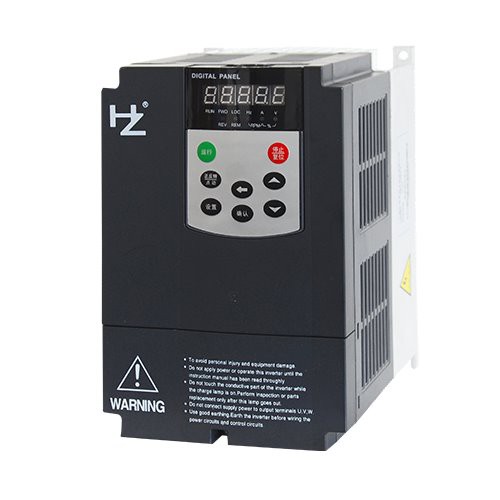
Now, I'd like to mention one of our products, the LED Digital Panel. This panel is often used in conjunction with Feedback Units to display important information about the system. It can show the measured values of variables like speed, position, or temperature in a clear and easy - to - read format. It's a great addition to any control system, as it allows operators to monitor the process at a glance. You can also check out our other LED Digital Panel options.
If you're in the market for a high - quality Feedback Unit, look no further. Our Feedback Units are designed to be reliable, accurate, and easy to integrate into your existing systems. Whether you need an encoder for a robotic application or a tachometer for a motor control system, we've got you covered.
We understand that every application is unique, and that's why we offer customized solutions. Our team of experts can work with you to determine the best Feedback Unit for your specific needs. We also provide excellent after - sales support to ensure that you get the most out of your purchase.
If you're interested in learning more about our Feedback Units or have any questions about how they work, don't hesitate to reach out. We're always happy to have a chat and discuss how we can help you improve your control systems. Whether you're a small business looking to upgrade your equipment or a large industrial manufacturer in need of reliable components, we're here to assist you in your procurement process. Let's start a conversation and see how we can work together to achieve your goals.
References
- Dorf, R. C., & Bishop, R. H. (2016). Modern Control Systems. Pearson.
- Nise, N. S. (2015). Control Systems Engineering. Wiley.