


Zhejiang Hertz Electric Co.,Ltd., founded in 2014, is high-tech enterprise specializing in the development, manufacture, sales, and after-sales service, serving medium and high-end equipment manufacturers and industrial automation system integrators. Relying on high-quality production equipment and rigorous testing process, we will provide customers with products such as low-voltage and medium voltage inverters, soft starters and servo control systems and solutions in related industries. The company upholds to the concept of "providing users with the best products and services" to serve every costomer. At present, it is mainly used for metallurgy, chemical industry, paper making, machinery and other industries.
Why Choose Us
Professional team
Our team of experts has many years of experience in the industry, and we provide our customers with the necessary support and advice.
High-quality products
Our products are manufactured to the highest standards using only the best materials. We ensure that our products are reliable, safe and long-lasting.
24H online service
The 400 hotline is open 24 hours a day. Fax, email, QQ, and telephone are all-round and multi-channel to accept customer problems. Technical personnel are 24 hours a day to answer customer problems.
One-stop solution
Provide technical support in the whole process of inspection, installation, commissioning, acceptance, performance acceptance test, operation, maintenance and other corresponding technical guidance and technical training related to contract products in a timely manner.

Our Variable Frequency Drive (VFD), designed for precise motor control, is a versatile solution aimed at enhancing energy efficiency and operational performance.

The inverter drive enables precise control over motor speed, resulting in reduced energy consumption and lower operating costs, making it an environmentally friendly choice for businesses.

Frequency Drive For Three Phase Motor
High quality material and first-class technology. Powerful function, continuously variable transmission. Regular appearance, small and beautiful. Convenient operation and intuitive digital display.
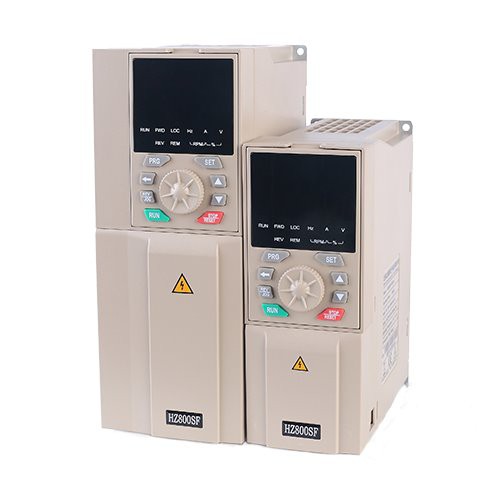
This type of VFD is often used in residential and small commercial settings, as it is suited to motors that operate on 120V power and do not require high levels of power output.

We grant each single segment 220V and three segment 220V input. When used for single phase, every other segment can be used as a spare line.
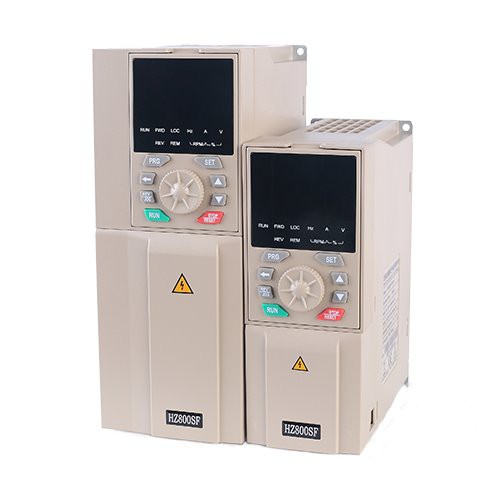
The use of frequency conversion device, drag air conditioning system of refrigeration pump, cold water pump, fan is a very good power saving technology.
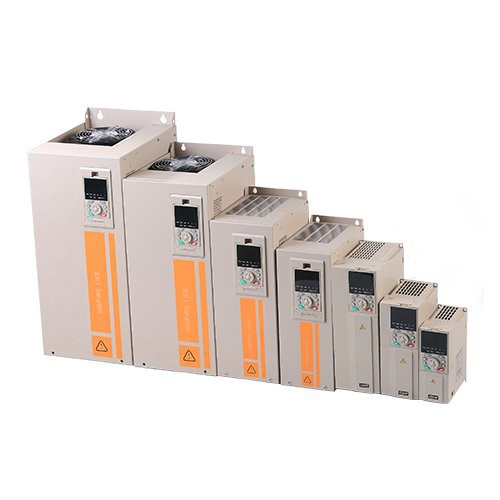
3.7KW Variable Frequency Drive. This is a 24V 150W brushless DC gear motor with a flange of 90x90mm. The built-in 10:1 keyway shaft right angle gearbox brings speed and torque to 300.

5.5KW Variable Frequency Drive. This is a 24V 150W brushless DC gear Motor with a flange of 90x90mm. The built-in 5:1 spur gearbox brings speed and torque to 600rpm and 1.95Nm(276.14.

Frequency converter is an AC strength machine that converts the electricity provide to different frequencies. In the late 1980s, China started out to use frequency converter.
What Is Vector Control VFD
Vector control VFD is a variable-frequency drive (VFD) control method in which the stator currents of a three-phase AC or brushless DC electric motor are identified as two orthogonal components that can be visualized with a vector. By regulating the motor's speed and torque, vector control VFD achieves optimal performance. This method is vital in industries that require precise motor-driven processes, such as manufacturing, robotics, and other automated systems.
Energy Efficiency: By optimizing the motor's performance, vector control VFD reduces energy consumption, which is crucial for industries looking to cut costs and reduce their environmental impact. Lower energy usage translates into significant cost savings over time.
Improved Process Accuracy: With precise control over speed and torque, industries can achieve higher accuracy in their processes, leading to better product quality and reduced waste. This precision is particularly important in high-stakes applications such as semiconductor manufacturing and aerospace.
Extended Motor Lifespan: Vector control VFD reduces the stress on motors by ensuring they operate within optimal parameters, thus extending their lifespan and reducing maintenance costs. This reliability is critical in applications where equipment downtime can lead to significant financial losses.
Enhanced Flexibility: Vector control VFDs are highly adaptable and can be programmed to suit various applications, making them ideal for industries with diverse and changing needs. The ability to reprogram control parameters allows for quick adaptation to new processes and products.
Real-Time Monitoring and Diagnostics: Advanced vector control VFDs incorporate digital technologies that enable real-time monitoring and diagnostics. This allows for early detection of potential issues, reducing the likelihood of unexpected breakdowns and enabling predictive maintenance strategies.
Vector control VFD is essential for enhancing the efficiency and performance of motor-driven systems. By accurately controlling the motor's speed and torque, vector control helps in reducing energy consumption, improving process accuracy, and extending the lifespan of the motor. This level of control is crucial in industries where precision and efficiency are paramount. In the competitive landscape of modern industry, the ability to fine-tune motor operations translates directly into cost savings and improved product quality.

How Vector Control VFD Works
At its core, vector control VFD works by decomposing the stator current into two orthogonal components that can be controlled independently. One component controls the magnetic flux, while the other controls the torque. This decomposition allows for precise control over the motor's output, which is why vector control is considered one of the best methods for motor control in industrial applications. The control system uses feedback from sensors to adjust these components dynamically, ensuring that the motor operates at peak efficiency under varying loads and conditions.
Comparison Between Scalar Control Method and Vector Control Method of VFD?
When compared to traditional control methods, vector control offers several significant advantages. Traditional methods, such as scalar control, primarily adjust motor speed and voltage without accounting for the complex interactions within the motor. This approach can lead to inefficiencies and less precise control, as scalar control methods are often simpler and less expensive to implement but lack the dynamic performance and accuracy of vector control. Scalar control methods are suitable for applications where high precision and dynamic response are not critical, but they fall short in high-performance environments.
Vector control, on the other hand, provides a more sophisticated approach by independently adjusting both torque and flux-producing currents. This results in more efficient operation, better performance, and higher precision. By managing these currents separately, vector control VFDs can maintain optimal motor performance under varying load conditions, ensuring that the motor operates at its best efficiency point. While the initial implementation of vector control can be more complex and costly, the long-term benefits in terms of energy savings, performance, and operational efficiency often justify the investment.
For instance, in industrial applications where motors run continuously under varying loads, the improved efficiency and precision of vector control can lead to substantial cost savings and increased reliability. The ability to maintain optimal motor performance under varying conditions makes vector control VFD a superior choice for many applications, providing both economic and technical benefits that far outweigh the initial complexity and cost.
Application of Vector Control VFD
Manufacturing: In manufacturing, vector control VFD is used to manage conveyor belts, robotic arms, and other machinery that require precise movement and speed control. This ensures smooth and efficient production processes, reducing downtime and increasing throughput.
Robotics: Robotics heavily relies on vector control VFD for the precise movement of robotic limbs and actuators. This level of control is essential for tasks that require high accuracy, such as assembly, welding, and packaging. Advanced robotic systems use vector control VFD to synchronize multiple motors, enabling complex maneuvers and operations.
Automotive Industry: In the automotive industry, vector control VFD is used in electric vehicles (EVs) to manage the performance of the electric motors. This results in improved efficiency and performance of EVs, making them more competitive in the market. The precise control also enhances the driving experience by providing smooth acceleration and regenerative braking.
HVAC Systems: Heating, ventilation, and air conditioning (HVAC) systems use vector control VFD to manage compressors and fans. This ensures energy-efficient operation and maintains a comfortable environment while reducing wear and tear on mechanical components.
Textile Industry: In the textile industry, vector control VFD is used to manage the speed and tension of looms and spinning machines. This allows for the production of high-quality fabrics with consistent properties, meeting the stringent requirements of the market.
What Motor Types are Vector Control VFD Compatible With?
Induction Motors
The most common type of motor used with vector control VFDs. These include squirrel-cage and wound-rotor induction motors, which benefit from the precise control of speed and torque provided by the vector control system.
Permanent Magnet Synchronous Motors
Vector control VFDs can efficiently control PMSMs, offering accurate speed and torque control by adjusting the stator current according to the rotor position, essential in applications requiring high efficiency and performance.
Brushless DC Motors
Although BLDC motors are electronically commutated, vector control VFDs can still be used to optimize their performance, providing smooth operation, precise torque, and speed control.
Common Issues and Solutions
Bearing Currents
High-frequency switching in VFDs can cause electrical currents to flow through motor bearings, leading to premature wear and potential failure. Solution: Use insulated bearings or shaft grounding techniques to protect the motor. Insulated bearings prevent the flow of electrical current through the bearing surfaces, while shaft grounding techniques divert the currents away from the bearings, thus protecting them from electrical damage.
01
Overheating
Motors can overheat due to increased operational speeds and insufficient cooling. Overheating can lead to premature motor failure and increased downtime. Solution: Ensure adequate cooling and ventilation, and consider using motors with higher thermal ratings. Regular maintenance to clean cooling fans and heat sinks is essential. Additionally, employing temperature monitoring systems can provide early warnings of overheating, allowing for timely interventions.
02
Torque Ripple
At low speeds, motors may experience torque ripple, which leads to vibration and noise. This can affect the precision of operations and cause wear on mechanical components. Solution: Implement advanced control algorithms like vector control VFD to smooth out torque delivery. Vector control VFD can adjust the motor's magnetic field and torque production dynamically, ensuring smooth and quiet operation even at low speeds.
03
Harmonics
Harmonics are electrical noise introduced by vector control VFDs into the power system, which can affect other equipment. This noise can cause overheating in transformers and neutral conductors, and interfere with communication lines. Solution: Use harmonic filters and proper grounding techniques to mitigate these effects. Harmonic filters can smooth out the electrical waveform, reducing the noise and protecting sensitive equipment from interference.
04
Select group PO and set basic running parameters. Press△or V to adjust the parameters. Take the setting of a three- phase 380V/50Hz output as an example.
P0.00=0 (Control mode 0: V/F, 1: Senseless vector)
P0.01=0 (Analog potentiometer on control pannel)
P0.02=50.00 (Running frequncy)
P0.03=0 (Control panal mode)
P0.06=50.00 (Max output freq)
P0.07=50.00 (Basic running freq)
P0.08=380 (Max output voltage)
P0.17=3 (Acc time)
P0.18=3 (Dec time)
To set the PA group, you need to set P0.00= 1 (vector control). PA.00,VFD static auto tuning
PA.00=1 (Motor parameter auto tuning, Static atuo tuning)
PA.01=380 (Motor rated voltage)
PA.02=2.5 (Motor rated current)
PA.03=50 (Motor rated frequency)
PA.04= 1390 (Motor rated rotating speed)
PA.05=4 (Motor poles)
VFD static auto tuning is mainly used to measure the resistance, sinductance and other parameters of the motor. In order to achieve better and more precise control. Press FWD to start static auto tuning.When the frequency interface is displayed, static auto tuning is completed.
What Are the Control Modes of Vector Control VFD?
Closed-loop vector control VFD
Closed-loop vector control VFDs require special motors with encoder feedback (hence the term "closed-loop") that provide motor shaft position info to the drive. The drive uses this information to constantly alter the V/Hz ratio to produce maximum torque. This type of VFD is very high performance and very expensive.
Sensorless vector control VFD
Sensorless vector control VFD work with standard motors, but because there is no encoder feedback, the performance is not quite as good as closed-loop, but still much better than V/Hz drives. Instead of getting real-time info from an encoder, a sensorless vector drive estimates what is going on by creating a motor model within it's software. This model is created using motor info that the user manually enters, along with other info that the drive measures when it is connected to the motor.
What to Consider When Choosing Vector Control VFD
Load Characteristics
Understand the type of load (constant torque or variable torque) the motor will be driving. Vector control VFDs are highly effective for constant torque applications, such as conveyors or cranes, where torque control at low speeds is critical.
Torque Requirements
Consider the torque requirements at both low and high speeds. Vector control VFDs provide high starting torque and precise torque control, making them ideal for demanding applications where maintaining torque is essential.
Power Rating and Voltage
Ensure the VFD matches the power rating (kW or HP) and voltage level of your motor and electrical supply. The VFD should be capable of handling the motor's full load current and voltage requirements.
Overload Capacity
Check the VFD's overload capacity, especially if the application involves frequent starts, stops, or high torque demands. A higher overload capacity ensures the VFD can handle peak loads without damage.
Environmental Conditions
Assess the environmental conditions such as temperature, humidity, and dust. Choose a VFD with an appropriate IP rating and protective features (such as conformal coatings) for harsh environments.
Energy Efficiency
Vector control VFDs are often more energy-efficient than standard VFDs. However, ensure that the chosen VFD offers energy-saving features like regenerative braking or auto-tuning functions.
Drive Protection Features
Check for built-in protection features such as overcurrent, overvoltage, short-circuit protection, and thermal overload protection to safeguard both the VFD and motor.
Ease of Installation and Setup
Consider VFDs with user-friendly installation procedures and intuitive programming interfaces, which simplify initial setup and parameter configuration.
Our Factory
Zhejiang Hertz Electric Co., Ltd. based on power electronics technology, motor drive and control technology, and relying on advanced production equipment and rigorous testing process, we provide customers with low-voltage and medium-voltage frequency converters, soft starters and servo control systems and related industry solutions.


Certificate

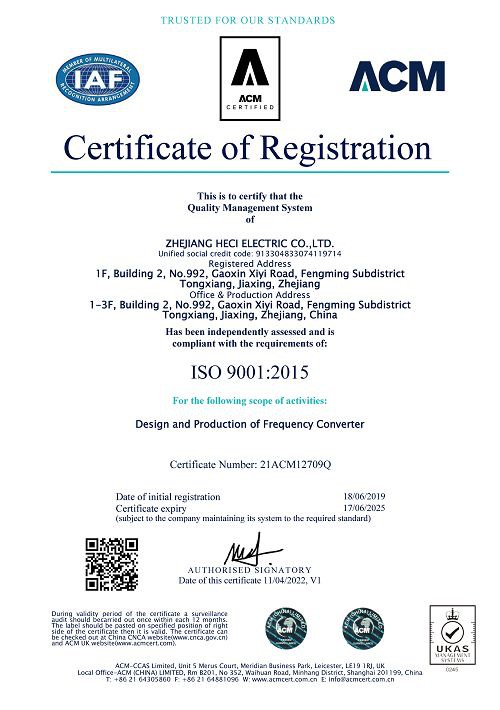


FAQ
Hot Tags: vector control vfd, China vector control vfd manufacturers, suppliers, factory, vfd in monitors, vfd in sorting machines, vfd in portable media players, 110v VFD Drive, vfd in medical monitors, vfd in turning machines