

Hey there! As a supplier of 660V - 690V Variable Frequency Drives (VFDs), I often get asked if these drives can be used for constant - torque loads. Well, let's dive right into it and find out.
First off, let's understand what constant - torque loads are. Constant - torque loads require a relatively constant amount of torque regardless of the speed of the motor. Examples of such loads include conveyors, positive displacement pumps, and some types of mixers. The torque demand remains stable over a wide range of speeds, and the power required is directly proportional to the speed.
Now, let's talk about 660V - 690V VFDs. These VFDs are designed to control the speed of an AC motor by varying the frequency and voltage supplied to the motor. The higher voltage range of 660V - 690V is typically used in industrial applications where larger motors are required, and the power demand is high.
So, can a 660V - 690V VFD be used for constant - torque loads? The short answer is yes, and here's why.
Compatibility with Motor Requirements
Most motors used for constant - torque loads are designed to operate within a certain voltage and frequency range. 660V - 690V VFDs can provide the necessary voltage and frequency control to match the motor's requirements. They can adjust the output voltage and frequency in a way that maintains a constant V/Hz ratio, which is crucial for the proper operation of the motor under constant - torque conditions.
For example, when the speed of the motor needs to be reduced, the VFD reduces both the voltage and frequency proportionally. This ensures that the magnetic flux in the motor remains constant, and the motor can continue to produce the required torque. This feature makes 660V - 690V VFDs a great fit for constant - torque loads.
Precise Speed Control
One of the key advantages of using a VFD for constant - torque loads is the ability to achieve precise speed control. In many industrial processes, the speed of the equipment needs to be adjusted to meet specific production requirements. A 660V - 690V VFD allows for smooth and accurate speed adjustments, which can improve the efficiency and productivity of the system.
For instance, in a conveyor system, the speed of the conveyor may need to be adjusted depending on the volume of materials being transported. With a 660V - 690V VFD, the operator can easily change the speed of the motor driving the conveyor, ensuring that the materials are moved at the optimal rate.
Energy Savings
Another important benefit of using a 660V - 690V VFD for constant - torque loads is energy savings. When a motor is operated at a fixed speed, it often consumes more energy than necessary, especially when the load demand is low. By using a VFD to control the speed of the motor, the energy consumption can be significantly reduced.
For example, in a positive displacement pump, if the flow rate needs to be reduced, the VFD can slow down the motor speed. This reduces the power consumption of the motor, as the power required is proportional to the speed. Over time, these energy savings can add up to significant cost savings for the user.
Features of 660V - 690V VFDs for Constant - Torque Loads
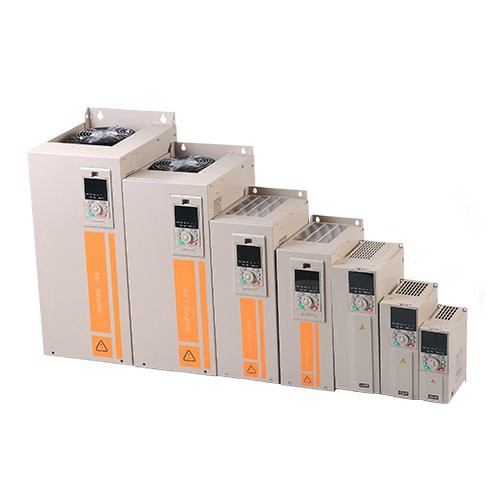
660V - 690V VFDs come with several features that make them well - suited for constant - torque loads. Some of these features include:
Over - Torque Capability
These VFDs are designed to handle short - term over - torque conditions. In constant - torque applications, there may be situations where the load suddenly increases, such as when a conveyor gets jammed. The VFD can provide additional torque for a short period to overcome the increased load without tripping or causing damage to the motor.
Torque Boost
Many 660V - 690V VFDs offer a torque boost feature. This feature allows the VFD to increase the output voltage at low speeds to provide extra torque. This is particularly useful for constant - torque loads that require high starting torque, such as mixers and crushers.

Built - in Protection
660V - 690V VFDs are equipped with various protection features to ensure the safe and reliable operation of the motor. These features include over - current protection, over - voltage protection, under - voltage protection, and over - temperature protection. These protections help to prevent damage to the motor and the VFD itself, especially in harsh industrial environments.
Real - World Applications
Let's take a look at some real - world applications where 660V - 690V VFDs are used for constant - torque loads.
Conveyor Systems
Conveyor systems are one of the most common applications for constant - torque loads. In a large - scale manufacturing plant, conveyors are used to transport materials between different workstations. A 660V - 690V VFD can be used to control the speed of the conveyor motor, allowing for efficient material handling. You can find more information about VFDs for motors at VFD For Motors.
Positive Displacement Pumps
Positive displacement pumps are used in many industries, such as chemical processing and water treatment. These pumps require a constant torque to operate effectively. A 660V - 690V VFD can be used to control the speed of the pump motor, ensuring a stable flow rate and reducing energy consumption. If you're interested in a 45KW VFD for such applications, check out 45KW VFD.
Mixers
Mixers are used in the food, pharmaceutical, and chemical industries to blend different materials. They require a constant torque to ensure proper mixing. A 660V - 690V VFD can be used to control the speed of the mixer motor, allowing for precise control of the mixing process. The Frequency Drive Controller can play a crucial role in this process.
Considerations When Using 660V - 690V VFDs for Constant - Torque Loads
While 660V - 690V VFDs are suitable for constant - torque loads, there are a few considerations that need to be taken into account:
Motor Compatibility
It's important to ensure that the motor is compatible with the 660V - 690V VFD. The motor's voltage, power rating, and insulation class should be checked to ensure that it can operate safely and efficiently with the VFD.
Installation and Commissioning
Proper installation and commissioning of the VFD are essential for its optimal performance. The VFD should be installed in a well - ventilated area, and the wiring should be done according to the manufacturer's instructions. Commissioning involves setting up the VFD parameters, such as the motor nameplate data, speed range, and torque settings.
Maintenance
Regular maintenance of the VFD is necessary to ensure its long - term reliability. This includes cleaning the VFD, checking the cooling fans, and inspecting the electrical connections.
Conclusion
In conclusion, 660V - 690V VFDs can definitely be used for constant - torque loads. They offer compatibility with motor requirements, precise speed control, energy savings, and a range of features that make them well - suited for these types of applications. Whether you're using a conveyor system, a positive displacement pump, or a mixer, a 660V - 690V VFD can help you achieve better performance and efficiency.
If you're in the market for a 660V - 690V VFD for your constant - torque load application, don't hesitate to reach out. We're here to provide you with the right solution and support. Let's start a conversation and see how we can help you optimize your industrial processes.
References
- Industrial Drives and Controls Handbook, Second Edition by Raymond G. Foulkes
- Variable Frequency Drives: Application, Selection, and Troubleshooting by Patrick H. Hester