


Zhejiang Hertz Electric Co.,Ltd., founded in 2014, is high-tech enterprise specializing in the development, manufacture, sales, and after-sales service, serving medium and high-end equipment manufacturers and industrial automation system integrators. Relying on high-quality production equipment and rigorous testing process, we will provide customers with products such as low-voltage and medium voltage inverters, soft starters and servo control systems and solutions in related industries. The company upholds to the concept of "providing users with the best products and services" to serve every costomer. At present, it is mainly used for metallurgy, chemical industry, paper making, machinery and other industries.
Why Choose Us
Professional team
Our team of experts has many years of experience in the industry, and we provide our customers with the necessary support and advice.
High-quality products
Our products are manufactured to the highest standards using only the best materials. We ensure that our products are reliable, safe and long-lasting.
24H online service
The 400 hotline is open 24 hours a day. Fax, email, QQ, and telephone are all-round and multi-channel to accept customer problems. Technical personnel are 24 hours a day to answer customer problems.
One-stop solution
Provide technical support in the whole process of inspection, installation, commissioning, acceptance, performance acceptance test, operation, maintenance and other corresponding technical guidance and technical training related to contract products in a timely manner.

Our Variable Frequency Drive (VFD), designed for precise motor control, is a versatile solution aimed at enhancing energy efficiency and operational performance.

The inverter drive enables precise control over motor speed, resulting in reduced energy consumption and lower operating costs, making it an environmentally friendly choice for businesses.

Frequency Drive For Three Phase Motor
High quality material and first-class technology. Powerful function, continuously variable transmission. Regular appearance, small and beautiful. Convenient operation and intuitive digital display.
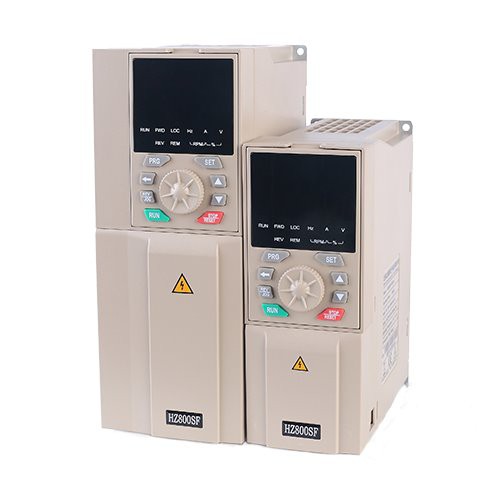
This type of VFD is often used in residential and small commercial settings, as it is suited to motors that operate on 120V power and do not require high levels of power output.

We grant each single segment 220V and three segment 220V input. When used for single phase, every other segment can be used as a spare line.
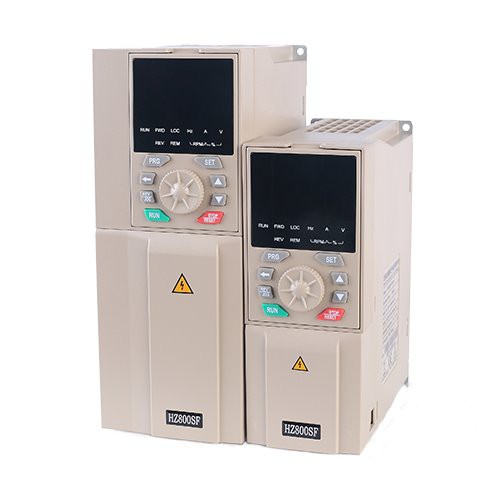
The use of frequency conversion device, drag air conditioning system of refrigeration pump, cold water pump, fan is a very good power saving technology.
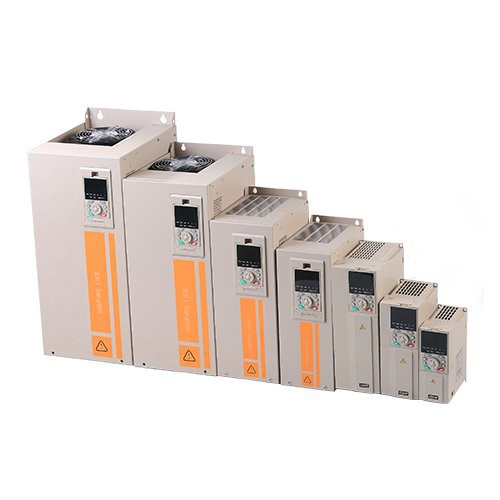
3.7KW Variable Frequency Drive. This is a 24V 150W brushless DC gear motor with a flange of 90x90mm. The built-in 10:1 keyway shaft right angle gearbox brings speed and torque to 300.

5.5KW Variable Frequency Drive. This is a 24V 150W brushless DC gear Motor with a flange of 90x90mm. The built-in 5:1 spur gearbox brings speed and torque to 600rpm and 1.95Nm(276.14.

Frequency converter is an AC strength machine that converts the electricity provide to different frequencies. In the late 1980s, China started out to use frequency converter.
What Is VFD For Motors
A variable frequency drive (VFD)for motors is a type of motor controller that drives an electric motor by varying the frequency and voltage of its power supply. The VFD also has the capacity to control ramp-up and ramp-down of the motor during start or stop, respectively. As the application's motor speed requirements change, the VFD can simply turn up or down the motor speed to meet the speed requirement.
Reduced Power Line Disturbances
Starting an AC motor across the line, and the subsequent demand for 300-600 % the motor full-load current, places an enormous drain on the power distribution system connected to the motor. When the supply voltage sags, depending on the size of the motor and the capacity of the distribution system, the voltage sags can cause sensitive equipment connected on the same distribution system to trip offline due to the low voltage. Using VFD eliminates this voltage sag, since the motor is started at zero voltage and ramped up.
Lower Power Demand on Start
If power is proportional to current-times-voltage, then power needed to start an AC motor across the line is significantly higher than with a VFD. This will be true only at the start up. When industrial customers start their motors during these peak hours of electrical consumption, it is not uncommon for the customer to be stung with charges for surges in power during peak periods. These demand factors would not be an issue with VFD'S.
Adjustable Operating Speed
Unlike the traditional stop-and-go motor, the use of a VFD enables optimizes a process, by making changes in a process. This allows starting at a reduced speed, and allows remote adjustment of speed by programmable controller or process controller. Control, in an industrial sense, is always a big bonus for production.
Adjustable Torque Limit
Use of a VFD can protect machinery from damage and protect the process or product (because the amount of torque being applied can be controlled accurately). If just an AC motor connected, the motor will continue to try to rotate until the motor's overload device opens (due to the excessive current being drawn as a result of the heavy load). A VFD, in turn, can be set to limit the amount of torque (AMP/CURRENT), so the AC motor never exceeds this limit.
VFD's are used to control ac motors. The VFD's input voltage (ac power supply) is reduced by the VFD transformer, rectified and filtered into dc voltage. The VFD then converts the dc voltage into adjustable frequency ac output voltage that matches the speed of the motor to be controlled. Proportional speed control is achieved by varying the VFD output frequency.
VFDs can produce up to 1000 pulses per revolution of the ac motor's rotor, and VFD's provide much smoother speed regulation compared to v/f control where a v/f converter is used to regulate the voltage going into an ac motor so that its torque matches load requirements. VFD's also allow the v/f converter to be bypassed so that it can protect motors from overload conditions, v/f converters do not provide this capability.
What Types of Motors can be Used With VFD For Motors?
Dc motor: Dc motors are still in production although the number of active manufacturers has decreased considerably, specifically those that are still manufacturing large dc motors (> 1 MW).
Ac asynchronous squirrel cage motor: This type of motor is the most commonly used motor in industrial processes with variable frequency drives.
Ac asynchronous wound rotor motor: This type of motor was traditionally used in variable frequency drive when the load required a high starting torque and the strength of the power supply network was insufficient to permit Direct On-Line (DOL) starting. Variable speed operation is obtained by varying the effective resistance in the rotor circuit.
Ac synchronous motor with permanent magnet excitation: This type of motor is specifically designed for operation with a variable frequency drive. Synchronous motors are used mainly in the high power ranges to minimize costs by minimizing the current rating of the variable frequency drive and due to the non availability of squirrel cage induction motors.
When Should you Install a VFD For Motors?
You should consider installing VFD's when you want to get the most out of your ac motor. For example, VFD's are often used on older ac motors because they get better performance from VFD's than they did with original equipment. VFDs are also installed when it is necessary to automate an ac process or improve its speed regulation.
In industry VFD's are installed for a variety of reasons. VFDs allow users to choose the speed that they want their motors to run at, and VFD's also allow process manufacturers to improve energy efficiency because VFD's can match the motor speed with an optimum electrical frequency.
Along with all this, VFD's maintain the same ac frequency as the power supply, which means it does not have to be converted from 50 or 60 Hertz frequency to a VFD's output frequency through an inverter. Therefore, VFD's reduce power consumption and help process manufacturers improve energy efficiency.
Some VFD's can also isolate electrical networks so that if one network has an issue, VFD's can disconnect it from the other networks and protect them. By doing this VFD manufacturers also help manufacturers increase safety.
Factors to Consider When Selecting VFD For Motors
Installation Environment
One of the first things to consider is the workplace environment where you'll install the drive. If you choose the wrong drive for your environment, you likely won't get to maximize the benefits. You'll need to consider whether you plan to use it indoors or outside. For an indoor environment, consider humidity levels, temperature and air quality. If you're working with harsh chemicals or in high temps, you'll want to look at VFD suited to these environments. For outdoor VFD, you'll want to consider what elements the drive will be exposed to and whether it will be in direct sunlight.
Motor Rated Current, Voltage and Frequency
It's insufficient to match a variable frequency drive to a motor's power rating. You should also consider the motor's specs and rating, particularly the current, voltage and frequency. These factors help determine whether the drive can handle higher and lower loads. By ensuring that you have well-matched VFD for motors, you'll be able to run your motors at peak performance. To ensure proper performance, you should also ensure that the VFD's ratings match your power supply capabilities.
Torque Requirements
Different motors will have additional torque requirements. Some have largely varied needs based on whether they're starting up, slowing down or running at peak capacity. You should look for a VFD that provides torque at least at the peak running speed of the motor.
Motor Type
Not all motors work well with all VFD, and some motors may not need one. Most induction motors will work in conjunction with VFD. VFDs are mandatory with permanent magnet synchronous motors (PMSMs), as these motors cannot start independently. Certain VFDs are designed with PMSMs in mind and have unique features to improve their operation.
Duty Cycle
Consider the duty cycle of your motor. Does it have one running speed, or does it vary between low and heavy-duty cycles. Some VFDs are not capable of managing heavy-duty loads for long periods. Others don't function well with extended light-duty cycles. Some VFDs are designed for motors that have more extended periods of light duty or are idle. Be sure to choose a power rating that matches your duty cycle.
Speed Regulation
Depending on your type of motor, speed regulation may be a factor. You'll need to consider whether you need a drive that can maintain a consistent speed or if some variation is allowed. You will also want to consider how different VFDs react to changes in speed. Some are designed with variations in mind and can regulate much more efficiently.
Type of Application
Finally, you need to consider the type of application. Each motor and setup is unique, and some have special requirements that VFD must account for. You should determine the kind of load your motor will produce. For those frequently running heavy-duty loads, you'll need to look at VFD capable of handling heavy-duty.
Application of VFD For Motors
HVAC Systems
VFDs are commonly used in HVAC systems to control the speed of fans and pumps. By controlling the motor speed, VFDs can optimize the system's energy consumption, resulting in lower energy costs.
Water and Wastewater Treatment
VFDs are used in water and wastewater treatment plants to control the speed of pumps and blowers. By controlling the motor speed, VFDs can optimize the system's energy consumption and reduce maintenance costs.
Manufacturing
VFDs are used in manufacturing to control the speed of conveyor belts, mixers, and other equipment. By controlling the motor speed, VFDs can improve production efficiency and reduce maintenance costs.
Agriculture
VFDs are used in agriculture to control the speed of irrigation pumps and other equipment. By controlling the motor speed, VFDs can optimize energy consumption and reduce maintenance costs.
Components of VFD For Motors
Rectifier
The rectifier converts incoming AC power from the electrical grid into DC (direct current) power. This is typically done using diodes.
DC Bus
The DC bus acts as a buffer, storing the converted DC power for use by the inverter.
Inverter
The inverter is a key component that converts the DC power from the DC bus back into AC power with variable frequency and voltage. It uses insulated gate bipolar transistors (IGBTs) or other power switching devices to control the output.
Controller/Processor
The controller or processor is the brain of the VFD. It monitors the incoming signals, processes information, and adjusts the output frequency and voltage accordingly to control the motor speed.
Operator Interface
VFDs often include an interface for users to set parameters, monitor performance, and control the drive. This can be a keypad, display, or a more sophisticated human-machine interface (HMI).
Feedback Devices
Sensors such as encoders or tachometers provide feedback to the controller about the actual speed and position of the motor. This information is used to adjust the output of the VFD to maintain the desired speed.
Braking System
Some VFDs incorporate a braking system to assist in quickly stopping or decelerating the motor. This can be regenerative braking or dynamic braking, depending on the design.
Cooling System
VFDs generate heat during operation, and a cooling system is essential to dissipate this heat and prevent the components from overheating. This can include fans, heat sinks, or other cooling methods.
EMI Filters
Electromagnetic interference (EMI) filters are used to reduce electromagnetic noise generated by the VFD and prevent it from affecting other electronic devices.
Protection Features
VFDs often include protective features such as overcurrent protection, overvoltage protection, and other safety measures to safeguard the drive and connected equipment.
Regular inspection
Regular inspection of VFD for motors is essential to identify and address any issues before they become major problems. Inspect the VFDs for signs of overheating, loose connections, and damaged or worn components.
Preventive maintenance
Develop and follow a preventive maintenance plan for VFD for motors, which includes regular cleaning, lubrication, and replacement of worn or damaged components. This helps to extend the life of the VFD and prevent failures.
Use the right VFD for the job
Ensure that the VFD for motors is properly sized and rated for the motor and application it is controlling. Using the wrong VFD for motors can cause it to fail prematurely or operate inefficiently.
Keep VFDs clean and cool
Dirt, dust, and other contaminants can cause VFD for motors to overheat and fail. Keep the VFD for motors clean and ensure that they are properly ventilated to dissipate heat.
Regular calibration
Regular calibration of VFD for motors is essential to ensure their continued accuracy and reliability. Follow the manufacturer's instructions for calibration.
Our Factory
Zhejiang Hertz Electric Co., Ltd. based on power electronics technology, motor drive and control technology, and relying on advanced production equipment and rigorous testing process, we provide customers with low-voltage and medium-voltage frequency converters, soft starters and servo control systems and related industry solutions.


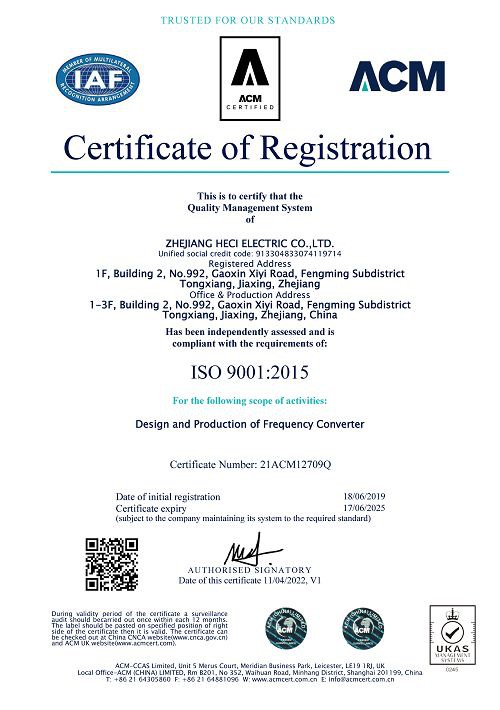
Certificate



FAQ
Hot Tags: vfd for motors, China vfd for motors manufacturers, suppliers, factory, vfd in welding machines, Fan Pump VFD, vfd in rehabilitation equipment, vfd in telescopes, vfd in printers, 37KW VFD