

In the realm of woodworking machinery, the pursuit of precision, efficiency, and safety is a never - ending journey. As a supplier of Feedback Units, I am often asked whether these units can be effectively used in woodworking machinery. In this blog, we will explore the potential applications, benefits, and challenges of using a Feedback Unit in woodworking machinery.
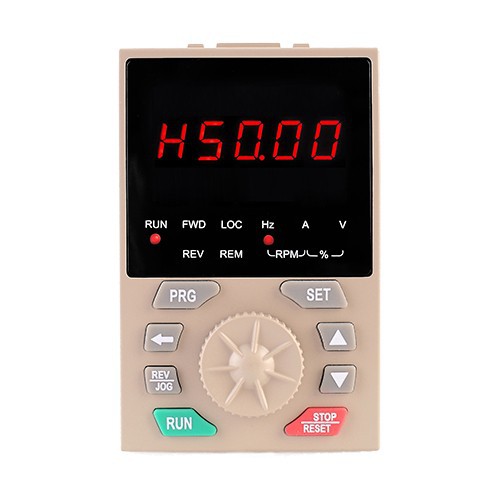

Understanding Feedback Units
Before delving into the woodworking context, let's first understand what a Feedback Unit is. A Feedback Unit is a device that provides information about the state or performance of a system. It measures variables such as position, speed, temperature, or pressure and sends this data back to a control system. This allows the control system to make real - time adjustments to ensure the system operates as intended.
There are several types of Feedback Units, including encoders, resolvers, and sensors. Encoders are commonly used to measure linear or angular position. They can be either incremental or absolute. Incremental encoders provide information about the change in position, while absolute encoders give the exact position at any given time. Resolvers are another type of position - sensing device that uses electromagnetic principles to determine the angular position. Sensors, on the other hand, can measure a wide range of physical quantities such as temperature, pressure, and vibration.
Potential Applications in Woodworking Machinery
Precision Cutting
One of the most critical aspects of woodworking is precision cutting. Whether it's cutting boards to a specific length, width, or angle, accurate measurements are essential. A Feedback Unit can be used in conjunction with a cutting mechanism, such as a saw blade or router, to ensure that the cut is made precisely as required. For example, an encoder can be installed on the motor shaft that drives the saw blade. The encoder measures the rotational speed and position of the shaft, and this information is sent to the control system. The control system can then adjust the speed and position of the saw blade to achieve the desired cut.
Automated Material Handling
In modern woodworking factories, automated material handling systems are becoming increasingly common. These systems are used to move wood panels, boards, and other materials from one workstation to another. A Feedback Unit can play a crucial role in these systems by providing information about the position and movement of the materials. For instance, sensors can be installed on conveyor belts to detect the presence and position of wood panels. This information can be used to control the speed and direction of the conveyor belts, ensuring that the materials are transported smoothly and accurately.
Dust Collection Systems
Dust collection is an important aspect of woodworking for both safety and environmental reasons. A Feedback Unit can be used in dust collection systems to monitor the performance of the system. For example, sensors can be installed in the ductwork to measure the air pressure and flow rate. If the air pressure drops below a certain level or the flow rate decreases, it could indicate a blockage in the system. The control system can then alert the operator or take corrective action, such as adjusting the fan speed or opening a bypass valve.
Benefits of Using a Feedback Unit in Woodworking Machinery
Improved Precision and Quality
By providing real - time feedback, a Feedback Unit allows for more precise control of woodworking machinery. This results in higher - quality products with fewer defects. For example, in precision cutting applications, the use of an encoder can reduce the margin of error to a minimum, ensuring that each cut is made exactly to the specified dimensions.
Increased Efficiency
Feedback Units can help to optimize the operation of woodworking machinery, leading to increased efficiency. For instance, in automated material handling systems, sensors can detect the position of materials and adjust the conveyor belt speed accordingly. This reduces the time wasted on unnecessary movements and ensures that the materials are processed as quickly as possible.
Enhanced Safety
Safety is a top priority in woodworking. Feedback Units can contribute to a safer working environment by monitoring critical parameters such as temperature, pressure, and vibration. For example, sensors can detect overheating in a motor or excessive vibration in a machine. The control system can then shut down the machine or take other safety measures to prevent accidents.
Challenges and Considerations
Environmental Conditions
Woodworking environments can be harsh, with high levels of dust, moisture, and vibration. These conditions can pose challenges to the operation of Feedback Units. For example, dust can accumulate on the sensors and encoders, affecting their accuracy. Moisture can cause corrosion and electrical problems. To overcome these challenges, Feedback Units need to be designed and built to withstand these harsh conditions. They should be sealed to prevent dust and moisture ingress and have robust mechanical and electrical components.
Compatibility with Existing Machinery
Integrating a Feedback Unit into existing woodworking machinery can be a complex task. The Feedback Unit needs to be compatible with the control system of the machinery. This may require some modifications to the existing control system or the use of an interface device. Additionally, the installation of a Feedback Unit may require some mechanical and electrical work, which should be carried out by qualified technicians.
Cost
The cost of a Feedback Unit and its installation can be a significant factor for woodworking businesses. However, it's important to consider the long - term benefits of using a Feedback Unit. The improved precision, efficiency, and safety can lead to cost savings in the long run. For example, higher - quality products can command a higher price in the market, and increased efficiency can reduce production costs.
Related Products for Woodworking Machinery
In addition to Feedback Units, there are other products that can enhance the performance of woodworking machinery. For example, an LCD Panel can be used to display important information such as the operating parameters of the machine, error messages, and diagnostic information. A Braking Resistance for VFD can be used to control the speed and braking of variable - frequency drives, which are commonly used in woodworking machinery. An LED Digital Panel can provide a clear and easy - to - read display of numerical values, such as speed, temperature, and pressure.
Conclusion
In conclusion, a Feedback Unit can indeed be used in woodworking machinery, offering numerous benefits such as improved precision, increased efficiency, and enhanced safety. While there are some challenges to overcome, such as environmental conditions, compatibility, and cost, the long - term advantages make it a worthwhile investment for many woodworking businesses.
If you are interested in learning more about how a Feedback Unit can benefit your woodworking machinery or would like to discuss a potential purchase, please feel free to reach out. We are here to provide you with the best solutions and support for your woodworking needs.
References
- "Woodworking Machinery Handbook", John Wiley & Sons
- "Automation in Manufacturing: Fundamentals and Applications", Pearson Education
- "Sensors and Actuators: An Introduction", Springer