

Hey there! As a supplier of 7.5KW VFDs (Variable Frequency Drives), I often get asked about how these nifty devices work. So, I thought I'd break it down in this blog post to give you a better understanding.
First off, let's talk about what a VFD is and why it's useful. A VFD is an electronic device that controls the speed and torque of an AC motor by varying the frequency and voltage supplied to it. In simple terms, it allows you to adjust the motor's speed according to your specific needs, which can lead to significant energy savings and better control over your equipment.
Now, let's dive into how a 7.5KW VFD actually works. The basic operation of a VFD can be divided into three main stages: rectification, DC bus filtering, and inversion.
Rectification
The first stage of the VFD is rectification. This is where the incoming AC power from the mains supply is converted into DC power. The rectifier section of the VFD typically consists of a set of diodes that allow the current to flow in only one direction. When the AC voltage is applied to the rectifier, the diodes convert it into a pulsating DC voltage.
This pulsating DC voltage is then smoothed out by a capacitor in the next stage. The rectification process is essential because it provides a stable DC voltage source for the rest of the VFD to operate.
DC Bus Filtering
After the rectification stage, the pulsating DC voltage is fed into the DC bus. The DC bus is a set of capacitors that act as a filter to smooth out the DC voltage and reduce any ripple. The capacitors store energy and release it as needed to maintain a constant DC voltage across the bus.
A stable DC voltage is crucial for the proper operation of the VFD because it ensures that the inverter section can produce a clean and stable AC output. Without proper filtering, the inverter would produce a distorted output, which could damage the motor or cause it to operate inefficiently.
Inversion
The final stage of the VFD is inversion. This is where the DC voltage from the DC bus is converted back into AC voltage at the desired frequency and voltage level. The inverter section of the VFD typically consists of a set of insulated-gate bipolar transistors (IGBTs) or metal-oxide-semiconductor field-effect transistors (MOSFETs).
These transistors are controlled by a microcontroller or a digital signal processor (DSP) that generates a series of pulses to turn the transistors on and off at the right time. By controlling the timing and duration of these pulses, the inverter can produce an AC output with the desired frequency and voltage.
The frequency of the AC output determines the speed of the motor, while the voltage level determines the torque. By adjusting the frequency and voltage, the VFD can control the motor's speed and torque over a wide range.
Control and Monitoring
In addition to the basic operation of rectification, DC bus filtering, and inversion, a 7.5KW VFD also includes a control and monitoring system. This system allows the user to set the desired speed and other parameters of the motor, as well as monitor the performance of the VFD and the motor.
The control system typically includes a keypad or a touchscreen display that allows the user to enter the desired speed, acceleration, and deceleration times. The monitoring system provides real-time information about the motor's speed, current, voltage, and temperature, as well as any fault conditions that may occur.
Some VFDs also include advanced features such as energy monitoring, power factor correction, and communication interfaces that allow the VFD to be integrated with other control systems or devices.
Applications of 7.5KW VFDs
7.5KW VFDs are used in a wide range of applications, including industrial machinery, HVAC systems, pumps, fans, and conveyor belts. In industrial applications, VFDs are used to control the speed of motors to improve process efficiency, reduce energy consumption, and extend the lifespan of the equipment.
For example, in a manufacturing plant, a VFD can be used to control the speed of a conveyor belt to match the production rate. By adjusting the speed of the conveyor belt, the plant can reduce the amount of energy consumed and improve the overall efficiency of the production process.
In HVAC systems, VFDs are used to control the speed of fans and pumps to maintain a constant temperature and humidity level. By adjusting the speed of the fans and pumps, the HVAC system can reduce the amount of energy consumed and improve the comfort level of the occupants.
Advantages of Using a 7.5KW VFD
There are several advantages to using a 7.5KW VFD in your applications. Here are some of the key benefits:
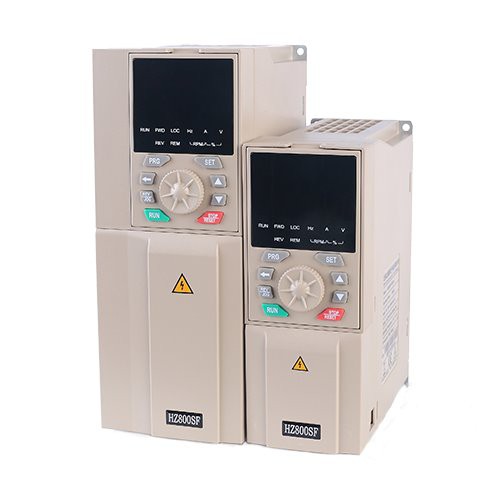

- Energy Savings: By controlling the speed of the motor, a VFD can reduce the amount of energy consumed by the motor. This can lead to significant cost savings over time, especially in applications where the motor operates for long periods of time.
- Improved Process Control: A VFD allows you to adjust the speed and torque of the motor to match the specific requirements of your application. This can improve the accuracy and consistency of your processes, leading to better product quality and higher productivity.
- Extended Equipment Lifespan: By reducing the stress on the motor and other equipment, a VFD can extend the lifespan of your equipment. This can reduce the need for frequent maintenance and replacement, saving you money in the long run.
- Soft Start and Stop: A VFD provides a soft start and stop function, which means that the motor gradually ramps up or down to its desired speed. This can reduce the mechanical stress on the motor and other equipment, as well as prevent voltage spikes and other electrical problems.
- Flexibility: A VFD can be easily programmed to meet the specific requirements of your application. This allows you to adjust the speed, acceleration, and deceleration times, as well as other parameters, to optimize the performance of your equipment.
Different Types of VFDs
There are several different types of VFDs available on the market, each with its own unique features and applications. Here are some of the most common types:
- Single Phase VFD Drive: These VFDs are designed to operate on a single-phase AC power supply. They are typically used in small to medium-sized applications, such as residential and commercial HVAC systems, pumps, and fans.
- Three Phase VFD: These VFDs are designed to operate on a three-phase AC power supply. They are typically used in larger industrial applications, such as manufacturing plants, mining operations, and water treatment facilities.
- 18.5KW VFD: As the name suggests, these VFDs have a power rating of 18.5KW. They are suitable for applications that require a higher power output, such as large pumps, fans, and compressors.
Conclusion
In conclusion, a 7.5KW VFD is a powerful and versatile device that can provide significant benefits in a wide range of applications. By controlling the speed and torque of an AC motor, a VFD can improve energy efficiency, process control, and equipment lifespan.
If you're in the market for a 7.5KW VFD or any other type of VFD, I'd be happy to help. As a supplier, I have a wide range of VFDs available to meet your specific needs. Just reach out to me, and we can discuss your requirements and find the right solution for you.
Thanks for reading, and I hope this blog post has been helpful in understanding how a 7.5KW VFD works.
References
- "Variable Frequency Drives: Principles and Applications" by Bimal K. Bose
- "Electric Motor Handbook" by Teruo Nagaoka
- "Power Electronics: Converters, Applications, and Design" by Mohan Ned, Undeland Tore M., and Robbins William P.