

Hey there! As a VFD (Variable Frequency Drive) supplier, I often get asked about how to adjust the speed accuracy of a VFD. It's a crucial aspect, especially for those who rely on precise motor control in various industrial and commercial applications. In this blog, I'll share some practical tips and insights based on my experience in the field.
Understanding the Basics of VFD Speed Control
Before we dive into the adjustment methods, let's quickly go over how a VFD works. A VFD is essentially a device that controls the speed of an AC motor by varying the frequency and voltage supplied to it. By adjusting these parameters, we can make the motor run at different speeds according to our needs.
The speed of an AC motor is directly proportional to the frequency of the power supply. So, if we increase the frequency, the motor speed goes up, and if we decrease it, the speed goes down. However, achieving high - speed accuracy isn't as simple as just changing the frequency. There are several factors that can affect the actual speed of the motor, such as load variations, motor characteristics, and the quality of the VFD itself.
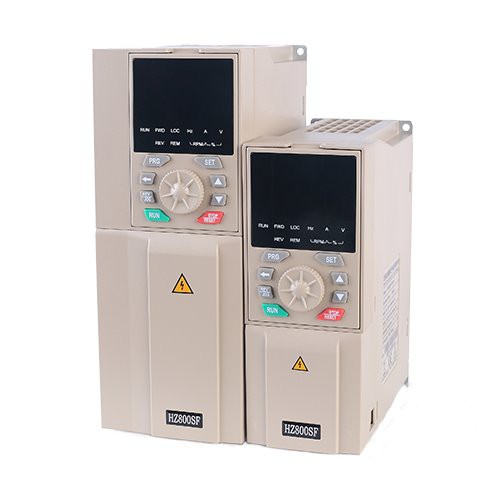

Factors Affecting Speed Accuracy
- Load Variations: When the load on the motor changes, the motor speed can fluctuate. For example, if a conveyor belt suddenly has more weight on it, the motor has to work harder, and its speed may drop slightly. A good VFD should be able to compensate for these load changes to maintain a consistent speed.
- Motor Characteristics: Different motors have different torque - speed curves. Some motors may be more sensitive to frequency changes than others. The type of motor, its rated power, and its efficiency can all impact how accurately it can follow the speed set by the VFD.
- VFD Quality: The quality of the VFD matters a lot. A high - quality VFD will have better control algorithms and more precise components, which can lead to better speed accuracy. For instance, Inverter Drive is known for its advanced technology and reliable performance, which can significantly improve speed control.
Methods to Adjust Speed Accuracy
- PID Control: PID (Proportional - Integral - Derivative) control is a widely used method for adjusting the speed accuracy of a VFD. It works by continuously comparing the actual speed of the motor with the set speed. If there is a difference (error), the PID controller calculates an appropriate adjustment to the frequency and voltage output of the VFD to minimize the error.
- Proportional Control: This part of the PID controller adjusts the output in proportion to the error. If the error is large, the adjustment will be large; if the error is small, the adjustment will be small.
- Integral Control: The integral control component accumulates the error over time. This helps to eliminate any steady - state errors that may occur due to factors like friction or load variations.
- Derivative Control: The derivative control measures the rate of change of the error. It can predict future errors and make adjustments in advance to prevent overshooting or undershooting of the set speed.
- Encoder Feedback: Using an encoder is another effective way to improve speed accuracy. An encoder is a device that measures the actual speed and position of the motor shaft. By feeding this information back to the VFD, the drive can make real - time adjustments to ensure that the motor runs at the exact speed set by the user. For example, in applications where precise speed control is critical, such as in CNC machines, an encoder is often used in combination with a VFD Control Drive to achieve high - speed accuracy.
- Calibration: Regular calibration of the VFD is essential for maintaining speed accuracy. This involves checking and adjusting the VFD's internal parameters to ensure that it is outputting the correct frequency and voltage. Calibration should be done according to the manufacturer's instructions, and it may require specialized equipment.
Step - by - Step Guide to Adjusting Speed Accuracy
- Initial Setup:
- First, make sure that the VFD is properly installed and wired according to the motor's specifications. Check the power supply, input/output connections, and any external control devices.
- Set the basic parameters of the VFD, such as the motor's rated power, voltage, current, and frequency. These parameters are crucial for the VFD to operate the motor correctly.
- PID Tuning:
- If you are using PID control, start by setting the initial values for the proportional, integral, and derivative gains. These values can usually be adjusted through the VFD's control panel or programming software.
- Monitor the motor speed and the error between the set speed and the actual speed. Gradually adjust the PID gains to minimize the error. This may take some trial and error, but with patience, you can find the optimal settings for your application.
- Encoder Installation and Configuration:
- If you are using an encoder, install it on the motor shaft according to the manufacturer's instructions. Make sure it is properly aligned and secured.
- Configure the VFD to use the encoder feedback. This usually involves setting parameters such as the encoder type, resolution, and the feedback mode.
- Testing and Fine - Tuning:
- Once you have made the initial adjustments, test the motor under different load conditions. Observe the speed accuracy and make any necessary fine - tuning adjustments to the VFD parameters.
Common Mistakes to Avoid
- Over - Tuning: When adjusting the PID gains, it's easy to over - tune the system. This can lead to instability, oscillations, and even damage to the motor or the VFD. Always make small adjustments and give the system time to stabilize before making further changes.
- Ignoring Encoder Calibration: If you are using an encoder, make sure it is calibrated regularly. An uncalibrated encoder can provide inaccurate feedback, which will affect the speed accuracy of the VFD.
- Not Considering the Application Requirements: Different applications have different speed accuracy requirements. For example, a simple fan application may not require the same level of accuracy as a precision machining application. Make sure you understand the requirements of your application and adjust the VFD accordingly.
Conclusion
Adjusting the speed accuracy of a VFD is a multi - step process that requires a good understanding of the VFD, the motor, and the application. By considering the factors that affect speed accuracy, using appropriate adjustment methods such as PID control and encoder feedback, and avoiding common mistakes, you can achieve high - speed accuracy in your motor control system.
If you're in the market for a reliable VFD, we offer a wide range of products, including the 2.2KW VFD, which is suitable for many small - to - medium - sized applications. If you have any questions or need help with adjusting the speed accuracy of your VFD, don't hesitate to reach out. We're here to assist you with your VFD needs and can provide more in - depth advice based on your specific situation. Let's start a conversation and see how we can improve your motor control system together.
References
- Motion Control Handbook.
- Variable Frequency Drives: Principles and Applications.