

Why Choose Us
Rich Experience
Zhejiang Hertz Electric Co., Ltd., founded in 2014, is high-tech enterprise specializing in the development, manufacture, sales, and after-sales service, serving medium and high-end equipment manufacturers and industrial automation system integrators.
Reliable Product Quality
Based on power electronics technology, motor drive and control technology, and relying on advanced production equipment and rigorous testing process, we provide customers with low-voltage and medium-voltage frequency converters, soft starters and servo control systems and related industry solutions.
Wide Product Range
Its products mainly serve the three fields of equipment manufacturing, energy conservation, environmental protection and new energy, and are widely used in many industries such as chemical industry, lifting industry, textile industry, metallurgy industry, machine tool industry, rubber industry, wire and cable industry etc.
Excellent Customer Service
The 400 hotline is open 24 hours a day. Fax, email, QQ, and telephone are all-round and multi-channel to accept customer problems. Technical personnel are 24 hours a day to answer customer problems. Respond to customer needs within 30 minutes, and arrive at the customer site within 24 hours for major problems.
A inverter drive is a type of motor controller that drives an electric motor by varying the frequency and voltage of its power supply. The inverter drive also has the capacity to control ramp-up and ramp-down of the motor during start or stop, respectively. Even though the inverter drives the frequency and voltage of power supplied to the motor, it is often refered to this as speed control. The result is an adjustment of motor speed.

The washing machine and ironing equipment of larger hotels used to adopt mechanical speed regulation or variable pole speed regulation, which can only provide one speed or several speeds, which is not ideal for fabrics that need to be repeatedly washed and ironed.
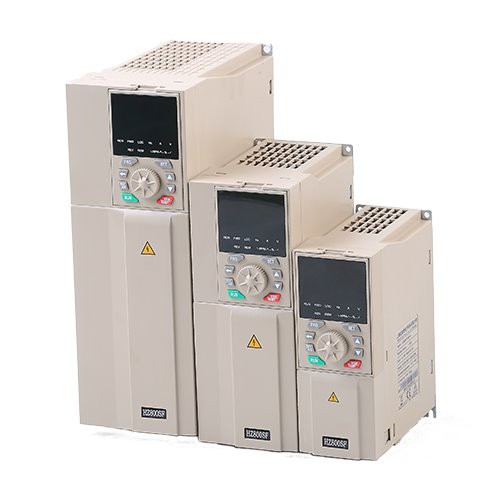
More and more attention is paid to environmental protection, which is related to the environment on which human beings live. So clean energy and green cities have emerged.

Polyester chip is one of the main products of petrochemical industry, because of the high precision of frequency control, easy to control multiple control points, stable and reliable, the use of frequency control can increase the quality of the product, bring great benefits to the enterprise.

Frequency conversion energy saving is mainly used in the need to implement the AC motor speed change, change the driving mechanical characteristics to meet the requirements of the production process, more used in the fan, water pump.

We grant each single segment 220V and three segment 220V input. When used for single phase, every other segment can be used as a spare line.
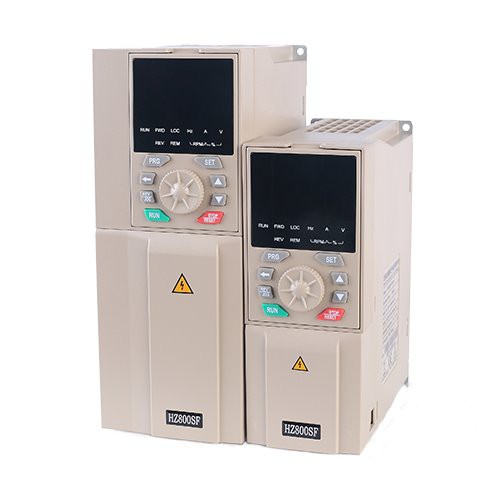
Office buildings, shopping malls and some supermarkets and factories have central air conditioning, which consumes a lot of electricity during the summer peak.
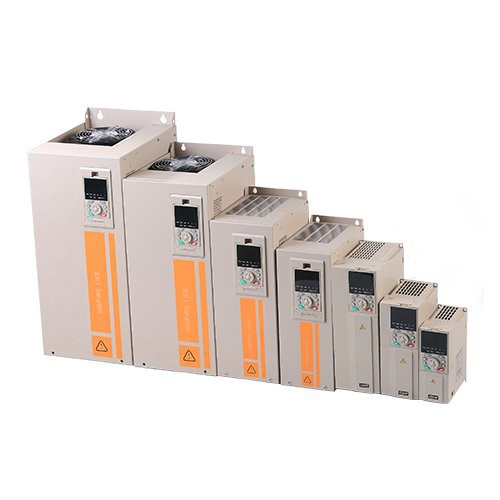
In the metallurgical industry, AC-AC frequency converter used to be used in large rolling mills in the past. In recent years, AC-DC-AC frequency converter has been adopted.

Crane, dump car and other load torque is large and stable, positive and negative frequent and reliable. Inverter control crane, dump car can meet these requirements.

The disc feeder of the sulfuric acid production line of the dye plant of the company is originally a slip speed regulation, low frequency torque is small, more failures, often stuck.
Advantages of Inverter Drive
Controlled Starting Current
When an AC motor is started "across the line," it can take up to as much as seven-to-eight times the motor full-load current to start the motor and load. This current flexes the motor windings and generates heat, which will, over time, reduce the longevity of the motor. An inverter drive starts a motor at zero frequency and voltage. As the frequency and voltage "build", it "magnetizes" the motor windings, which typically takes 50-70% of the motor full-load current.
Reduced Power Line Disturbances
Starting an AC motor across the line, and the subsequent demand for 300-600 % the motor full-load current, places an enormous drain on the power distribution system connected to the motor. When the supply voltage sags, depending on the size of the motor and the capacity of the distribution system, the voltage sags can cause sensitive equipment connected on the same distribution system to trip offline due to the low voltage.
Lower Power Demand on Start
If power is proportional to current-times-voltage, then power needed to start an AC motor across the line is significantly higher than with a inverter drive. This will be true only at the start up. The primary issue is that some electrical distribution systems might be at their limit during specific times of day, usually considered "Peak Hours." When industrial customers start their motors during these peak hours of electrical consumption, it is not uncommon for the customer to be stung with charges for surges in power during peak periods.
Controlled Acceleration
A inverter drive starts at zero speed and accelerates smoothly on a customer-adjustable ramp. Conversely, an AC motor started "across the line" triggers higher mechanical shock loads both for the motor and mechanically connected load. This shock will, over time, increase the wear and tear not only on the connected load but the AC motor as well. Applications that include easy-to-tip product, such as bottling lines, greatly benefit from a slow ramp up in power which allows the conveyor belt to smoothly speed up rather than an abrupt jerk to full power.
Adjustable Operating Speed
Unlike the traditional stop-and-go motor, the use of a inverter drive enables optimizes a process, by making changes in a process. This allows starting at a reduced speed, and allows remote adjustment of speed by programmable controller or process controller. Control, in an industrial sense, is always a big bonus for production!
Adjustable Torque Limit
Use of a inverter drive can protect machinery from damage and protect the process or product (because the amount of torque being applied can be controlled accurately). An example would be a conveyor jam. If just an AC motor connected, the motor will continue to try to rotate until the motor's overload device opens (due to the excessive current being drawn as a result of the heavy load). A inverter drive, in turn, can be set to limit the amount of torque (AMP/CURRENT), so the AC motor never exceeds this limit.
Energy Savings
Variable torque loads, such as, Centrifugal fans and pump loads operated with a inverter drive will reduces energy consumption. Centrifugal fans and pumps follow a variable torque load, which has horsepower proportional to the cube of speed and torque varying proportional to the square of speed, also known as the "Affinity Laws". Example; if the speed of a fan is cut in half, the horsepower needed to run the fan at load is cut by a factor of eight (1/2)3 = 1/8.
Reverse Operation
Using a inverter drive eliminates the need for a reversing starters, a inverter drive allows electronic ability reversing either by integrated reversing or an external switch added to the inverter drive terminal control board. The elimination of a reversing starter eliminates its maintenance cost and reduces panel space.
Types of Inverter Drive
Voltage-Source Inverter Drives
Voltage-source inverter (VSI) drives are the most common variable frequency drives in the market. They consist of a rectifier that converts AC to DC, a DC link, and an inverter that converts DC back to AC. The inverter section uses pulse width modulation (PWM) to control the frequency and voltage applied to the motor, resulting in precise control of the motor's speed and torque.
● Suitable for a wide range of motor applications
● Smooth control of motor speed and torque
● Efficient use of energy
Current-Source Inverter Drives
Current-source inverter (CSI) drives are the second of the three basic types of variable frequency drives. These drives employ a rectifier, a DC link, and an inverter. They also use field-effect transistors (FETs) that have a higher switching speed than the insulated-gate bipolar transistors (IGBTs) in VSI drives. This feature enables CSI drives to accommodate high-speed applications and yield faster dynamic responses.
● Reduced harmonic distortion
● Rapid acceleration and deceleration
● Suitable for regenerative braking applications
● Enhanced dynamic control
Direct Torque Control Drives
Direct torque control (DTC) drives offer the highest level of control among the variable frequency drives. DTC technology monitors and controls motor torque and flux directly instead of operating through an intermediate variable frequency control stage. The result is increased accuracy, minimized torque ripple, and faster dynamic responses.
● Fast torque and flux control
● Superior motor control for complex applications
● Reduced harmonic distortion
● Improved energy efficiency
Crane and hoist machines
Inverter drives are utilized in asynchronous motors in hoist machines and crane applications. This helps in achieving nearly 90% efficiency when it comes to lifting heavy weights.
Treadmill
Inverter drives are used in treadmills along with an AC motor to facilitate the easy flow of power during frequent torque changes. Hence, they have replaced traditional DC motors and guarantee better durability.
Air-conditioners
This is arguably the most popular application of a variable-speed drive. inverter drives in ACs help regulate the temperature. Additionally, they also play a massive role in being environment-friendly by reducing carbon emissions and saving energy.
Thermal power plant
Thermal power plants use asynchronous motors constantly. Medium voltage inverter drives or inverter drives are used to restructure the water supply pumps for better precision and energy savings. inverter drives alter the speed of the motor as per the water required for the operation. They do this by controlling the amount of energy used.
Oil industry
The oil industry relies largely on speed motor drives to pump oil. The application of inverter drives has helped this industry in tackling the power consumption issues that vary with load size. They also facilitate increased frequency range, accuracy and dynamic response.
Irrigation
The use of inverter drives in irrigation pumping help cut costs. inverter drives are usually placed in a motor in connection with the curve of the irrigation pump.
Components of Inverter Drive


Inverter Drive Unit
This is the main component of the system, responsible for controlling the motor's speed and torque by adjusting the frequency and voltage of the output power. It typically consists of power electronics such as insulated gate bipolar transistors (IGBTs) and a microcontroller for signal processing.
Power Input/Output Section
The inverter drive is connected to the power supply (AC mains) and the motor. It includes components like fuses, circuit breakers, and contactors to manage the power supply and protect the equipment from overloads and faults.
DC Bus Capacitors
These capacitors store energy and help to smooth out voltage fluctuations in the DC bus of the inverter drive. They provide a stable DC voltage source for the inverter section.
Rectifier
The rectifier converts the incoming AC power from the mains into DC power. It typically uses diodes to perform this conversion.
DC Bus
The DC bus is the intermediate link between the rectifier and the inverter. It stores DC voltage that is used by the inverter to generate variable-frequency and variable-voltage output for the motor.
Inverter Section
This section converts the DC voltage from the DC bus back into AC voltage but with variable frequency and voltage. This variable output is what allows the inverter drive to control the motor's speed and torque.
Microcontroller and Control Logic
A inverter drive has a microcontroller that processes input signals, such as desired speed and control commands, and generates the necessary control signals for the power electronics (IGBTs) in the inverter section. It implements algorithms to maintain the desired motor speed and manage other control functions.
User Interface
inverter drives often have a user interface, which could be a digital display, keypad, buttons, or a touchscreen. This interface allows users to configure parameters, set desired speeds, and monitor system status.
Communication Interfaces
Some inverter drives come with built-in communication interfaces such as Modbus, Profibus, Ethernet, etc. These interfaces enable the inverter drive to be integrated into larger control systems, allowing remote monitoring, data collection, and control.
Braking Chopper (Optional)
In some applications, a braking chopper (or dynamic braking resistor) is used to dissipate excess energy during deceleration or braking. It converts the excess energy into heat and helps to prevent overvoltage conditions.
Filtering Components
To reduce electromagnetic interference (EMI) and radio frequency interference (RFI), additional filtering components like chokes and filters might be added to the inverter drive circuit.
Temperature and Current Sensors
Sensors are often integrated to monitor the temperature and current levels of the motor and inverter drive components. This information is used for protection and maintenance purposes.
How An Inverter Drive Works And Controls The Speed Of An Ac Induction Motor
An Inverter Drive (VFD) works by taking AC mains (single or three phase) and first rectifying it into DC, the DC is usually smoothed with Capacitors and often a DC choke before it is connected to a network of Power Transistors to turn it into three phases for the motor.
The network of Power Transistors of a small Inverter drive is actually one 'Intelligent Power Module' (known as an IPM) and includes its own protection and basic control circuits. The IPM inverts the DC into AC - hence the term 'Inverter'.
The control method is known as 'PWM' for 'Pulse Width Modulation'. This means the DC is switched on and off very quickly (chopped) by the Transistor switches. A sine wave of motor current is made by a series of DC pulses where the first has a very short 'on' period, followed by a longer on period, then longer until the widest pulse appears in the centre of the positive sine wave, then smaller until the DC is inverted and the same pattern of pulses generate the negative part of the sine wave.
Since the Transistors can be controlled to any time base the other phases are controlled by more Transistors, displaced by the time necessary to equally space the phases at 120 degrees. The frequency of the pulses being turned on is known as the 'Switching Frequency'.
Switching frequency is usually around 3kHz to 4kHz, so the pulses it makes for 50Hz will be 3000/50 or 60 pulses per full sine wave or each phase. When the fixed Voltage pulses are presented to the inductance of the motor, the result is control of both Voltage (by width of the fixed Voltage pulses) and Frequency (by spreading the progression and regression of the pulse widths over more of the switching frequency base pulses).
From the above you can see the IPM in the Inverter drive will control Voltage and Frequency over virtually any range the parameter settings in the VFD tells it to. This means when setting up an Inverter drive we can choose to run a small 'Delta' connected 230V motor from a 230V single phase supply with a base frequency set at 50Hz, a 400V Star Connected small motor from a 400V three phase supply or any other arrangement of Voltage and frequency we choose that will correctly flux the motor.
The motor will be correctly fluxed when its Voltage curve rises from around zero x 0Hz to its base frequency x normal Voltage. Base frequency and Voltage being what is shown on the motor nameplate.
Understand your application
Start by thoroughly understanding the requirements of your application. Consider factors such as motor power, voltage, current, speed control range, torque control, and any specific environmental conditions.
Determine the motor type
Identify the type of motor you will be using, such as induction motors or permanent magnet synchronous motors (PMSMs). Different types of frequency inverter drives are designed to work with specific motor types, so it's important to choose one that is compatible.
Calculate the load characteristics
Analyze the load characteristics of your application, including starting torque, peak torque, speed variations, and any cyclic load variations. This information will help you select a frequency inverter drive with the appropriate torque and speed control capabilities.
Consider the voltage and current ratings
Ensure that the frequency inverter drive's voltage and current ratings match or exceed those of the motor. Undersized inverter drives can lead to motor overheating and premature failure, while oversized inverter drives may result in unnecessary costs.
Evaluate the speed control range
Determine the required speed control range for your application. Frequency inverter drives offer different speed control options, such as scalar control or vector control. Vector control provides better performance and precise control in applications requiring a wide speed range.
Assess the protective features
Look for frequency inverter drives with comprehensive protective features, such as overcurrent protection, overvoltage protection, undervoltage protection, short-circuit protection, and motor stall prevention. These features safeguard both the inverter drive and the motor from potential damage.
Consider the environmental conditions
Evaluate the environmental conditions in which the frequency inverter drive will operate. Factors such as temperature, humidity, dust, and vibration can impact the performance and reliability of the inverter drive. Choose a model that is suitable for the specific environmental conditions of your application.
Regular inspection
Regular inspection of inverter drives is essential to identify and address any issues before they become major problems. Inspect the inverter drives for signs of overheating, loose connections, and damaged or worn components.
Preventive maintenance
Develop and follow a preventive maintenance plan for inverter drives, which includes regular cleaning, lubrication, and replacement of worn or damaged components. This helps to extend the life of the inverter drive and prevent failures.
Proper installation
Proper installation of inverter drives is essential for their reliable operation. Ensure that inverter drives are installed according to the manufacturer's specifications, and that they are installed in a clean and dry environment.
Use the right inverter drive for the job
Ensure that the inverter drive is properly sized and rated for the motor and application it is controlling. Using the wrong inverter drive can cause it to fail prematurely or operate inefficiently.
Proper grounding
Proper grounding is important to prevent electrical interference and ensure safe operation of inverter drives. Follow the manufacturer's instructions for grounding the inverter drive.
Keep inverter drives clean and cool
Dirt, dust, and other contaminants can cause inverter drives to overheat and fail. Keep the inverter drives clean and ensure that they are properly ventilated to dissipate heat.
Regular calibration
Regular calibration of inverter drives is essential to ensure their continued accuracy and reliability. Follow the manufacturer's instructions for calibration.
Our Factory
Zhejiang Hertz Electric Co., Ltd., founded in 2014, is high-tech enterprise specializing in the development, manufacture, sales, and after-sales service, serving medium and high-end equipment manufacturers and industrial automation system integrators. Relying on high-quality production equipment and rigorous testing process, we will provide customers with products such as low-voltage and medium voltage inverters, soft starters and servo control systems and solutions in related industries.

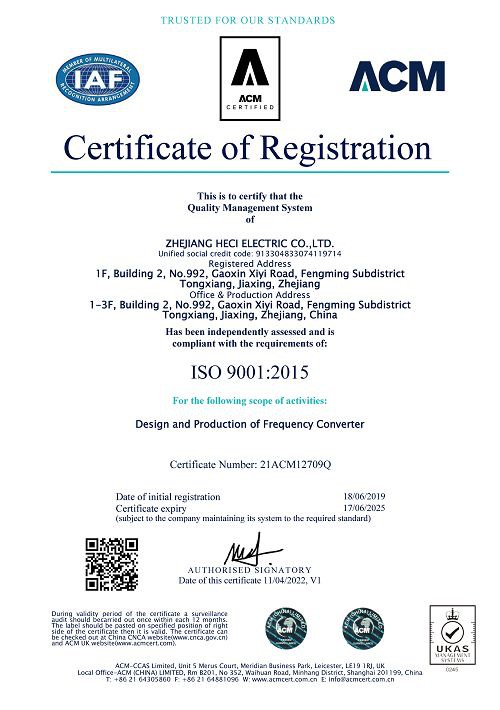
Our Certifications



Ultimate FAQ Guide to Inverter Drive
Hot Tags: inverter drive, China inverter drive manufacturers, suppliers, factory, MPPT, vfd in monitors, LCD Panel, VFD For 120v Single Phase Motor, High Level Float Alarm, Braking Resistance for VFD