

Hey there! As a supplier of Feedback Units, I've had my fair share of experiences in the industry. Feedback units are crucial components in many systems, and they come in various types. In this blog, I'm gonna break down the different types of Feedback Units and give you a better understanding of what they do.
Encoders
Encoders are one of the most common types of Feedback Units. They're used to measure the position, speed, and direction of a rotating shaft. There are two main types of encoders: incremental and absolute.
Incremental Encoders
Incremental encoders generate a series of pulses as the shaft rotates. The number of pulses corresponds to the amount of rotation, and the direction of rotation can be determined by the phase relationship between two output channels. These encoders are relatively simple and cost - effective, making them a popular choice in many applications. For example, they're often used in conveyor systems to monitor the speed and position of the conveyor belt. You can use them to ensure that the belt is moving at the right speed and that items are being transported to the correct location.
Absolute Encoders
Absolute encoders, on the other hand, provide a unique digital code for each position of the shaft. This means that they can immediately tell you the exact position of the shaft without the need for a reference point or counting pulses. They're more expensive than incremental encoders but offer higher accuracy and reliability, especially in applications where precise positioning is critical, like in CNC machines. A CNC machine needs to know the exact position of the cutting tool at all times to produce high - quality parts, and an absolute encoder can deliver that level of precision.

Resolvers
Resolvers are another type of Feedback Unit that can measure the angular position of a rotating shaft. They work based on the principle of electromagnetic induction. A resolver consists of a rotor and a stator, and as the rotor rotates, it induces voltages in the stator windings. By measuring these voltages, you can determine the position of the shaft.
Resolvers are known for their robustness and reliability. They can operate in harsh environments, such as high temperatures, high humidity, and high levels of vibration. That's why they're commonly used in aerospace and military applications. For instance, in an aircraft's flight control system, a resolver can accurately measure the position of control surfaces like ailerons and elevators, even under extreme conditions.
Tachometers
Tachometers are used to measure the rotational speed of a shaft. There are different types of tachometers, including mechanical, electrical, and optical tachometers.
Mechanical Tachometers
Mechanical tachometers work based on the principle of centrifugal force. They have a rotating mass that is connected to the shaft being measured. As the shaft rotates, the centrifugal force causes the mass to move, and this movement is translated into a speed reading on a dial. These tachometers are simple and inexpensive but are not as accurate as some of the other types.
Electrical Tachometers
Electrical tachometers, such as DC tachometers and AC tachometers, generate an electrical signal that is proportional to the speed of the shaft. DC tachometers produce a DC voltage that is directly related to the speed, while AC tachometers generate an AC voltage. Electrical tachometers are more accurate than mechanical tachometers and are widely used in industrial applications, like in motor control systems. You can use an electrical tachometer to monitor the speed of an electric motor and adjust its operation accordingly.
Optical Tachometers
Optical tachometers use light to measure the speed of a shaft. They typically have a sensor that detects the passage of markings on the shaft. As the shaft rotates, the markings interrupt the light beam, and the sensor counts the number of interruptions per unit of time to determine the speed. Optical tachometers are non - contact, which means they don't have any physical contact with the shaft. This makes them suitable for high - speed applications and applications where the shaft is difficult to access.
Potentiometers
Potentiometers are variable resistors that can be used as Feedback Units to measure linear or angular position. They work by changing the resistance as the position of a wiper on the resistor element changes. When a voltage is applied across the potentiometer, the output voltage at the wiper terminal is proportional to the position of the wiper.
Potentiometers are relatively inexpensive and easy to use. They're often used in applications where a simple and cost - effective position measurement is required, like in some home appliances. For example, in a blender, a potentiometer can be used to control the speed of the blender by adjusting the position of a control knob.
Smart Feedback Units
With the advancement of technology, smart Feedback Units have emerged. These units integrate sensors, microprocessors, and communication interfaces. They can not only measure position, speed, or other parameters but also process the data and communicate it to other devices in a system.
Smart Feedback Units can provide additional features such as self - diagnosis, calibration, and data logging. They can also communicate with other components in a system using various protocols, like Ethernet or Modbus. This makes them very versatile and suitable for modern, interconnected systems. For example, in an automated factory, smart Feedback Units can be used to monitor the performance of multiple machines and send real - time data to a central control system for analysis and optimization.
Related Components
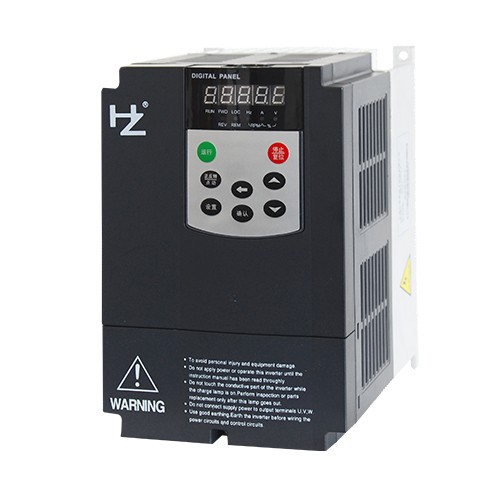
In addition to the main types of Feedback Units, there are also some related components that are often used in conjunction with them. For example, the LED Digital Panel can be used to display the data measured by the Feedback Unit. It provides a clear and easy - to - read display of information such as position, speed, or voltage.
The Braking Resistance for VFD is another important component. In variable frequency drive (VFD) systems, when the motor needs to stop quickly, the excess energy generated needs to be dissipated. The braking resistance is used to absorb this energy and prevent damage to the VFD.
The LCD Panel is also a useful addition. It can display more detailed information compared to an LED digital panel. You can use it to show graphs, trends, and other complex data measured by the Feedback Unit.
Why Choose Our Feedback Units
As a supplier, I can tell you that our Feedback Units are top - notch. We offer a wide range of types to meet different customer needs. Whether you need a high - precision absolute encoder for a CNC machine or a robust resolver for an aerospace application, we've got you covered.
Our products are known for their quality, reliability, and performance. We use the latest technology and high - quality materials in the manufacturing process. And we have a team of experts who can provide technical support and advice to ensure that you get the most out of our Feedback Units.
If you're in the market for Feedback Units or any of the related components, don't hesitate to reach out. We're more than happy to have a chat about your specific requirements and find the best solutions for you. Whether you're a small business looking for a cost - effective solution or a large corporation in need of high - end, precision components, we can work with you.
So, if you're interested in learning more or making a purchase, just drop us a line. Let's start a conversation and see how we can help you take your systems to the next level.
References
- "Motion Control Handbook" by Dan Hebert
- "Industrial Electronics Handbook" edited by Timothy L. Schuler
- Various industry - specific research papers and technical documents