

Hey there! As a supplier of 3.7KW VFDs, I get a lot of questions about how these things work, especially when it comes to the braking function. So, I thought I'd break it down for you in this blog post.
First off, let's talk about what a VFD is. A Variable Frequency Drive, or VFD for short, is a device that controls the speed of an AC motor by adjusting the frequency and voltage of the power supplied to it. This is super useful because it allows you to control the motor's speed according to your needs, which can save energy and improve the efficiency of your equipment.
Now, the braking function in a 3.7KW VFD is an important feature that helps in stopping the motor quickly and safely. There are a few different types of braking methods that a 3.7KW VFD can use, and I'll go through each of them.
Dynamic Braking
One of the most common braking methods is dynamic braking. When the VFD needs to slow down or stop the motor, it takes the energy that the motor generates during deceleration and converts it into heat. This is done by using a braking resistor. The excess energy from the motor is sent to the braking resistor, which dissipates it as heat.
Think of it like this: when you're driving a car and you hit the brakes, the kinetic energy of the moving car is converted into heat by the brake pads. In the same way, the dynamic braking in a VFD takes the energy from the spinning motor and turns it into heat.
The advantage of dynamic braking is that it's relatively simple and cost - effective. It's great for applications where you need to stop the motor quickly but don't have extremely high braking requirements. For example, in a conveyor belt system, dynamic braking can be used to stop the belt smoothly when needed.
Regenerative Braking
Another type of braking is regenerative braking. Instead of converting the excess energy into heat like in dynamic braking, regenerative braking sends the energy back to the power supply. This is a more efficient method because it doesn't waste the energy as heat.
In a 3.7KW VFD with regenerative braking, when the motor decelerates, the VFD acts as a generator. It takes the mechanical energy from the motor and converts it back into electrical energy. This electrical energy is then fed back into the power grid or used to power other equipment in the system.
Regenerative braking is ideal for applications where there's a lot of deceleration and acceleration cycles, like in an elevator or a crane. By sending the energy back to the power supply, you can save a significant amount of energy in the long run.
DC Injection Braking
DC injection braking is a bit different. In this method, a DC voltage is applied to the motor windings. When DC is applied to the AC motor, it creates a stationary magnetic field. This magnetic field opposes the rotation of the motor, causing it to slow down and stop.
DC injection braking is useful for applications where you need a quick stop and don't want to rely on the power supply or braking resistors. For example, in a small machine tool, DC injection braking can be used to stop the spindle quickly when the operation is finished.
Now, why is the braking function so important in a 3.7KW VFD? Well, for starters, it improves safety. In industrial settings, quickly and safely stopping a motor can prevent accidents. If a motor is running and needs to be stopped immediately due to a fault or an emergency, the braking function ensures that it can be stopped in a controlled manner.
Secondly, it helps in improving the lifespan of the motor and other equipment. Sudden stops or uncontrolled deceleration can put a lot of stress on the motor and its components. By using the proper braking function in the VFD, you can reduce this stress and make the equipment last longer.
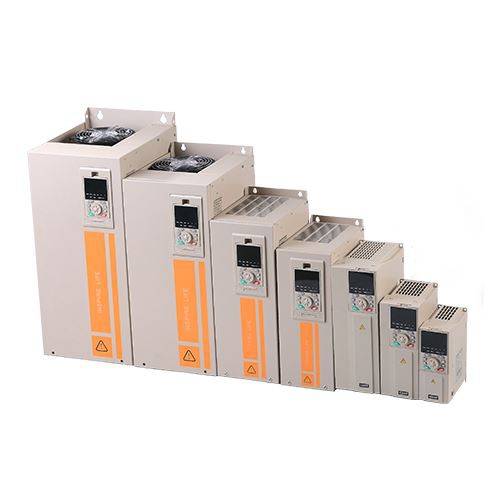
As a 3.7KW VFD supplier, I've seen firsthand how these different braking methods can make a big difference in various applications. Whether you're using a 110v VFD Drive for a small household appliance or a Frequency Controller for Ac Motor in an industrial setting, the right braking function is crucial.
If you're working in an outdoor environment, you might also be interested in our Outdoor VFD. These VFDs are designed to withstand the harsh conditions outside and still provide reliable performance, including effective braking.
So, if you're in the market for a 3.7KW VFD and you're not sure which braking function is right for your application, don't hesitate to reach out. We have a team of experts who can help you understand your needs and choose the best VFD for you. Whether you need a simple dynamic braking system or a more advanced regenerative braking solution, we've got you covered.

In conclusion, the braking function in a 3.7KW VFD is a key feature that offers many benefits. It improves safety, energy efficiency, and the lifespan of your equipment. So, if you're looking to upgrade your motor control system or start a new project, consider the importance of the braking function in your VFD. And remember, we're here to help you every step of the way. Contact us today to start the conversation about your VFD needs and let's find the perfect solution together.
References
- “Variable Frequency Drives: Selection, Application, and Maintenance” by Thomas G. Hagan
- “Electric Motor Handbook” by Arnold E. Fitzgerald, Charles Kingsley Jr., and Stephen D. Umans