

Hey there! As a supplier of 45KW VFDs (Variable Frequency Drives), I often get asked about the maximum number of motors a 45KW VFD can control. It's a great question, and in this blog, I'll break it down for you.
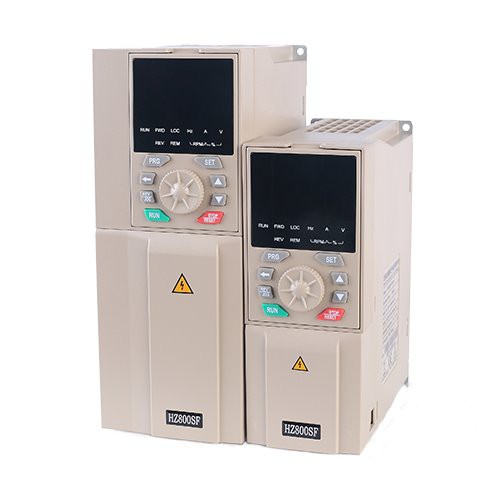
First off, let's understand what a VFD does. A VFD is a device that controls the speed and torque of an AC motor by varying the frequency and voltage supplied to the motor. It's like a smart controller that can adjust the motor's performance based on the load requirements. You can learn more about frequency controllers for AC motors here: Frequency Controller for Ac Motor.
Now, back to the main question: How many motors can a 45KW VFD control? Well, it depends on several factors. The most important ones are the power rating of the motors, the type of load they're driving, and the duty cycle.
Power Rating of the Motors
The power rating of the motors is the first thing you need to consider. Each motor has a specific power requirement, usually measured in kilowatts (KW). If you try to connect motors with a total power rating that exceeds the capacity of the 45KW VFD, you'll likely run into problems.
For example, let's say you have some 2.2KW motors. To find out how many of these motors you can connect to a 45KW VFD, you simply divide the VFD's power rating by the power rating of each motor. So, 45KW divided by 2.2KW gives you approximately 20.45. In theory, you could connect 20 of these 2.2KW motors to the 45KW VFD. Check out our 2.2KW VFD for more details.
However, it's not that simple in real life. You need to leave some margin for safety. Running the VFD at its maximum capacity all the time can lead to overheating and premature failure. A good rule of thumb is to operate the VFD at around 80% of its rated capacity. So, in the case of the 2.2KW motors, you might want to limit the number to around 16 motors to ensure reliable operation.
On the other hand, if you have 11KW motors, dividing 45KW by 11KW gives you about 4.09. Again, considering the safety margin, you might be able to connect 3 of these 11KW motors to the 45KW VFD. You can find more information about our 11KW VFD.
Type of Load
The type of load the motors are driving also plays a crucial role. Motors can be classified into different load types, such as constant torque, variable torque, and constant power loads.

- Constant Torque Loads: These loads require a constant amount of torque regardless of the motor speed. Examples include conveyors, positive displacement pumps, and crushers. When dealing with constant torque loads, you need to make sure that the VFD can supply enough torque to start and run the motors smoothly. Since constant torque loads typically draw more current at low speeds, you may need to be more conservative with the number of motors you connect.
- Variable Torque Loads: These loads, like centrifugal pumps and fans, require less torque at lower speeds and more torque as the speed increases. VFDs are well-suited for variable torque loads because they can reduce the power consumption by adjusting the motor speed according to the load requirements. You can usually connect more motors with variable torque loads to a 45KW VFD compared to constant torque loads.
- Constant Power Loads: These loads maintain a constant power output over a range of speeds. Examples include machine tools and some types of industrial mixers. Constant power loads can be more challenging to control, and you need to carefully consider the motor's power requirements and the VFD's capacity.
Duty Cycle
The duty cycle refers to how often and for how long the motors will be running. If the motors are going to be running continuously at full load, you need to be more cautious with the number of motors you connect to the 45KW VFD. On the other hand, if the motors have a intermittent or light-duty cycle, you may be able to connect more motors.
For example, if the motors are only used for short periods throughout the day, the VFD has time to cool down between operations. This allows you to push the limits a bit more compared to a continuous-duty application.
Other Considerations
In addition to the power rating, load type, and duty cycle, there are a few other things to keep in mind when determining the maximum number of motors a 45KW VFD can control.
- Motor Starting Current: When a motor starts, it typically draws a much higher current than its normal running current. This inrush current can cause voltage dips and put additional stress on the VFD. You need to make sure that the VFD can handle the starting current of all the motors you're connecting.
- Harmonics: VFDs can generate harmonics, which are unwanted electrical frequencies that can interfere with other equipment in the electrical system. You may need to install harmonic filters to reduce the harmonic distortion and ensure the proper operation of the motors and other electrical devices.
- Control Strategy: The way you control the motors also matters. You can connect the motors in parallel or use a more complex control scheme, such as a multi-motor control system. Each approach has its own advantages and limitations, and you need to choose the one that best suits your application.
Conclusion
So, to answer the question of what the maximum number of motors a 45KW VFD can control, there's no one-size-fits-all answer. It depends on a variety of factors, including the power rating of the motors, the type of load they're driving, the duty cycle, and other considerations like motor starting current and harmonics.
As a 45KW VFD supplier, I'm here to help you make the right decision for your application. If you're unsure about how many motors you can connect to a 45KW VFD or need more information about our products, don't hesitate to reach out. We can work together to find the best solution for your specific needs. Whether you're looking for a Frequency Controller for Ac Motor, a 2.2KW VFD, or an 11KW VFD, we've got you covered. Let's start a conversation and see how we can help you optimize your motor control system.
References
- “Variable Frequency Drives: Selection, Application, and Maintenance” by Gregory J. McPherson
- “Electric Motor Handbook” by Teruo Matsui