

As a trusted supplier of 11KW Variable Frequency Drives (VFDs), I'm often asked about the slip compensation function of these devices. In this blog post, I'll delve into what slip compensation is, why it's important in a 11KW VFD, and how it benefits various applications.
Understanding Slip in an Induction Motor
Before we discuss slip compensation, it's crucial to understand what slip is in the context of an induction motor. An induction motor operates based on the principle of electromagnetic induction. The rotating magnetic field produced by the stator induces currents in the rotor, which in turn creates a magnetic field that interacts with the stator's field, causing the rotor to turn.
However, the rotor speed never quite matches the speed of the rotating magnetic field in the stator. This difference in speed is known as slip. Slip is expressed as a percentage and is calculated using the following formula:
[ Slip (%)=\frac{N_s - N_r}{N_s}\times100 ]
Where (N_s) is the synchronous speed of the motor (determined by the frequency of the power supply and the number of motor poles) and (N_r) is the actual rotor speed.
Slip is inherent in induction motors and is necessary for the motor to generate torque. But in some applications, excessive slip can lead to problems such as reduced efficiency, lower speed accuracy, and increased heat generation.
What is Slip Compensation?
Slip compensation is a feature in VFDs that adjusts the output frequency of the drive to compensate for the slip in the induction motor. By increasing the output frequency slightly, the VFD can make the motor run closer to its synchronous speed, effectively reducing the slip.
In a 11KW VFD, the slip compensation function continuously monitors the motor's load and adjusts the output frequency accordingly. When the motor is lightly loaded, the slip is relatively small, and the VFD maintains a normal output frequency. As the load on the motor increases, the slip also increases. The slip compensation function detects this change and increases the output frequency to keep the motor speed stable.
Why is Slip Compensation Important in a 11KW VFD?
1. Improved Speed Accuracy
One of the primary benefits of slip compensation is improved speed accuracy. In many industrial applications, precise speed control is essential. For example, in conveyor systems, a consistent speed is required to ensure proper material handling. Without slip compensation, the motor speed would vary depending on the load, leading to inconsistent operation. With slip compensation, the 11KW VFD can maintain a more constant speed, even under varying load conditions.
2. Increased Efficiency
Excessive slip can cause the motor to draw more current than necessary, resulting in increased energy consumption and heat generation. By reducing the slip, the slip compensation function helps the motor operate more efficiently. This not only saves energy but also extends the motor's lifespan by reducing the stress on its components.
3. Better Torque Performance
Slip compensation also improves the motor's torque performance. At low speeds, an induction motor may experience a significant drop in torque due to increased slip. The slip compensation function in the 11KW VFD can adjust the output frequency to maintain a sufficient torque level, allowing the motor to start smoothly and operate effectively at low speeds.
How Slip Compensation Works in a 11KW VFD
The slip compensation function in a 11KW VFD typically works in the following steps:
1. Load Detection
The VFD continuously monitors the motor's load by measuring the current drawn by the motor. As the load increases, the current also increases, indicating an increase in slip.
2. Frequency Adjustment
Based on the load information, the VFD calculates the required frequency adjustment to compensate for the slip. It then increases the output frequency slightly to bring the motor speed closer to the synchronous speed.
3. Closed - Loop Control
Most modern 11KW VFDs use closed - loop control for slip compensation. This means that the VFD continuously compares the actual motor speed with the desired speed and makes further adjustments to the output frequency if necessary. This ensures that the motor maintains a stable speed under all load conditions.
Applications of 11KW VFDs with Slip Compensation
1. Pumping Systems
In pumping systems, slip compensation helps maintain a constant flow rate. As the pressure in the system changes, the load on the pump motor also changes. The slip compensation function in the 11KW VFD ensures that the pump motor runs at a consistent speed, providing a stable flow of water or other fluids.

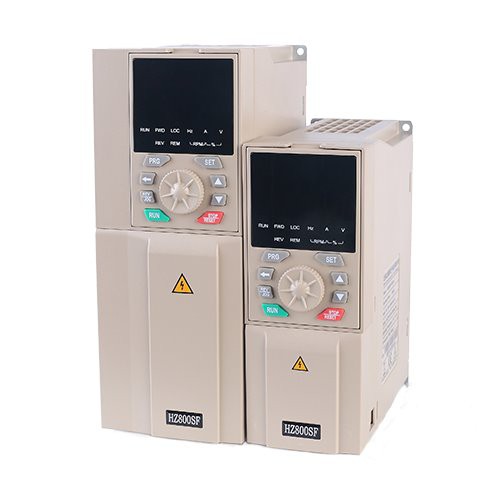
2. Fan Systems
Fans are another common application for 11KW VFDs with slip compensation. In ventilation systems, a consistent airflow is required to maintain proper air quality. Slip compensation allows the fan motor to operate at a constant speed, regardless of changes in the air resistance or other factors that may affect the load.
3. Conveyor Systems
As mentioned earlier, conveyor systems require precise speed control. The slip compensation function in a 11KW VFD ensures that the conveyor belt moves at a constant speed, preventing material jams and ensuring smooth operation.
Other Related Features in 11KW VFDs
In addition to slip compensation, 11KW VFDs often come with other useful features. For example, Single Phase VFD Drive is suitable for applications where only single - phase power is available. It can convert single - phase input power to three - phase output power, providing a cost - effective solution for small - to - medium - sized motors.
Single Phase To Single Phase VFD is another option that can be used to control the speed of single - phase motors. This type of VFD is ideal for applications such as small pumps, fans, and other single - phase motor - driven equipment.
Vector Control VFD offers even more precise control over the motor's torque and speed. It can independently control the magnetic flux and torque of the motor, providing excellent performance in applications that require high - precision speed and torque control.
Conclusion
The slip compensation function in a 11KW VFD is a crucial feature that offers numerous benefits, including improved speed accuracy, increased efficiency, and better torque performance. Whether you're using the VFD in a pumping system, fan system, or conveyor system, slip compensation ensures that the motor operates at its best under all load conditions.
If you're in the market for a 11KW VFD with reliable slip compensation and other advanced features, we're here to help. Our range of VFDs is designed to meet the diverse needs of industrial applications. Contact us today to discuss your requirements and explore how our products can enhance your operations.
References
- Fitzgerald, A. E., Kingsley, C., & Umans, S. D. (2003). Electric Machinery (6th ed.). McGraw - Hill.
- Chapman, S. J. (2012). Electric Machinery Fundamentals (5th ed.). McGraw - Hill.