


Zhejiang Hertz Electric Co., Ltd., founded in 2014, is high-tech enterprise specializing in the development, manufacture, sales, and after-sales service, serving medium and high-end equipment manufacturers and industrial automation system integrators. Relying on high-quality production equipment and rigorous testing process, we will provide customers with products such as low-voltage and medium voltage inverters, soft starters and servo control systems and solutions in related industries.
Why Choose Us
Professional team
Our team of experts has many years of experience in the industry, and we provide our customers with the necessary support and advice.
High-quality products
Our products are manufactured to the highest standards using only the best materials. We ensure that our products are reliable, safe and long-lasting.
24H online service
The 400 hotline is open 24 hours a day. Fax, email, QQ, and telephone are all-round and multi-channel to accept customer problems. Technical personnel are 24 hours a day to answer customer problems.
One-stop solution
Provide technical support in the whole process of inspection, installation, commissioning, acceptance, performance acceptance test, operation, maintenance and other corresponding technical guidance and technical training related to contract products in a timely manner.


What Is Solar Powered Pump Drives?
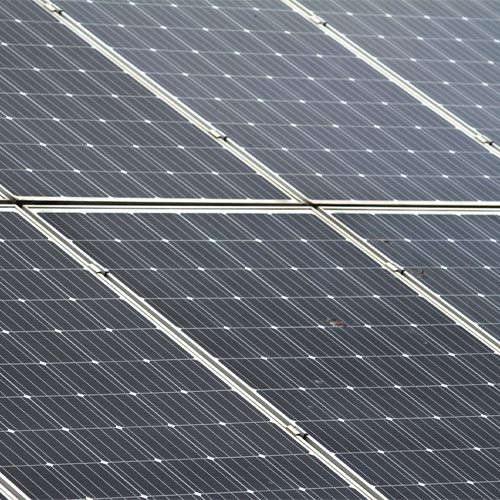
Solar Powered Pump Drives is a type of pump that is driven by the electricity produced from solar panels. It consists of a water storage tank, electrical cables, a breaker/fuse box, a DC water pump, a solar charge controller (MPPT), and a solar panel array.
Solar-powered pumps have a lower environmental impact compared to pumps powered by IC engines or utility electricity. These pumps are best suitable for reservoirs and irrigation systems.
These types of pumps mainly use in areas that have electricity issues. Solar Powered Pump Drivess are best suitable for use in rural areas, farms, and remote locations where conventional grid electricity is either unreliable or unavailable. These pumps may also be used in livestock watering, irrigation systems, and for domestic water supply.
Eco-friendly
Sunshine is renewable energy. Renewable energy comes from sources that nature will replace. Some contend that solar energy is not renewable because of greenhouse gas emitted during the solar panel manufacturing process.
Useful in remote areas
Since the sun provides the energy, an external power source isn't necessary, which means a solar-powered water pump will work in remote places and areas without access to a power grid.
Easy to maintain
Solar-powered water pumps have very few mechanical parts, which lessens the chances of components needing repairs. They can last for many years without requiring maintenance.
Easy to install
Engineers aren't required to assemble or install solar-powered water pumps. They have few components and can be installed easily by local people.
Reliable
Solar-powered water pumps provide a reliable water source because it doesn't require electricity.
Types of Solar Powered Pump Drives
Submersible solar pump
Submersible solar pump have the ability to lift up to 650ft of water and can install in large wells. As long as the well water is more than 20ft above the surface, these pumps operate directly to turn off batteries, solar panels, and in some cases, electricity.
These types of solar pump are most commonly used in deep water and undrilled areas. These pumps also use for livestock watering, pond aeration, home water systems, irrigation, pressurization, and well pumping. The maximum recommended pump depth is 50m.
Surface solar pump
The surface solar pumps are used in streams, storage tanks, shallow wells, or ponds. When the well water supply depth is 20ft or less from the ground, you should use a surface solar water pump.
DC solar pump
This pump has an electric motor that uses DC power. Therefore, these pumps don't need battery or inverter.
AC solar pump
The electric motor used in this type of pump works with alternating currents. It requires an inverter which is used to transform the DC voltage produced by the panels into AC votage to run the pump. This conversion can lead to power outages during production and use.
Surface water pumps
A surface water pump is placed on the ground surface near the water source. It sucks water up into the pump (suction lift) and then pushes it up or along to where the water is needed (discharge lift). The suction lift, plus discharge lift equates to the total lift – this is the 'lift' amount that is commonly referred to on datasheets and websites.
Due to physics, the maximum suction lift of a surface pump cannot exceed approximately 8 metres. They are ideal for accessible water sources as they are optimised for higher flow rate.
Applications of Solar Powered Pump Drives


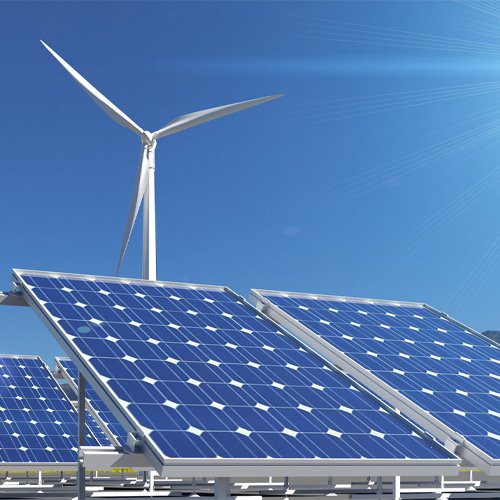
Solar Powered Pump Drives (also known as photovoltaic water pump) is mainly composed of photovoltaic pumping inverters, water pumps and solar panels. It is a powerful water supply method in remote areas with little electricity. Utilizing the inexhaustible solar energy that can be obtained everywhere, the system automatically works at sunrise and rests at sunset, without the need for guards and excessive maintenance. It is an ideal green energy water extraction system integrating economy, reliability and environmental protection benefits.
Solar Powered Pump Drivess are widely used in agricultural irrigation, desert control, grassland animal husbandry, urban water features, domestic water, etc., reflecting the modern concept of low carbon, energy saving and environmental protection. The following will introduce the application of Solar Powered Pump Drivess in production and life.
Cash crops and farmland irrigation
In arid and semi-arid areas, the lack of water resources makes it difficult to irrigate crops. The Solar Powered Pump Drives system is used to irrigate crops, achieving the purpose of low energy consumption and environmental protection. At the same time, the cost of pumping water is reduced, and the economic benefit is significant. The photovoltaic water pump system has broad application prospects and significant social, economic and ecological benefits in commercial crops and farmland irrigation.
Management of barren hills
The deterioration of the environment causes frequent occurrence of severe weather such as sandstorms, which seriously threatens the living environment of human beings. In the process of greening of barren hills, vegetation irrigation has become a big problem, and the high cost of power grid erection and electricity consumption has become the bottleneck of greening of barren hills. Solar Powered Pump Drives system uses solar energy resources and groundwater resources according to local conditions, and configures drip irrigation and intelligent control system, which is an effective way to solve vegetation irrigation in the process of barren hills management.
Soil Erosion protection
In areas with soil erosion, solar energy is used to pump water from rivers ashore without the need for power supply to irrigate soil erosion-proof vegetation on both banks and hillsides. Solar Powered Pump Drives systems play an important role in the governance of soil erosion protection.
Desertification land management
Photovoltaic water pump system is also widely used in afforestation, returning forest and grassland, curbing the spread of desertified land and desertification grassland management, protecting and restoring desertification grassland grassland vegetation, comprehensive management of small watersheds and water sources, construction of water-saving irrigation projects, small water conservancy and water conservation projects, farmland and artificial grassland irrigation, etc.
Livestock water and pasture irrigation
Drought and water shortage will cause serious damage to grasslands, large areas of forages will dry up, and animal husbandry production will be severely impacted. Livestock in pastoral areas will be killed or injured due to lack of grass and water. At present, grassland irrigation mainly relies on groundwater, and the utilization of groundwater is restricted by two factors, one is the limitation of water resources, and the other is the limitation of energy and power. These areas are scattered with scattered settlements, inconvenient transportation, and difficult to supply energy. In addition, the power grid construction has caused energy shortage due to high line losses and large spans, which makes it impossible to solve the problem of water-lifting power. The Solar Powered Pump Drives system combines the characteristics of rich solar energy resources and long sunshine time in the grassland, and effectively uses the solar panel to convert the solar energy into electricity, drives the water pump to extract groundwater, and transforms the natural grassland into artificial grassland.
Domestic water
Photovoltaic water pump systems can effectively provide safe and secure water supply solutions for households in remote areas with insufficient water supply due to power shortages. It can effectively meet various household water needs.
Solar panels
Also called the solar photovoltaic (PV) system, solar panels take the sun's photons and convert them into electricity in three basic steps.
Solar cells within solar panels absorb photons from the sun and convert them into DC electricity.
Water pump motor
The water pump motor takes water from any available water source, including from underground or another water source, that can be used for irrigation, household, or other purposes.
Inverter
Water pumps run on AC electrical current, so the inverter converts the electricity from the original DC to usable AC.
Pipes
Pipes will transport water from the original source to wherever it needs to go; a purification system, a holding tank, etc.
Water tank
The water pumping system will often include a water tank to store water that may be used when sunshine isn't available.
Pump controllers
The controllers regulate the water pump and allow it to be turned on and off. They can increase the life of the water pump by protecting it from electrical irregularities or motor damage if it keeps running when a water source runs dry. Controllers also maximize water delivery.
Are Solar Powered Pump Drives any good?
Now is a really good time for Solar Powered Pump Drives as technologies have been rapidly improving, becoming more efficient and cheaper. Once you get into a routine with solar power, these changes can be used to your advantage.
From rain-fed agriculture to solar
Moving from rain-fed agriculture to a solar powered water pump will increase your farm's resilience to changing weather patterns, droughts, and seasons. Irrigating through drier periods of the year means that you will have longer growing seasons, and sometimes even grow an extra harvest, depending on the climate where you are.
From manual irrigation to solar
Manual irrigation is labour intensive and, as a result, the size of land you can cultivate is limited. Switching to solar can give you hours back in your day as the pump will move water for you – either directly to the crops or to a tank for gravity irrigation later.
From electric pumps to Solar Powered Pump Drives
If you have a reliable electric connection in your field, then the benefits of solar over electric are not so clear. However most farms do not have this luxury. Installing a grid connection can be expensive and also limits where you can place your pump. Solar Powered Pump Drives, especially with portable panels, give more flexibility to irrigation and will have zero fuel costs.
From fuel pumps to solar
Fuel pumps are often praised for their high flow rates which is something which must be considered when switching to solar. A solar pump will require a large PV array to pump equal amounts of water. However, water conservation and efficiency techniques such as using low-pressure sprinklers or drip irrigation can reduce the amount of water you need to deliver to your plants. You do not need to swap like for like. One of the largest benefits of moving away from a dependence on fossil fuels is that your farm profits are less reliant on the often unpredictable price of fuel because solar energy is free. You also do not need to travel to fill a petrol can anymore.
Solar Powered Pump Drives Heating System Maintenance
Solar Powered Pump Drives require periodic inspections and routine maintenance to keep them operating efficiently. Also, from time to time, components may need repair or replacement.
Periodic Inspection List
Here are some suggested inspections of Solar Powered Pump Drives. Also read your owner's manual for a suggested maintenance schedule and keep track of previous maintenance activities in order to manage preventative maintenance intervals and better track elusive problems
Collector shading
Visually check for shading of the collectors during the day (mid-morning, noon, and mid-afternoon) on an annual basis. Shading can greatly affect the performance of solar collectors. Vegetation growth over time or new nearby construction may produce shading that wasn't there when the collectors were installed.
Collector soiling
Dusty or soiled collectors will perform poorly. Periodic cleaning may be necessary in areas with specific sources of soiling such as birds or dust from plowing and if rain is not sufficient to rinse them off.
Collector glazing and seals
Look for cracks in the collector glazing, and check to see if seals are in good condition. Plastic glazing, if excessively yellowed, may need to be replaced.
Plumbing, ductwork, and wiring connections
Look for fluid leaks at pipe connections. Check duct connections and seals. Ducts should be sealed with a mastic compound. All wiring connections should be tight.
Piping, duct, and wiring insulation
Check that all valves are in the proper operating position. Look for damage or degradation of insulation covering pipes, ducts, and wiring. Cover the pipe insulation with protective plastic or aluminum wrapping and replace if necessary. Protect wiring in conduits
Support structures
Check all nuts and bolts attaching the collectors to any support structures for tightness. Watch for corrosion on steel parts- and clean and paint if necessary.
Pressure relief valve
Actuate the lever to make sure the valve is not stuck open or closed.
Dampers
If possible, make sure the dampers open and close properly and are in the proper position.
Pumps or blowers
Verify that pumps or blowers (fans) are operating. Listen to see if they come on when the sun is shining on the collectors after mid-morning. If you can't hear a pump or blower operating, then either the controller has malfunctioned or the pump or blower has. The problem is often the starting capacitor, which can be replaced without replacing the pump or motor.
Heat transfer fluids
The propylene glycol antifreeze solutions in liquid (hydronic) solar heating collectors need to be replaced periodically. The pH (acidity) and freeze point of the fluid can be measured with hand-held instruments and replaced if out of specification. It's a task best left to a qualified technician. If water with a high mineral content (i.e., hard water) is circulated directly in the collectors, mineral buildup in the piping may need to be removed by adding a de-scaling or mild acidic solution to the water every few years.
Storage systems
Check storage tanks, etc., for cracks, leaks, rust, or other signs of corrosion. Steel storage tanks have a "sacrificial anode" which corrodes before the tank does and should be replaced at an interval recommended by the supplier. It is a good idea to flush storage tanks periodically to remove sediment.
Our Factory
Zhejiang Hertz Electric Co., Ltd., founded in 2014, is high-tech enterprise specializing in the development, manufacture, sales, and after-sales service, serving medium and high-end equipment manufacturers and industrial automation system integrators. Relying on high-quality production equipment and rigorous testing process, we will provide customers with products such as low-voltage and medium voltage inverters, soft starters and servo control systems and solutions in related industries.


Certificate




FAQ
Q: What is solar pump drive?
Q: Can I run a pump directly from a solar panel?
Q: Are solar powered water pumps any good?
Q: Can solar power a pumping machine?
Q: How long do solar water pumps last?
Q: How much solar power do I need to run a pump?
Q: Which is the best solar powered water pump?
Q: Do solar water pumps work at night?
Q: Do solar pumps work on cloudy days?
Q: How many hours a water pump can run continuously?
Q: Can you connect a solar panel to a water pump?
Q: How does a solar powered pump drive work?
Q: Can you connect a solar panel directly to a motor?
Q: What happens if I connect solar panel directly to battery?
Q: Can a solar panel power a water pump?
Q: How many hours can a water pump run continuously?
Q: How many years should a water pump last?
Q: Can a solar panel run a small water pump?
Q: How often should water pump kick on and off?
Q: How long can a water pump run before it burns out?
Hot Tags: solar powered pump drives, China solar powered pump drives manufacturers, suppliers, factory, solar powered flower garden spraying pump, solar powered filtration pump, solar powered greenhouse pump, solar powered tanning salon pump, solar powered livestock watering pump, solar powered sand filtration pump