


Zhejiang Hertz Electric Co.,Ltd., founded in 2014, is high-tech enterprise specializing in the development, manufacture, sales, and after-sales service, serving medium and high-end equipment manufacturers and industrial automation system integrators. Relying on high-quality production equipment and rigorous testing process, we will provide customers with products such as low-voltage and medium voltage inverters, soft starters and servo control systems and solutions in related industries. The company upholds to the concept of "providing users with the best products and services" to serve every costomer. At present, it is mainly used for metallurgy, chemical industry, paper making, machinery and other industries.
Why Choose Us
Professional team
Our team of experts has many years of experience in the industry, and we provide our customers with the necessary support and advice.
High-quality products
Our products are manufactured to the highest standards using only the best materials. We ensure that our products are reliable, safe and long-lasting.
24H online service
The 400 hotline is open 24 hours a day. Fax, email, QQ, and telephone are all-round and multi-channel to accept customer problems. Technical personnel are 24 hours a day to answer customer problems.
One-stop solution
Provide technical support in the whole process of inspection, installation, commissioning, acceptance, performance acceptance test, operation, maintenance and other corresponding technical guidance and technical training related to contract products in a timely manner.

Our Variable Frequency Drive (VFD), designed for precise motor control, is a versatile solution aimed at enhancing energy efficiency and operational performance.

The inverter drive enables precise control over motor speed, resulting in reduced energy consumption and lower operating costs, making it an environmentally friendly choice for businesses.

Frequency Drive For Three Phase Motor
High quality material and first-class technology. Powerful function, continuously variable transmission. Regular appearance, small and beautiful. Convenient operation and intuitive digital display.
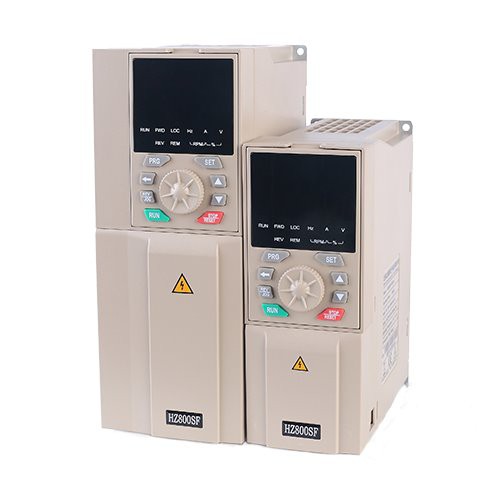
This type of VFD is often used in residential and small commercial settings, as it is suited to motors that operate on 120V power and do not require high levels of power output.

We grant each single segment 220V and three segment 220V input. When used for single phase, every other segment can be used as a spare line.
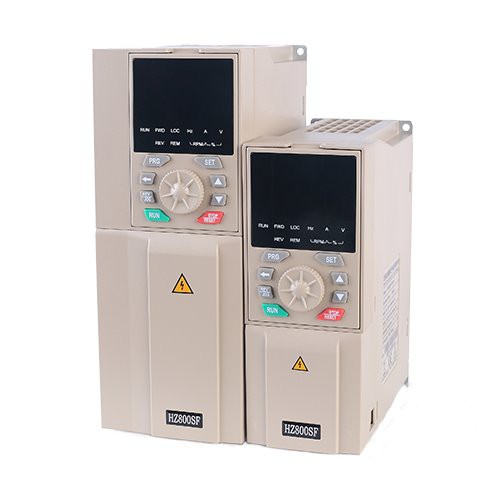
The use of frequency conversion device, drag air conditioning system of refrigeration pump, cold water pump, fan is a very good power saving technology.
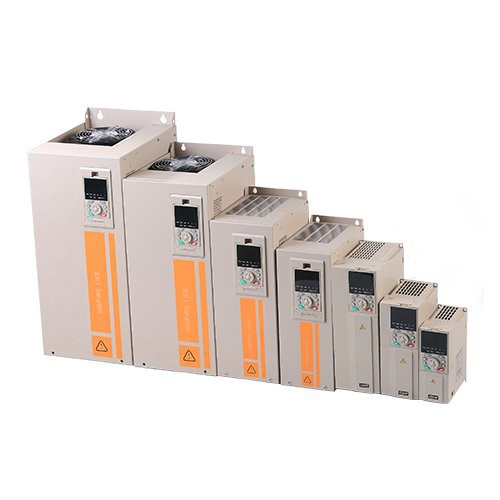
3.7KW Variable Frequency Drive. This is a 24V 150W brushless DC gear motor with a flange of 90x90mm. The built-in 10:1 keyway shaft right angle gearbox brings speed and torque to 300.

5.5KW Variable Frequency Drive. This is a 24V 150W brushless DC gear Motor with a flange of 90x90mm. The built-in 5:1 spur gearbox brings speed and torque to 600rpm and 1.95Nm(276.14.

Frequency converter is an AC strength machine that converts the electricity provide to different frequencies. In the late 1980s, China started out to use frequency converter.
What Is VFD Variable Frequency Drive
A VFD or variable frequency drive is an electronic device used to control an AC induction motor or synchronous motor. A VFD controls the torque, speed, and direction of the motor, smoothly starting and accelerating the motor to the desired speed at a controlled acceleration rate. Deceleration is also controlled, and braking is available as an option. VFDs allow you to use a single motor for a variety of processes and conditions that may require different speeds.
Benefits of VFD Variable Frequency Drive
Enhanced Energy Efficiency
Among the most compelling benefits of VFDs is their remarkable ability to enhance energy efficiency, which, in turn, trims down energy expenses. Motors typically constitute a substantial portion of energy consumption, particularly within industrial setups. VFDs come to the rescue by skillfully governing motor speed, particularly when the motor doesn't require full-throttle power or a consistent pace.
Voltage Sag Mitigation
Voltage sags, characterized by transient voltage drops, frequently plague industrial settings, often occurring during the activation of sizable AC motor lines. These sags can be detrimental to delicate equipment like computers and sensors. VFDs circumvent this issue by starting the motor at zero voltage and gradually increasing it from there.
Controlled Starting Current
VFDs offer another feather in their cap by effectively managing the startup current. They possess the capability to initiate motors at zero voltage and frequency, which not only minimizes the wear and tear on motors but also extends their operational lifespan, reducing the need for frequent maintenance and repair.
Equipment Safeguard
Another remarkable aspect of VFDs is their capacity to tailor and limit torque, ensuring that motors do not venture beyond their safe torque limits. This proactive measure shields machinery and equipment, preempting damage and averting potential production disruptions.
Precision Process Control
In the realm of industrial manufacturing, VFDs prove invaluable for optimizing production processes by allowing fine-tuned control over motor speeds. VFDs can be programmed to run motors at ideal speeds or halt at predefined positions, surpassing other motor control methods in precision. Moreover, many VFDs can be remotely controlled, offering heightened flexibility.
Noise Reduction
While not their primary purpose, VFDs do the service of reducing ambient noise levels by operating motors at lower speeds. This feature is particularly advantageous in industrial environments where lowered ambient noise levels contribute to improved working conditions and smoother communication on the factory floor. This small but significant improvement creates a more conducive work environment.
The VFD works by taking in AC power at the 60 Hz frequency, converts it into direct current (DC) power through a rectifier circuit, and sends it through a DC bus to filter the voltage further. Then, power reaches the inverter which creates pulses of DC energy that function like AC current. The pulsing nature of the output mimics AC power enough to create the correct induction processes needed to spin the rotor of the motor.
Since DC is easier to control in voltage and frequency, using it instead of true AC power allows the VFD to adjust the electrical supply on the fly. A series of transistors, especially the Insulated Gate, Bipolar Transistor (IGBT), give manual or automatic control over the power output and the resulting EDDY pump performance. Power is easily increased to a sludge pump under heavy load and then dropped again after a blockage passes or the texture of the slurry or sludge being pumped changes.

VFD Variable Frequency Drive Key Features
Continuous run current rating: This is the maximum RMS current the variable frequency drive can safely handle under all operating conditions at a fixed ambient temperature (usually 40 [degrees] C). Motor ball load sine wave currents must be equal to or less than this rating.
Overload current rating: This is an inverse time/current rating that is the maximum current the variable frequency drive can produce for a given time frame. Typical ratings are 110% to 150% overcurrent for 1 min, depending on the manufacturer. Higher current ratings can be obtained by oversizing the variable frequency drive. This rating is very important when sizing the variable frequency drive for the currents needed by the motor for break-away torque.
Line voltage: As with any motor controller, an operating voltage must be specified. Variable frequency drives are designed to operate at some nominal voltage such as 240VAC or 480VAC, with an allowable voltage variation of plus or minus 10%. Most motor starters will operate beyond this 10% variation, but variable frequency drives will not and will go into a protective trip. A recorded voltage reading of line power deviations is highly recommended for each application.
Types of VFD Variable Frequency Drive
Volts/Hertz (V/Hz) Control VFDs
First up, we have the Volts/Hertz (V/Hz) Control VFDs. These VFDs control the frequency of the power supplied to the motor. They're simple yet highly effective, finding their use in most common applications.
Sensorless Vector Control VFDs
Next is the Sensorless Vector Control VFDs. These are more advanced than the V/Hz drives. They can maintain constant torque without the use of a feedback sensor, making them suitable for applications needing a bit more precision.
Flux Vector Control VFDs
Lastly, we have Flux Vector Control VFDs. These are the cream of the crop when it comes to precision control. They provide accurate and fast control of motor speed and torque, ideal for complex and demanding applications.
Application of VFD Variable Frequency Drive
Swimming pool filtration systems
VFDs can be used in indoor swimming pool filtration systems to increase cleanliness. VFDs used in indoor swimming pool filtration systems can help to lower the electricity consumption by easily varying the water volume as required. 40% of the power used by swimming pools is needed to filter the water. A pump using a VFD can aid in the recycling of water by drawing it into the filtration system.
Pressure booster pumps
Commercial or large buildings like hotels require sufficient high water pressure to reach all units, including bathrooms and showers, using a pressure booster pump. VFDs can be a better alternative to pressure control valves since they have better energy savings and eliminates maintenance costs.
HVAC systems
VFDs have been used in HVAC systems for decades. Traditionally they have been used for capacity modulation, but in recent years they have also been used for fan and pump balancing, equipment monitoring, and cutting equipment energy usage at peak load conditions. VFDs can help reduce the wearing of components of HVAC systems, as they require less energy to start a motor, thus reducing the components stress.
Manufacturing
In the manufacturing industry, VFDs are used in conveyor belts, extruders, and various machinery to provide precise control over speed and torque. This improves production quality, reduces wear on mechanical parts, and increases energy efficiency.
Water and Wastewater Treatment
VFDs are crucial in controlling the speed of pumps in water and wastewater treatment plants. They help regulate water flow and pressure, optimize energy use, and reduce mechanical stress on pumps during start-up and operation.
Agriculture
In agricultural applications, VFDs are used in irrigation systems, grain dryers, and ventilation systems in barns and greenhouses. By controlling motor speeds, VFDs optimize water and air flow, reduce energy consumption, and improve the lifespan of equipment.
Components of VFD Variable Frequency Drive
Converter
The converter, or AC input rectifier, help convert the AC voltage to a DC voltage. The converter is made up of multiple diodes that are connected parallel to each other and only allow the current to travel in one direction. The electricity that is flowing through the converter is cycled through until it is transformed into a rough DC voltage.
DC Link
DC Link is a filtering section made up of filter inductors and capacitors. The purpose of DC Link is to smoothen the rippled DC voltage obtained out of the rectifier circuit in the previous step. The filtered output is then fed to the input of the inverter.
Inverter
The purpose of the Inverter is to convert the output of the DC link, which is the filtered DC voltage, back into AC. The Inverter is used to control the variable voltage, variable frequency output to the motor. The Inverter is composed of IGBT switches that are connected in pairs to control the electrical flow. This is usually connected to a logic controller that allows an operator to interface and adjust the voltage of the motor. By controlling the path of electric flow with pulse-width modulation, AC voltage can be produced from the DC source.
User interface
To achieve optimal power usage or save energy, a user interface is needed to configure the VFD. A User interface is a control panel that is connected the VFD, allowing for manual user input. These range from a keypad to LCD touch screens. Newer systems offer Bluetooth wireless control panels.
Control logic
The user defined setting is then interpreted by the Control logic. It is the software needed for the VFD to communicate with the user interface and the feedback device on the motor. The software is usually based on a state diagram, which follows a set of sequences before completing a task from start to stop. This allows the VFD to be fully automated.
Factors to Consider When Selecting VFD Variable Frequency Drive
The first decision to make when choosing a VFD is making sure the drive can handle the motors current demands. Check the motor nameplate for the Full Load Current requirement, then find a drive that's rated for at least that much current. If you are feeding the drive with single-phase power, be sure to use the drive ratings for single-phase. Variable frequency drives are significantly derated for single-phase operation.
The size of the VFD should be chosen based on maximum motor current at peak demand and not chosen based upon motor horsepower. Constant starting, stopping and dynamic loads affects the electronics inside the VFD far more than the effect they have upon the local power bus and a full voltage motor starter. Therefore, peak demand current should be used.
Choose between variable torque (VT) and constant torque (CT) and separate ratings for each. Use VT ratings for fans and pumps or consult the CT ratings for conveyors and general machine control. It is important to know the application type because the drive specifications are organized accordingly. If you aren't sure which one to use it's recommended to go with CT.
The altitude at which you're using your VFD also has an effect on cooling. As the altitude increases, the air becomes less dense. This decrease in air density decreases the cooling properties of the air. Most VFDs are designed to operate at 100% capacity at altitudes of up to 1000m. If you're at a higher altitude, the drive must be oversized to compensate for the decrease in cooling.
You want the lowest carrier frequency your motor can handle. Most of the time the default carrier frequency will work fine, but if you need to reduce the audible noise, the heat dissipation or the power consumption, then make sure you are able to modify the carrier frequency for the drive.
Determining the correct VFD size involves several calculation methods to ensure the VFD can handle the motor's demands. The basic formula used is: VFD Size (kW) = Motor Power (kW) x Service Factor. The service factor typically ranges from 1.1 to 1.5, accounting for unexpected load increases and ensuring reliability. For example, if you have a motor rated at 10 kW and you choose a service factor of 1.2, the required VFD size would be at least 12 kW. This ensures the VFD can handle occasional peaks in load without overheating or failing.
Additionally, it is crucial to verify that the VFD's current rating matches the motor's full-load amperes (FLA). This involves checking the motor's nameplate for its FLA and ensuring the VFD can supply this current under all operating conditions. More advanced calculations might consider factors like harmonic distortion, which can affect both the power supply and the motor. Harmonics are particularly significant in large or sensitive installations, where they can lead to power quality issues and equipment damage.
Using manufacturer-specific tools or online calculators can simplify this sizing process. These tools take into account detailed input parameters such as motor power, load type, and environmental conditions, providing tailored recommendations. This approach helps ensure that the selected VFD is well-suited to the specific application, enhancing efficiency and reliability.
How to Maintain VFD Variable Frequency Drive
Regular Cleaning
Industrial and commercial areas have a lot of airborne dust and debris that might accumulate over a VFD and negatively impact its functioning. To avoid this, regardless of the VFD chassis type, regular cleaning must be ensured for VFD. Its heat sink and fans must be kept clean always. Periodic cleaning of VFDs can be done through wiping, cleaning and air spraying the accumulation from them.
Temperature Maintenance
Another crucial tip that must be followed for top-notch maintenance of VFDs is that their temperature must be maintained, as these are mostly used in compact areas where heat spikes are a common thing. However, to maintain their optimum temperature, appropriate air circulation must be ensured. Also, temperature control systems must be installed.
Regular Visual Inspections
Another proactive approach for the maintenance of VFDs is regular visual inspections. Maintenance personnel with a basic knowledge of these controllers must inspect them visually weekly to identify any visible faults. Some of the key inspections that must be looked after include the working of area cooling systems, fibre optic cables, connections and emergency circuits.
Prevent Moisture Penetration
Water and electricity is not a suitable combination in any industrial setting and it is no different with the Variable Frequency Drives. VFDs must not come in contact with moisture as it will inevitably cause various problems like equipment failures, erratic behaviours and corrosion. Therefore, VFDs must be kept dry.
Intact Connections
Next on the list of VFD maintenance tips is that you must ensure tight connections. The electrical connections might have loosed up due to the constant vibrations. Loose connections will result in uneven operations of the controller.
Our Factory
Zhejiang Hertz Electric Co., Ltd. based on power electronics technology, motor drive and control technology, and relying on advanced production equipment and rigorous testing process, we provide customers with low-voltage and medium-voltage frequency converters, soft starters and servo control systems and related industry solutions.


Certificate

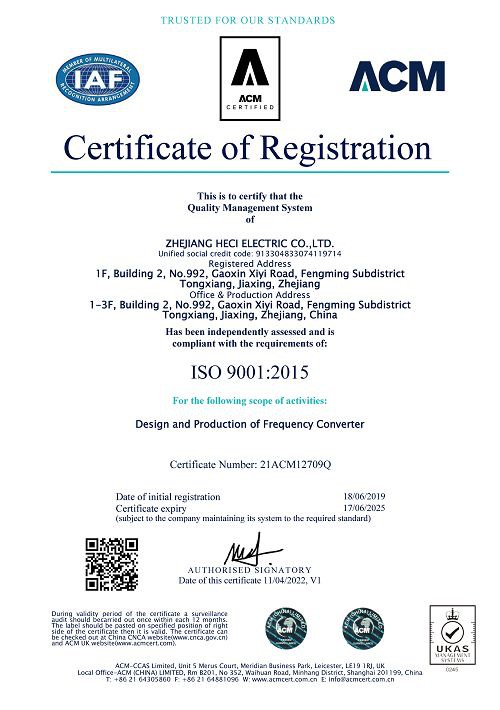


FAQ
Hot Tags: vfd variable frequency drive, China vfd variable frequency drive manufacturers, suppliers, factory, vfd brightness, vfd in eeg monitors, vfd in dental equipment, vfd phosphor, vfd in office equipment, vfd in pick and place machines