

As a supplier of Three Phase Variable Frequency Drives (VFDs), I've witnessed firsthand the transformative impact these devices can have on motor performance. In this blog, I'll explore the question: Can a Three Phase VFD improve motor performance? Let's dive into the technical details and real - world applications to find out.
Understanding Three Phase VFDs
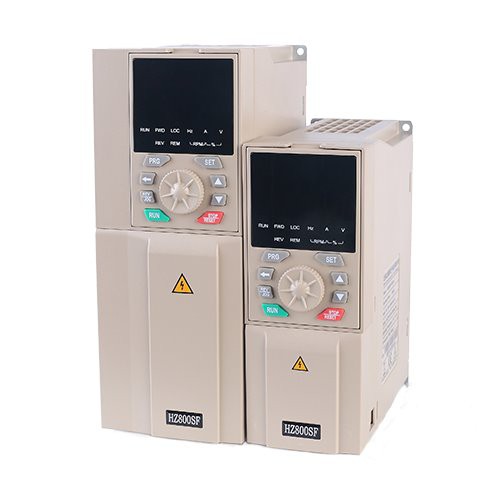
Before delving into how a Three Phase VFD can enhance motor performance, it's crucial to understand what a VFD is. A Variable Frequency Drive is an electronic device that controls the speed, torque, and direction of an AC motor by varying the frequency and voltage supplied to the motor. A three - phase VFD is specifically designed to work with three - phase AC motors, which are commonly used in industrial and commercial applications due to their high efficiency and power output.
The basic components of a three - phase VFD include a rectifier, which converts the incoming AC power to DC power; a DC bus, which stores the DC power; and an inverter, which converts the DC power back to AC power at a variable frequency and voltage. By adjusting the frequency and voltage, the VFD can precisely control the motor's speed and torque.
Improving Motor Efficiency
One of the most significant ways a Three Phase VFD can improve motor performance is by enhancing efficiency. Traditional AC motors operate at a fixed speed determined by the frequency of the power supply. In many applications, the motor may not need to run at full speed all the time. For example, in a pumping system, the flow rate requirements may vary depending on the demand.
When a motor is operated at a fixed speed, it often consumes more energy than necessary, leading to wasted power and increased operating costs. A Three Phase VFD allows the motor to run at the optimal speed for the specific application, reducing energy consumption. By matching the motor's speed to the load requirements, the VFD can significantly improve the motor's efficiency, resulting in lower energy bills and a reduced carbon footprint.
Research has shown that using a VFD can lead to energy savings of up to 50% in some applications. For instance, in a fan system, where the power consumption is proportional to the cube of the speed, reducing the speed by 20% can result in a 50% reduction in power consumption. This dramatic reduction in energy usage not only benefits the environment but also provides substantial cost savings for businesses.

Precise Speed Control
Another advantage of a Three Phase VFD is its ability to provide precise speed control. In many industrial processes, such as conveyor systems, machine tools, and printing presses, accurate speed control is essential for maintaining product quality and production efficiency.
With a VFD, the motor's speed can be adjusted smoothly and accurately over a wide range. This allows for better control of the production process, reducing the likelihood of errors and improving the overall quality of the output. For example, in a textile manufacturing plant, a VFD can ensure that the spinning machines operate at the exact speed required to produce high - quality yarn.
Moreover, precise speed control can also extend the lifespan of the motor. When a motor is operated at a constant speed, it may experience mechanical stress and wear, especially during startup and shutdown. A VFD can provide a soft - start and soft - stop function, gradually ramping up and down the motor's speed, which reduces the mechanical stress on the motor and its associated components. This results in less maintenance and a longer service life for the motor.
Torque Control
In addition to speed control, a Three Phase VFD can also provide excellent torque control. Torque is the rotational force that causes an object to rotate. In many applications, such as cranes, elevators, and hoists, precise torque control is crucial for safe and efficient operation.
A VFD can adjust the motor's torque output to match the load requirements. This means that the motor can provide the necessary torque to start, stop, and accelerate the load smoothly, without over - or under - applying force. For example, in a crane application, a VFD can ensure that the crane can lift heavy loads safely and precisely, reducing the risk of accidents and damage to the equipment.
Reducing Mechanical Stress
Traditional AC motors often experience high mechanical stress during startup and shutdown. When a motor is started directly from a fixed - frequency power supply, it can draw a large inrush current, which can cause mechanical shock to the motor and its connected equipment. This can lead to premature wear and tear of the motor's bearings, couplings, and other components.
A Three Phase VFD provides a soft - start and soft - stop function, which gradually ramps up and down the motor's speed. This reduces the inrush current and mechanical stress on the motor and its associated components. As a result, the motor and equipment are less likely to experience breakdowns, and the maintenance costs are significantly reduced.
Real - World Applications
The benefits of a Three Phase VFD are evident in a wide range of real - world applications. In the HVAC (Heating, Ventilation, and Air Conditioning) industry, VFDs are used to control the speed of fans and pumps. By adjusting the speed of these components according to the actual demand, the HVAC system can operate more efficiently, reducing energy consumption and improving indoor comfort.
In the water and wastewater treatment industry, VFDs are used to control the flow rate of pumps. This ensures that the water is pumped at the right speed and pressure, optimizing the treatment process and reducing energy costs.
In the manufacturing sector, VFDs are used in various machines, such as conveyor belts, mixers, and extruders. The precise speed and torque control provided by VFDs improve the quality of the products and increase the productivity of the manufacturing process.
Types of VFDs Offered
As a supplier, we offer a variety of VFDs to meet different customer needs. Our Outdoor VFD is designed to withstand harsh outdoor environments, with features such as high - temperature resistance, waterproofing, and dust protection. This makes it ideal for applications such as outdoor pumps, fans, and agricultural equipment.
We also provide Single Phase VFD Drive for applications where single - phase power is available. These drives are suitable for small - scale industrial and commercial applications, such as small pumps, fans, and machine tools.
For applications that require high - voltage operation, we offer 660V - 690V VFD. These high - voltage VFDs are commonly used in large - scale industrial applications, such as mines, steel mills, and power plants.
Conclusion
In conclusion, a Three Phase VFD can significantly improve motor performance in terms of efficiency, speed control, torque control, and reducing mechanical stress. The energy savings, precise control, and extended motor lifespan provided by VFDs make them a valuable investment for businesses in various industries.
If you're looking to enhance the performance of your motors and reduce your operating costs, we invite you to contact us for more information about our Three Phase VFDs. Our team of experts can help you select the right VFD for your specific application and provide you with professional installation and after - sales service.
References
- "Variable Frequency Drives: Principles and Applications" by Bimal K. Bose.
- "Energy - Efficient Electric Motor Systems: A Guide to Savings" by the U.S. Department of Energy.
- Industry reports on the use of VFDs in various sectors, such as HVAC, water treatment, and manufacturing.