

Hey there! As a supplier of 1.5KW Variable Frequency Drives (VFDs), I'm super stoked to share with you how these nifty devices work. VFDs are a game - changer in the world of motor control, and the 1.5KW VFD is no exception.
Let's start with the basics. A Variable Frequency Drive, as the name suggests, is a device that controls the speed of an electric motor by varying the frequency and voltage supplied to it. This is crucial because in many industrial and commercial applications, you don't always need your motor to run at full speed. By adjusting the speed, you can save energy, reduce wear and tear on the motor, and improve overall system efficiency.

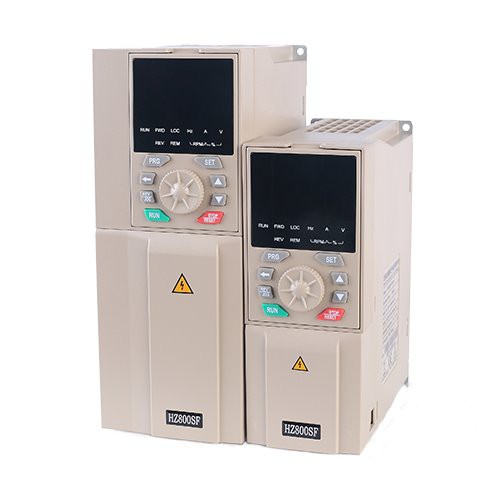
The Core Components of a 1.5KW VFD
First off, a 1.5KW VFD has three main parts: the rectifier, the DC bus, and the inverter.
The rectifier is the first stop for the incoming AC power. It takes the alternating current from your power source, which is usually at a fixed frequency (like 50Hz or 60Hz), and converts it into direct current (DC). Think of it as a translator that changes the "language" of the power from AC to DC. It's like when you're traveling abroad and need to convert your money into the local currency. In the case of the VFD, the rectifier is that money - exchanger for electricity.
Next up is the DC bus. This is like a storage tank for the DC power. It smooths out any fluctuations in the DC voltage and stores the energy. You can imagine it as a water tank that holds water after it's been pumped up. The DC bus ensures that the power going to the next stage is stable and consistent.
Finally, we have the inverter. This is the real magic part of the VFD. The inverter takes the DC power from the DC bus and converts it back into AC power, but this time, it can control the frequency and voltage of the output. It's like a DJ who can change the tempo and volume of a song. By adjusting the frequency, the inverter can control the speed of the motor connected to the VFD. If you increase the frequency, the motor will run faster, and if you decrease it, the motor will slow down.
How the 1.5KW VFD Controls Motor Speed
Now, let's dig a bit deeper into how the 1.5KW VFD actually controls the motor speed. The relationship between the frequency of the power supplied to the motor and its speed is pretty straightforward. The speed of an AC motor is directly proportional to the frequency of the power supply. So, if you want to increase the speed of the motor, you simply increase the frequency of the AC power coming out of the inverter.
But it's not just about changing the frequency. The VFD also needs to adjust the voltage in proportion to the frequency. This is known as the volts - per - hertz (V/Hz) ratio. For most motors, maintaining a constant V/Hz ratio is essential for proper operation. If the voltage is too high for a given frequency, the motor might overheat, and if it's too low, the motor might not have enough torque to run properly. The 1.5KW VFD is designed to automatically adjust the voltage according to the frequency to keep this ratio constant.
Applications of 1.5KW VFDs
1.5KW VFDs are used in a wide range of applications. One common use is in HVAC (Heating, Ventilation, and Air Conditioning) systems. In an HVAC system, the fan motors often need to run at different speeds depending on the temperature and ventilation requirements. By using a 1.5KW VFD, you can adjust the speed of the fan motors, which helps to save energy and maintain a comfortable indoor environment.
Another application is in conveyor systems. Conveyor belts are used in factories and warehouses to move products from one place to another. Sometimes, you might need to change the speed of the conveyor belt depending on the production rate. A 1.5KW VFD allows you to easily adjust the speed of the conveyor motor, making the operation more flexible and efficient.
Comparison with Other VFDs
If you're in the market for a VFD, you might be wondering how the 1.5KW VFD compares to other models. For example, there are 110v VFD Drive which are designed to work with a 110 - volt power supply. These are often used in smaller applications where the power requirements are lower.
On the other hand, 30KW VFD are much more powerful and are typically used in large industrial applications such as heavy machinery and large pumps. The 1.5KW VFD strikes a good balance between power and versatility. It's powerful enough for many medium - sized applications but not too big and expensive for smaller setups.
And if you're looking for something a bit more powerful than the 1.5KW VFD but not as big as the 30KW one, you might consider the 2.2KW VFD. It offers a bit more power and can handle slightly larger motors.
Benefits of Using a 1.5KW VFD
One of the biggest benefits of using a 1.5KW VFD is energy savings. As I mentioned earlier, by adjusting the motor speed according to the actual load requirements, you can significantly reduce the energy consumption of the motor. This not only saves you money on your electricity bills but also helps to reduce your carbon footprint.
Another benefit is improved motor control. With a VFD, you can start and stop the motor smoothly, which reduces the mechanical stress on the motor and the connected equipment. This can extend the lifespan of the motor and reduce maintenance costs.
Why Choose Our 1.5KW VFDs
As a supplier of 1.5KW VFDs, we take pride in offering high - quality products. Our VFDs are designed with the latest technology to ensure reliable and efficient operation. We also provide excellent customer support. If you have any questions about our 1.5KW VFDs or need help with installation and setup, our team of experts is always ready to assist you.
If you're in the market for a 1.5KW VFD, or if you just want to learn more about how they work, don't hesitate to reach out. We're here to help you make the right choice for your application. Whether you're a small business owner looking to upgrade your equipment or an engineer working on a new project, our 1.5KW VFDs can be a great solution.
In conclusion, the 1.5KW VFD is a powerful and versatile device that offers many benefits in terms of energy savings, motor control, and overall system efficiency. If you're interested in learning more or making a purchase, please contact us for a detailed discussion. We're eager to work with you and help you find the perfect VFD for your needs.
References
- "Variable Frequency Drives: Principles and Applications" by William Bolton
- "Electric Motor Handbook" by Terence W. Lipo