

Three-phase Variable Frequency Drives (VFDs) are indispensable components in modern industrial and commercial settings, offering precise control over motor speed, torque, and overall performance. As a trusted three-phase VFD supplier, I am well-acquainted with the technical intricacies and practical applications of these remarkable devices. This blog aims to demystify the operation of three-phase VFDs and explain how they effectively control motor speed.
Understanding the Basics of Three - Phase Motors and VFDs
Before delving into how a three - phase VFD controls motor speed, it's essential to understand the rudimentary principles of three - phase motors. Three - phase motors are a staple in industrial applications due to their high efficiency, reliability, and smooth operation. They rely on a rotating magnetic field generated by three alternating currents that are 120 degrees out of phase with each other. The speed of a three - phase motor is governed by the frequency of the power supply and the number of poles in the motor, as described by the formula:
[n=\frac{120f}{p}]
Where (n) is the synchronous speed of the motor in revolutions per minute (RPM), (f) is the frequency of the power supply in Hertz (Hz), and (p) is the number of poles in the motor.
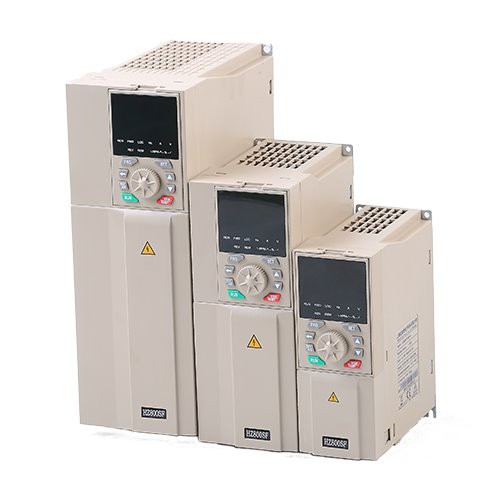
A Three - Phase VFD, on the other hand, is an electronic device that can vary the frequency and voltage supplied to a three - phase motor. By adjusting these parameters, the VFD can control the motor speed over a wide range, providing a high level of flexibility and efficiency.
Components of a Three - Phase VFD
A typical three - phase VFD consists of three main sections: the rectifier, the DC bus, and the inverter.
1. Rectifier
The rectifier is the front - end section of the VFD. Its primary function is to convert the incoming three - phase AC power into DC power. This is achieved through a set of diodes or thyristors. In most modern VFDs, a diode bridge rectifier is commonly used. The rectifier takes the alternating current, which has a constantly changing voltage and direction, and converts it into a pulsating DC voltage.
2. DC Bus
The DC bus is an energy storage and filtering section. It smooths out the pulsating DC voltage produced by the rectifier into a relatively stable DC voltage. Capacitors are typically used in the DC bus to store electrical energy and reduce voltage ripple. This stable DC voltage serves as the input for the next stage, the inverter.
3. Inverter
The inverter is the heart of the VFD when it comes to speed control. It takes the DC voltage from the DC bus and converts it back into three - phase AC voltage. The key here is that the frequency and voltage of the output AC can be precisely adjusted. The inverter uses insulated - gate bipolar transistors (IGBTs) or other high - power switching devices to rapidly turn the DC voltage on and off, creating an equivalent AC waveform with the desired frequency and voltage.
How a Three - Phase VFD Controls Motor Speed
The speed control of a three - phase motor using a VFD is mainly based on the principle of varying the frequency of the power supply. As mentioned earlier, the synchronous speed of a three - phase motor is directly proportional to the frequency of the power supply. So, by altering the output frequency of the VFD, we can change the motor speed.
In addition to frequency, the VFD also adjusts the output voltage according to the frequency to maintain a constant volts - per - hertz (V/Hz) ratio. This is crucial because the magnetic field in the motor is determined by the V/Hz ratio. If the voltage is too high relative to the frequency, the motor may overheat due to excessive magnetic flux. Conversely, if the voltage is too low, the motor may not have enough torque to operate properly.
For example, when we want to reduce the motor speed, the VFD decreases the output frequency. At the same time, it proportionally lowers the output voltage to keep the V/Hz ratio constant. This way, the motor can run efficiently at a lower speed with the appropriate torque. Similarly, when increasing the motor speed, the VFD increases the frequency and voltage in a coordinated manner.
Advanced Speed Control Features
Beyond basic frequency - based speed control, modern three - phase VFDs offer a plethora of advanced features to enhance motor performance and efficiency.
Sensor - less Vector Control
Sensor - less vector control is a sophisticated control algorithm used in many VFDs. It allows the VFD to control the motor's torque and speed independently, even without the use of external speed sensors. By analyzing the motor's current and voltage, the VFD can estimate the motor's rotor position and adjust the output accordingly. This results in more precise speed control, better dynamic response, and improved energy efficiency.
Closed - Loop Control
In some applications where extremely high precision is required, closed - loop control can be employed. This involves using a speed sensor, such as an encoder, to provide feedback to the VFD. The VFD compares the actual motor speed with the set speed and makes real - time adjustments to the output frequency and voltage to minimize the speed error. Closed - loop control is commonly used in applications like machine tools, robotics, and conveyor systems.
Applications of Three - Phase VFDs
Three - phase VFDs find applications in a wide range of industries, from manufacturing to HVAC systems.
Industrial Manufacturing
In manufacturing plants, VFDs are used to control the speed of conveyor belts, pumps, fans, and machine tools. By adjusting the motor speed according to the production requirements, these systems can operate more efficiently, reduce energy consumption, and improve product quality. For example, a conveyor belt can be slowed down during the loading and unloading process and then sped up during the transportation phase.
HVAC Systems
Heating, ventilation, and air - conditioning (HVAC) systems often use three - phase VFDs to control the speed of fans and pumps. This allows the system to adjust the airflow and water flow according to the actual demand, resulting in significant energy savings. For instance, in a large office building, the VFD can slow down the fans during off - peak hours when the building is less occupied.
Product Recommendations
As a three - phase VFD supplier, I recommend different products based on various application requirements. For applications with a power demand around 15KW, our 15KW VFD is an excellent choice. It offers reliable performance and advanced control features at a competitive price.
If you are looking to control a single - phase motor, our Variable Speed Drive for Single Phase Motor provides a cost - effective solution with smooth speed regulation.
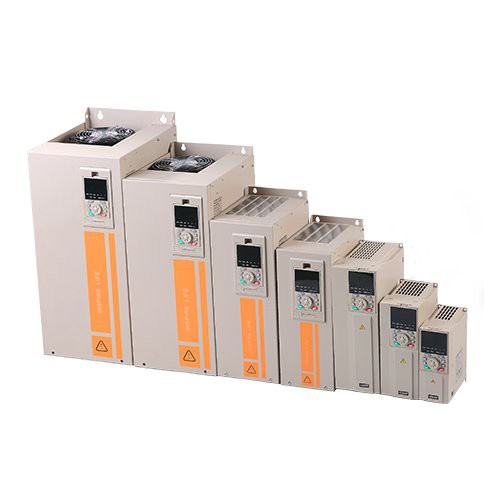
In addition, we have a range of Normal Duty and Heavy Duty VFD devices tailored to meet different load requirements. Whether you need a VFD for light - duty applications or heavy - duty industrial use, we have the right product for you.
Conclusion
Three - phase VFDs are powerful tools for controlling motor speed, offering numerous benefits such as energy savings, improved efficiency, and precise control. By understanding how they work and their advanced features, you can make informed decisions when selecting a VFD for your specific application. Whether you are in the industrial manufacturing, HVAC, or any other industry that requires motor speed control, our company can provide high - quality three - phase VFDs to meet your needs.
If you are interested in our products or have any questions about three - phase VFDs, please do not hesitate to contact us for procurement and negotiation. We are committed to providing you with the best solutions and excellent customer service.
References
- Chapman, S. J. (2012). Electric Machinery Fundamentals. McGraw - Hill.
- Bolton, W. (2016). Industrial Electronics. Routledge.