

Hey there! As a VFD (Variable Frequency Drive) supplier, I've seen firsthand how these nifty devices can have a big impact on the mechanical stress of motors. So, let's dig into how a VFD affects the mechanical stress on a motor.
What's a VFD Anyway?
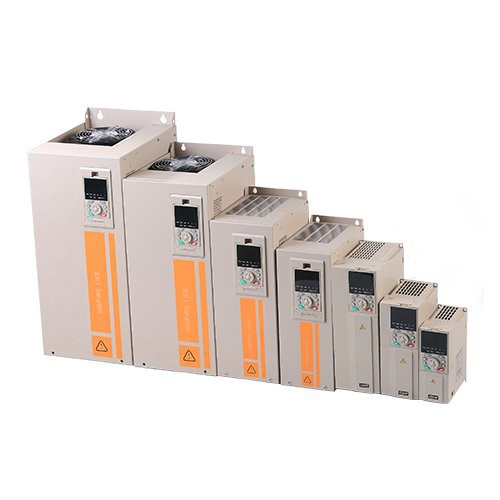
Before we jump into the mechanical stress part, let's quickly go over what a VFD is. A VFD is a device that controls the speed of an electric motor by varying the frequency and voltage supplied to it. It's like a dimmer switch for your motor, allowing you to adjust its speed according to your needs. Whether you're running a Three Phase VFD for an industrial setup or a Variable Speed Drive for Single Phase Motor for a smaller application, VFDs offer a lot of flexibility.
How VFDs Reduce Mechanical Stress
Soft Starting
One of the biggest ways a VFD reduces mechanical stress is through soft starting. When a motor starts directly across the line (without a VFD), it experiences a huge inrush of current. This sudden surge can cause a lot of mechanical stress on the motor's components, like the bearings, shafts, and couplings. It's like slamming your foot on the gas pedal in a car - it puts a lot of strain on the engine and drivetrain.
With a VFD, the motor starts gradually. The VFD ramps up the frequency and voltage slowly, allowing the motor to reach its operating speed smoothly. This gentle start reduces the stress on the mechanical components, which can extend the motor's lifespan and reduce maintenance costs. For example, in a conveyor belt system, a soft start can prevent the belt from jerking and reduce wear and tear on the pulleys and bearings.
Speed Control
Another way a VFD helps with mechanical stress is by providing precise speed control. In many applications, motors don't need to run at full speed all the time. For instance, a fan in a ventilation system may only need to run at half speed most of the time. By using a VFD to adjust the motor's speed, you can reduce the mechanical stress on the fan blades and the motor itself.
Running a motor at a lower speed also reduces the centrifugal forces acting on the rotating parts. These forces can cause vibrations and stress on the bearings and shafts. By keeping the speed in check, you can minimize these issues and ensure a more reliable operation. A 3.7KW VFD can be a great choice for applications where you need to control the speed of a motor in this range.
Torque Control
VFDs also offer torque control, which is crucial for reducing mechanical stress. Torque is the rotational force that a motor produces. In some applications, like pumps and compressors, the load on the motor can vary. Without a VFD, the motor may have to produce more torque than necessary, which can lead to increased mechanical stress.
A VFD can adjust the torque output of the motor based on the load. When the load is light, the VFD reduces the torque, which reduces the stress on the motor's components. When the load increases, the VFD can increase the torque to meet the demand. This dynamic torque control helps to keep the motor running efficiently and reduces wear and tear.
Potential Increase in Mechanical Stress
Harmonics
While VFDs offer many benefits in terms of reducing mechanical stress, they can also introduce some issues. One of these is harmonics. VFDs use power electronics to convert the incoming AC power to DC and then back to AC at a variable frequency. This process can generate harmonics, which are electrical frequencies that are multiples of the fundamental frequency.
These harmonics can cause additional heat and vibrations in the motor. The heat can increase the temperature of the motor's windings, which can reduce the insulation life and increase the risk of failure. The vibrations can also cause mechanical stress on the motor's components, especially the bearings and shafts. However, modern VFDs often come with built-in filters to reduce the harmonic content and minimize these issues.
Resonance
Another potential problem is resonance. Resonance occurs when the frequency of the VFD output matches the natural frequency of the motor or the mechanical system it's driving. When this happens, the vibrations can be amplified, causing excessive mechanical stress.
To avoid resonance, it's important to properly size and select the VFD and the motor. The VFD should be able to operate over a wide range of frequencies to avoid getting stuck at the resonant frequency. Additionally, the mechanical system should be designed to have a natural frequency that is outside the operating range of the VFD.
Real-World Examples
Let's look at a few real-world examples of how VFDs can affect mechanical stress.
HVAC Systems
In HVAC (Heating, Ventilation, and Air Conditioning) systems, VFDs are commonly used to control the speed of fans and pumps. By using a VFD, the system can adjust the airflow and water flow based on the actual demand. This not only saves energy but also reduces the mechanical stress on the fans and pumps.
For example, in a large office building, the ventilation fans can be controlled by a VFD. During off-peak hours, when there are fewer people in the building, the fans can run at a lower speed. This reduces the stress on the fan blades and the motor, and also saves energy.
Industrial Pumps
In industrial applications, pumps are often used to move fluids. A VFD can be used to control the pump's speed based on the flow rate required. This helps to reduce the mechanical stress on the pump's impeller, bearings, and seals.
For instance, in a water treatment plant, a VFD can be used to control the speed of the pumps that move water through the treatment process. By adjusting the speed according to the water flow rate, the pump can operate more efficiently and with less mechanical stress.
Conclusion
In conclusion, VFDs can have a significant impact on the mechanical stress of motors. On one hand, they offer many benefits such as soft starting, speed control, and torque control, which can reduce the stress on the motor's components and extend its lifespan. On the other hand, they can introduce issues like harmonics and resonance, which need to be carefully managed.
If you're considering using a VFD for your motor application, it's important to choose the right VFD and ensure that it's properly installed and configured. As a VFD supplier, I'm here to help you make the right choice and ensure that your motor runs smoothly and efficiently. If you have any questions or are interested in purchasing a VFD, feel free to reach out to me for a chat about your specific needs and how we can work together to get the best solution for your application.

References
- Fitzgerald, A. E., Kingsley, C., & Umans, S. D. (2003). Electric Machinery. McGraw-Hill.
- Krause, P. C., Wasynczuk, O., & Sudhoff, S. D. (2002). Analysis of Electric Machinery and Drive Systems. Wiley-Interscience.
- Chapman, S. J. (2012). Electric Machinery Fundamentals. McGraw-Hill.