

As a VFD (Variable Frequency Drive) supplier, I often get asked about the various functions and components of our products. One of the most crucial aspects that plays a significant role in the performance of a VFD is the PID (Proportional - Integral - Derivative) control. In this blog post, I'll delve into the function of PID control in a VFD and explain why it's so important.
Understanding the Basics of VFD
Before we jump into the details of PID control, let's briefly understand what a VFD is. A VFD is an electronic device that controls the speed of an AC motor by varying the frequency and voltage supplied to the motor. It offers several benefits such as energy savings, improved process control, and reduced mechanical stress on the motor and connected equipment.
What is PID Control?
PID control is a widely used control algorithm in industrial automation. It uses three basic control modes - proportional, integral, and derivative - to calculate an error value between a setpoint (the desired value) and a process variable (the actual value). The controller then adjusts the output to minimize this error.
Proportional Control
The proportional term in PID control calculates the error between the setpoint and the process variable and multiplies it by a proportional gain (Kp). The output of the proportional controller is directly proportional to the error. A higher Kp value will result in a larger correction for a given error, but it can also lead to overshoot and instability if set too high.
Integral Control
The integral term accumulates the error over time. It sums up all the past errors and multiplies the sum by an integral gain (Ki). The integral action helps to eliminate steady - state errors that the proportional controller may not be able to correct. However, if the integral gain is set too high, it can cause the system to become unstable and oscillate.
Derivative Control
The derivative term calculates the rate of change of the error. It multiplies the derivative of the error with respect to time by a derivative gain (Kd). The derivative action helps to predict future errors and provides a corrective action in advance. It can reduce overshoot and improve the stability of the system, especially in systems with high inertia.
Function of PID Control in a VFD
Speed Control
One of the primary functions of PID control in a VFD is speed control. In many industrial applications, maintaining a constant motor speed is crucial. For example, in conveyor systems, a constant speed ensures a smooth flow of materials. The VFD with PID control can continuously monitor the motor speed (process variable) and compare it with the desired speed (setpoint). If there is a difference between the two, the PID controller will adjust the frequency and voltage supplied to the motor to bring the speed back to the setpoint.
Suppose we have a conveyor system where the setpoint speed is 1000 RPM. Due to changes in the load, the actual speed may drop to 950 RPM. The PID controller in the VFD will detect this error and increase the frequency and voltage supplied to the motor to increase the speed back to 1000 RPM.
Pressure Control
In applications such as pumps and compressors, pressure control is essential. A VFD with PID control can be used to maintain a constant pressure in a system. For instance, in a water supply system, the PID controller can monitor the water pressure (process variable) and adjust the speed of the pump motor accordingly. If the pressure drops below the setpoint, the controller will increase the motor speed to boost the pressure, and if the pressure is too high, it will reduce the motor speed.
Let's say the setpoint pressure in a water supply system is 50 psi. If the actual pressure drops to 45 psi, the PID controller in the VFD will increase the pump motor speed to raise the pressure back to 50 psi.
Temperature Control
In some industrial processes, temperature control is critical. A VFD can be used in conjunction with a heating or cooling system to maintain a constant temperature. The PID controller will monitor the temperature (process variable) and adjust the speed of the fan or compressor motor to keep the temperature at the setpoint.
For example, in a food processing plant, the setpoint temperature for a storage room is 5°C. If the actual temperature rises to 7°C, the PID controller in the VFD will increase the speed of the cooling compressor to lower the temperature back to 5°C.
Advantages of Using PID Control in a VFD
Improved Process Control
PID control allows for precise and accurate control of the process variable. It can quickly respond to changes in the load or other disturbances and maintain the desired setpoint. This leads to better product quality and consistency in industrial processes.
Energy Savings
By adjusting the motor speed according to the actual requirements of the process, a VFD with PID control can save a significant amount of energy. For example, in a pump system, instead of running the pump at full speed all the time, the PID controller can reduce the speed when the demand for water is low, resulting in energy savings.
Reduced Wear and Tear
Since the PID controller can maintain a stable operating condition, it reduces the mechanical stress on the motor and connected equipment. This leads to less wear and tear, longer equipment lifespan, and lower maintenance costs.
Our VFD Products with PID Control
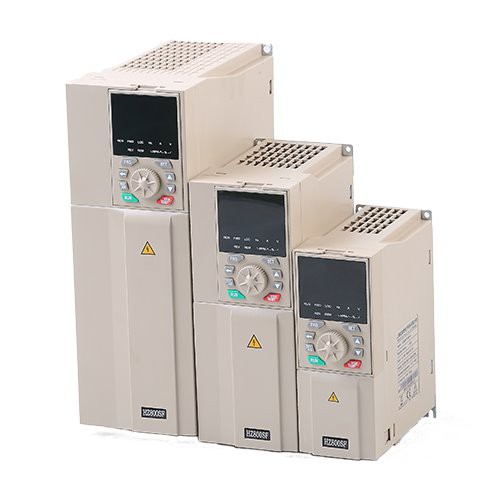
At our company, we offer a wide range of VFDs with advanced PID control functionality. Our Frequency Drive Controller is designed to provide precise control in various applications. It has user - friendly settings that allow for easy adjustment of the PID parameters.
We also have VFD Single Phase To 3 Phase products that are suitable for applications where a single - phase power supply is available but a three - phase motor is required. These VFDs come with PID control to ensure stable and efficient operation.
For larger applications, our 18.5KW VFD is a great choice. It can handle high - power motors and provides excellent PID control for speed, pressure, or temperature regulation.
Conclusion
PID control is a vital function in a VFD that offers numerous benefits in terms of process control, energy savings, and equipment longevity. Whether you need to control the speed of a motor, maintain a constant pressure, or regulate the temperature, a VFD with PID control can provide the solution.
If you're interested in our VFD products with PID control or have any questions about how they can be used in your application, we'd love to hear from you. Contact us to start a discussion about your specific requirements and explore how our products can meet your needs.

References
- Ogata, Katsuhiko. "Modern Control Engineering." Prentice Hall, 2010.
- Dorf, Richard C., and Robert H. Bishop. "Modern Control Systems." Pearson, 2017.