

What are the cooling methods of a Three Phase VFD?
Hey there! As a supplier of Three Phase VFDs, I often get asked about the cooling methods for these nifty devices. A Variable Frequency Drive (VFD) is like the brain of an electrical motor system, allowing you to control the speed and torque of a motor. But with all that power comes heat, and proper cooling is crucial to keep the VFD running smoothly and extend its lifespan. So, let's dive into the different cooling methods for Three Phase VFDs.
1. Air Cooling
Air cooling is one of the most common methods used to cool Three Phase VFDs. It's simple, cost - effective, and relatively easy to implement. The basic idea behind air cooling is to use fans to blow air over the heat - generating components of the VFD, such as the power modules.
There are two main types of air - cooled systems: natural convection and forced air cooling.
Natural Convection: In natural convection cooling, the heat rises naturally due to the temperature difference between the hot components and the surrounding air. The VFD is designed with fins or other heat - dissipating structures that increase the surface area for heat transfer. As the air near the hot components heats up, it rises and is replaced by cooler air. This process is slow but can be sufficient for small - power VFDs or in applications where the heat generation is relatively low.
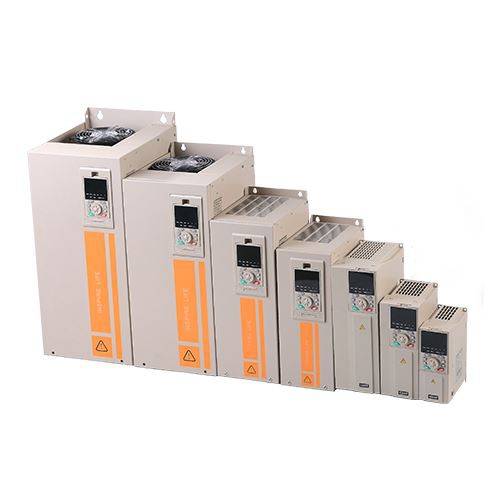
Forced Air Cooling: For larger VFDs or those in high - heat applications, forced air cooling is the way to go. In this method, fans are used to actively blow air over the heat sinks and other components. The fans can be either internal or external to the VFD enclosure. Internal fans are usually built into the VFD unit and are responsible for circulating air within the enclosure. External fans, on the other hand, can be mounted on the outside of the enclosure to draw in fresh, cool air and expel the hot air.
One of the advantages of air cooling is its simplicity. There are no complex plumbing or refrigeration systems to maintain. However, air cooling has its limitations. It is less effective in high - temperature environments, and the fans can be a source of noise. Also, the air can carry dust and other contaminants, which can accumulate on the components and reduce their efficiency over time.
If you're looking for an Outdoor VFD, you'll need to consider the environmental conditions. Outdoor VFDs often require more robust air - cooling systems to deal with higher temperatures and potential dust and moisture.

2. Liquid Cooling
Liquid cooling is a more advanced cooling method that offers better heat - dissipation capabilities compared to air cooling. In a liquid - cooled system, a coolant (usually water or a water - glycol mixture) is circulated through channels or plates in contact with the heat - generating components of the VFD.
There are two main types of liquid - cooling systems: direct liquid cooling and indirect liquid cooling.
Direct Liquid Cooling: In direct liquid cooling, the coolant comes into direct contact with the power modules or other heat - generating components. This provides very efficient heat transfer as the coolant can absorb a large amount of heat quickly. However, direct liquid cooling requires more careful design to prevent leaks and ensure electrical insulation.
Indirect Liquid Cooling: Indirect liquid cooling uses a heat exchanger to transfer heat from the VFD components to the coolant. The coolant circulates through the heat exchanger, and then it is cooled by an external radiator or cooling tower. This method is safer and easier to maintain compared to direct liquid cooling, as the coolant is not in direct contact with the electrical components.
The main advantage of liquid cooling is its high efficiency. It can handle much higher heat loads than air cooling, making it suitable for high - power VFDs. Liquid cooling also produces less noise compared to air - cooled systems. However, liquid - cooling systems are more complex and expensive to install and maintain. They require additional components such as pumps, pipes, and heat exchangers, and there is a risk of leaks and corrosion.
3. Heat Pipes
Heat pipes are a special type of cooling device that can be used in Three Phase VFDs. A heat pipe is a sealed tube containing a small amount of working fluid (usually water or a refrigerant). One end of the heat pipe is in contact with the heat - generating component, and the other end is connected to a heat sink.
When the heat from the component is transferred to the working fluid in the heat pipe, the fluid evaporates. The vapor then travels to the cooler end of the heat pipe, where it condenses and releases the heat to the heat sink. The condensed fluid then returns to the hot end of the heat pipe by capillary action.
Heat pipes offer several advantages. They are very efficient at transferring heat, with high heat - transfer rates compared to traditional heat sinks. They are also compact and lightweight, which is beneficial for applications where space is limited. Additionally, heat pipes can operate in a wide range of orientations, making them flexible for different VFD designs.
However, heat pipes can be more expensive than traditional air - cooling methods, and they require careful design and installation to ensure proper operation.
4. Hybrid Cooling Systems
In some cases, a combination of different cooling methods, known as a hybrid cooling system, may be used. For example, a VFD may use air cooling for normal operation and switch to liquid cooling when the heat load exceeds a certain threshold. This allows for a more flexible and efficient cooling solution, taking advantage of the benefits of both air and liquid cooling.
Hybrid cooling systems can also be customized based on the specific requirements of the application. For instance, in a data center where VFDs are used to control the ventilation fans, a hybrid cooling system can ensure stable operation under different environmental conditions.
5. Choosing the Right Cooling Method
When choosing a cooling method for a Three Phase VFD, several factors need to be considered.
- Power Rating: Higher - power VFDs generate more heat and usually require more efficient cooling methods such as liquid cooling or heat pipes.
- Environmental Conditions: If the VFD is located in a hot, dusty, or humid environment, a more robust cooling system may be needed. Outdoor VFDs, for example, may require special features to protect against the elements.
- Cost: Air cooling is generally the most cost - effective option, while liquid cooling and heat pipes are more expensive to install and maintain.
- Noise Requirements: If noise is a concern, liquid - cooled or heat - pipe - cooled systems may be a better choice, as they produce less noise compared to air - cooled systems.
At our company, we offer a wide range of Three Phase VFDs with different cooling options to meet your specific needs. Whether you're looking for a cost - effective VF Control VFD with air cooling or a high - performance VFD with liquid cooling for a demanding application, we've got you covered.
If you need a Variable Speed Drive For Single Phase Motor, we can also provide suitable solutions. Our team of experts can help you choose the right VFD and cooling method based on your requirements.
If you're interested in purchasing a Three Phase VFD or have any questions about cooling methods, don't hesitate to reach out to us. We're here to help you make the right choice and ensure your motor system runs smoothly.
References
- “Variable Frequency Drives Handbook”
- Industry - specific technical papers on VFD cooling technologies