

Hey there! As a supplier of Feedback Units, I often get asked about the differences between optical and magnetic Feedback Units. So, I thought I'd take a few minutes to break it down for you.
Let's start with the basics. Feedback Units are essential components in many industrial and automation systems. They're used to provide real - time information about the position, speed, or other parameters of a moving part. This information is crucial for the system to operate accurately and efficiently.
Optical Feedback Units
Optical Feedback Units use light to measure and provide feedback. They typically consist of a light source, a detector, and a scale or encoder pattern. The light source emits light, which is then reflected or transmitted through the scale. The detector picks up the light and converts it into an electrical signal. Based on the changes in the light pattern, the system can determine the position or movement of the part.
One of the biggest advantages of optical Feedback Units is their high accuracy. They can provide extremely precise measurements, often down to the micrometer level. This makes them ideal for applications where high precision is required, like in semiconductor manufacturing, CNC machining, and high - end robotics.
Another plus is their fast response time. Optical systems can detect changes very quickly, allowing for rapid adjustments in the system. This is great for high - speed applications where the system needs to react in real - time to changes in position or speed.

However, optical Feedback Units also have some drawbacks. They're sensitive to dust, dirt, and other contaminants. Even a small amount of debris on the scale or in the optical path can interfere with the light signal and cause errors in the measurement. This means they need to be used in clean environments or protected with proper enclosures.
They're also relatively expensive compared to magnetic Feedback Units. The high - precision components and the need for a clean operating environment contribute to the higher cost.
Magnetic Feedback Units
Magnetic Feedback Units, on the other hand, use magnetic fields to measure and provide feedback. They usually have a magnetic scale and a magnetic sensor. The sensor detects the changes in the magnetic field as the scale moves, and this information is then used to determine the position or movement of the part.
One of the main advantages of magnetic Feedback Units is their robustness. They're not affected by dust, dirt, or moisture as much as optical units. This makes them suitable for harsh industrial environments, such as mining, steel manufacturing, and outdoor machinery.
They're also more cost - effective. The components used in magnetic Feedback Units are generally less expensive to produce, which means they can be a more budget - friendly option for many applications.
But magnetic Feedback Units aren't without their limitations. Their accuracy is typically lower than that of optical units. While they can still provide good precision for many applications, they may not be suitable for those that require extremely high - precision measurements.
They also have a slower response time compared to optical units. This can be a drawback in high - speed applications where a quick reaction is needed.
Comparison in Different Applications
Let's take a look at how these differences play out in different applications.
In the aerospace industry, where precision is of the utmost importance, optical Feedback Units are often the go - to choice. For example, in the control systems of aircraft wings or satellite positioning mechanisms, the high accuracy and fast response time of optical units are essential for ensuring safe and accurate operation.
In the automotive manufacturing industry, both types are used. Optical units might be used in the assembly line for high - precision tasks like installing engine components. Magnetic units, on the other hand, can be found in the testing and quality control areas where the environment might be a bit dirtier and high - precision isn't always necessary.
In the food and beverage industry, magnetic Feedback Units are popular because of their resistance to moisture and contaminants. They can be used in conveyor systems and packaging machines without the risk of being affected by spills or cleaning agents.
Related Products
If you're in the market for Feedback Units, you might also be interested in some related products. For example, Braking Resistance for VFD is an important component in variable frequency drive systems. It helps to control the speed and stop the motor smoothly.
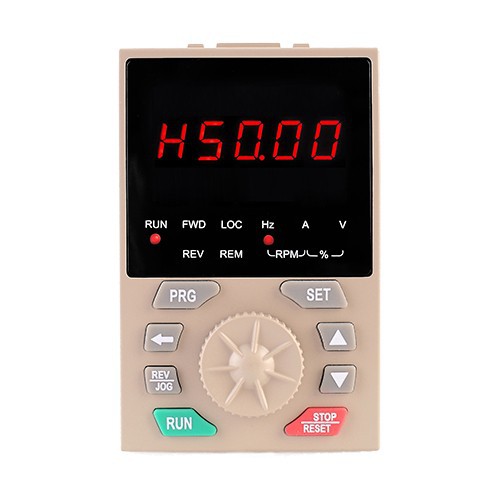
LED Digital Panel and LCD Panel are useful for displaying information about the system, such as position, speed, or error messages. These panels can make it easier for operators to monitor and control the system.
Why Choose Us as Your Supplier
As a Feedback Unit supplier, we understand the unique requirements of different industries and applications. We offer a wide range of optical and magnetic Feedback Units to meet your specific needs. Whether you need high - precision optical units for a clean - room application or robust magnetic units for a harsh industrial environment, we've got you covered.
Our team of experts can help you choose the right Feedback Unit for your system. We'll take into account factors like accuracy, response time, cost, and environmental conditions to ensure you get the best solution for your needs.
If you're interested in learning more about our Feedback Units or want to discuss a specific application, don't hesitate to reach out. We're here to help you make the right choice and ensure the smooth operation of your system.
Conclusion
In conclusion, both optical and magnetic Feedback Units have their own strengths and weaknesses. Optical units offer high accuracy and fast response times but are sensitive to contaminants and more expensive. Magnetic units are robust and cost - effective but have lower accuracy and slower response times. The choice between the two depends on the specific requirements of your application, such as the level of precision needed, the operating environment, and your budget.
If you're looking for a reliable supplier of Feedback Units, give us a shout. We're ready to assist you in finding the perfect solution for your industrial or automation needs.
References
- Industrial Automation Handbook, various authors
- Technical manuals of Feedback Unit manufacturers