

Hey there! As a supplier of 45KW VFDs (Variable Frequency Drives), I often get asked about the acceleration and deceleration time of these devices. So, I thought I'd write this blog to share some insights on this topic.
First off, let's understand what acceleration and deceleration time mean in the context of a VFD. The acceleration time is the duration it takes for the VFD to increase the output frequency from 0 Hz to the set frequency. On the other hand, the deceleration time is the time it takes for the VFD to decrease the output frequency from the set frequency back to 0 Hz.
Now, why are these times so important? Well, they play a crucial role in the smooth operation of the motor connected to the VFD. If the acceleration time is too short, the motor might draw excessive current, which can lead to overheating and potentially damage the motor. On the flip side, if the acceleration time is too long, the motor might not reach the desired speed in a timely manner, affecting the overall efficiency of the system. The same goes for the deceleration time. A too - short deceleration time can cause the motor to generate a large amount of regenerative energy, which might trip the VFD due to overvoltage. A too - long deceleration time can make the system slow to respond when it needs to stop.
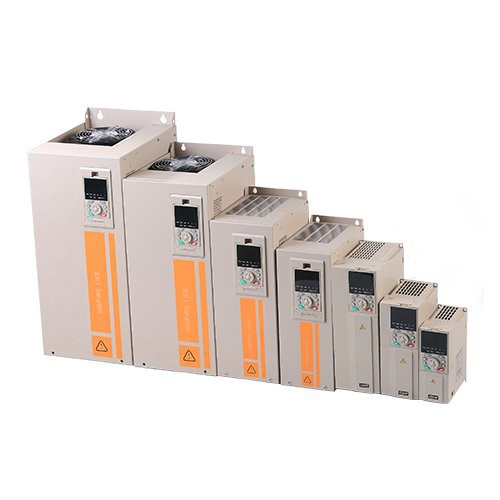

So, what's the typical acceleration and deceleration time for a 45KW VFD? There's no one - size - fits - all answer to this question. It depends on several factors. One of the main factors is the type of load connected to the motor. For example, if you're using the VFD to drive a Fan Pump VFD, which has a relatively low inertia load, you can usually set a shorter acceleration and deceleration time. Fans and pumps don't require a huge amount of torque to start or stop, so the VFD can change the frequency more quickly.
On the other hand, if the 45KW VFD is connected to a high - inertia load, like a large conveyor belt or a heavy flywheel, you'll need to set a longer acceleration and deceleration time. These types of loads have a lot of mass, and it takes more time and energy to get them moving or bring them to a stop.
Another factor that affects the acceleration and deceleration time is the motor's rated current. You need to make sure that during the acceleration and deceleration process, the current drawn by the motor doesn't exceed its rated value. If you set the time too short, the current spike can be significant, and this can cause problems for both the motor and the VFD.
Let's talk a bit about how to set these times. Most modern 45KW VFDs come with built - in parameters that allow you to adjust the acceleration and deceleration time. You can usually find these settings in the VFD's control panel. The values are typically set in seconds. For example, you might set the acceleration time to 10 seconds and the deceleration time to 15 seconds.
When you're setting these times, it's a good idea to start with conservative values and then fine - tune them based on the actual performance of the system. You can monitor the motor's current, speed, and the VFD's status during the start - up and shut - down processes. If you notice that the motor is struggling to start or stop, or if the VFD is tripping due to overcurrent or overvoltage, you might need to adjust the times accordingly.
It's also important to note that some applications might require different acceleration and deceleration profiles. For instance, in some cases, you might need a linear acceleration and deceleration, where the frequency changes at a constant rate. In other applications, a S - curve acceleration and deceleration might be more suitable. An S - curve profile provides a smoother start and stop, which can be beneficial for reducing mechanical stress on the motor and the connected equipment.
Now, if you're in the market for a 45KW VFD, or maybe you're looking for other types of VFDs like VFD For Motors or 3.7KW VFD, we've got you covered. Our VFDs are designed with high - quality components and advanced control algorithms to ensure reliable and efficient operation.
We understand that every application is unique, and that's why we offer a wide range of options for setting the acceleration and deceleration times. Our technical support team is always ready to help you choose the right settings for your specific needs. Whether you're a small business owner or part of a large industrial operation, we can provide you with the VFD solutions that fit your requirements.
If you're interested in learning more about our 45KW VFDs or want to discuss your application in detail, don't hesitate to reach out. We're here to make the process of selecting and using a VFD as easy and hassle - free as possible. Let's work together to optimize your motor control systems and improve your overall productivity.
References
- "Variable Frequency Drives Handbook" by some well - known author in the field
- Technical documentation from major VFD manufacturers