

In the field of industrial automation, Variable Frequency Drives (VFDs) play a crucial role in controlling the speed and torque of electric motors. As a supplier of 30KW VFDs, I often encounter questions from clients regarding various technical aspects of these devices. One frequently asked question is, "What is the phase number of a 30KW VFD?" In this blog post, I will delve into this topic, explaining the concept of phase numbers in VFDs, the significance of the phase number for a 30KW VFD, and how it impacts the performance and application of the drive.
Understanding Electrical Phases
Before we discuss the phase number of a 30KW VFD, it's essential to understand what electrical phases are. In an electrical system, a phase refers to the voltage or current waveform. Single - phase power systems have one alternating current (AC) waveform, while three - phase power systems have three AC waveforms that are offset by 120 degrees from each other.
Single - phase power is commonly used in residential applications for lighting, small appliances, and other low - power devices. It is simpler and less expensive to install but has limitations in terms of power capacity. Three - phase power, on the other hand, is widely used in industrial and commercial settings because it can deliver more power efficiently and smoothly. The balanced nature of three - phase power reduces the amount of ripple in the power supply, resulting in more stable motor operation and less stress on electrical components.

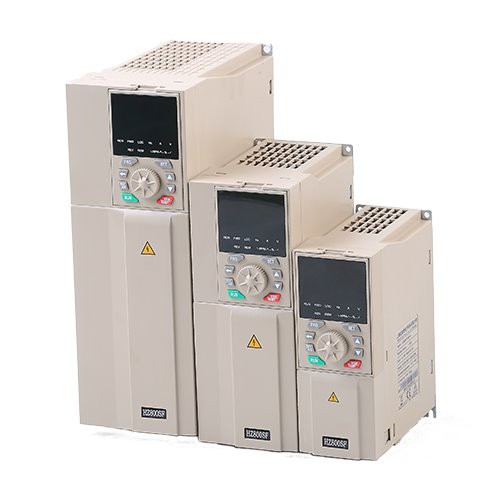
Phase Number of a 30KW VFD
For a 30KW VFD, the most common phase number is three - phase. There are several reasons for this. Firstly, a 30KW power rating is relatively high, and single - phase power systems typically have limitations in terms of the amount of power they can supply. Single - phase power is generally limited to lower power applications, usually up to a few kilowatts. Trying to use a single - phase power supply for a 30KW VFD would require extremely high currents, which would lead to excessive voltage drops, overheating of cables, and inefficient operation.
Secondly, three - phase power provides a more constant and balanced power supply. When a 30KW VFD is connected to a three - phase power source, the motor it controls can operate more smoothly, with less vibration and noise. This is because the three - phase power creates a rotating magnetic field in the motor, which is essential for the efficient operation of AC motors.
Most industrial environments are equipped with three - phase power distribution systems. This makes it convenient to connect a 30KW VFD to the existing power infrastructure without the need for significant modifications. Additionally, three - phase VFDs are more readily available in the market, and there is a wider range of options in terms of features and performance.
Impact of Phase Number on VFD Performance
The phase number of a VFD has a significant impact on its performance. As mentioned earlier, a three - phase VFD connected to a three - phase power source can provide a more stable power supply to the motor. This stability translates into better motor control, allowing for more precise speed and torque regulation. In applications where precise control is required, such as in conveyor systems, machine tools, and pumps, a three - phase 30KW VFD is the preferred choice.
Another aspect is the efficiency of the VFD. Three - phase VFDs are generally more efficient than single - phase VFDs, especially at higher power ratings. The balanced nature of three - phase power reduces the losses in the VFD's power conversion process, resulting in lower energy consumption and cost savings over time.
In terms of motor compatibility, most industrial AC motors are designed to operate on three - phase power. Connecting a 30KW VFD with a three - phase output to a three - phase motor ensures optimal performance and longevity of the motor. The motor can run at its rated speed and torque without being subjected to excessive stress or overheating.
Applications of 30KW VFDs
30KW VFDs are used in a wide range of industrial applications. In the manufacturing industry, they are commonly used to control the speed of conveyor belts, which are used to transport materials within a factory. By adjusting the speed of the conveyor belt using a VFD, manufacturers can optimize the production process, reduce energy consumption, and improve product quality.
In the water and wastewater treatment industry, 30KW VFDs are used to control the speed of pumps. Pumps are used to move water through the treatment process, and by using a VFD, operators can adjust the pump speed according to the actual demand. This not only saves energy but also extends the life of the pumps by reducing wear and tear.
In the HVAC (Heating, Ventilation, and Air Conditioning) industry, 30KW VFDs are used to control the speed of fans and compressors. By adjusting the speed of these components, HVAC systems can operate more efficiently, providing better temperature and humidity control while reducing energy costs.
Related Products
If you are interested in other power ratings of VFDs, we also offer 18.5KW VFD and 15KW VFD. These VFDs are also designed to provide reliable and efficient motor control for various applications. Additionally, our Frequency Controller for Ac Motor offers advanced features for precise speed and torque control of AC motors.
Conclusion
In conclusion, the phase number of a 30KW VFD is typically three - phase. This is due to the high power requirements, the need for a stable and balanced power supply, and the compatibility with industrial power systems and AC motors. The phase number has a significant impact on the performance, efficiency, and application of the VFD.
If you are in the market for a 30KW VFD or have any questions about our products, we encourage you to contact us for a detailed discussion. Our team of experts is ready to assist you in selecting the right VFD for your specific needs and providing you with the best possible solution.
References
- "Variable Frequency Drives: Principles, Operation, and Application" by Thomas H. Bishop
- "Electric Motors and Drives: Fundamentals, Types, and Applications" by Austin Hughes