


Why Choose Us
Professional team: Our team of experts has many years of experience in the industry, and we provide our customers with the necessary support and advice.
High-quality products: Our products are manufactured to the highest standards using only the best materials. We ensure that our products are reliable, safe and long-lasting.
24H online service: The 400 hotline is open 24 hours a day. Fax, email, QQ, and telephone are all-round and multi-channel to accept customer problems. Technical personnel are 24 hours a day to answer customer problems.
One-stop solution: Provide technical support in the whole process of inspection, installation, commissioning, acceptance, performance acceptance test, operation, maintenance and other corresponding technical guidance and technical training related to contract products in a timely manner.
What Is Single Phase Vfd Drive?
A single phase VFD drive is an electronic device used to control the speed of a single-phase AC electric motor. It works by manipulating the frequency and voltage of the output to the motor, thereby allowing the motor speed to be varied. This type of VFD is often used in residential and small commercial settings, as it is suited to motors that operate on 120V power and do not require high levels of power output.


While there are many features associated with variable frequency drives (VFD), the following are the most important.
Continuous run current rating
This is the maximum RMC current the variable frequency drive can safely handle under all operating conditions at a fixed ambient temperature (usually 40 [degrees] C). Motor ball load sine wave currents must be equal to or less than this rating.
Overload current rating
This is an inverse time/current rating that is the maximum current the variable frequency drive can produce for a given time frame. Typical ratings are 110% to 150% overcurrent for 1 min, depending on the manufacturer. Higher current ratings can be obtained by oversizing the variable frequency drive. This rating is very important when sizing the variable frequency drive for the currents needed by the motor for break-away torque.
Line voltage
As with any motor controller, an operating voltage must be specified. Variable frequency drives are designed to operate at some nominal voltage such as 240VAC or 480VAC, with an allowable voltage variation of plus or minus 10%. Most motor starters will operate beyond this 10% variation, but variable frequency drives will not and will go into a protective trip. A recorded voltage reading of line power deviations is highly recommended for each application.
7 Benefits of Using Variable Frequency Drives (VFDs) to Control Your Crane or Hoist


Greater speed adjustment: With VFD controls, you have the flexibility to choose from multiple speeds, allowing you to customize your hoist controls to match the specific requirements of your application. This versatility enables you to optimize the speed for different lifting tasks and load conditions, enhancing efficiency and productivity.
Improved load control: Positioning a load using a single-speed hoist can lead to shock loading or load swings. However, with a VFD, you can achieve smooth operation by gradually slowing down the load. Variable frequency drives enable controlled acceleration and deceleration, minimizing load swings during traverse motions. This precise load control reduces the risk of accidents and ensures a safer working environment.
Duty cycles: VFDs can be precisely matched with a braking resistor based on the duty cycle of the motion. This allows for reliable and uninterrupted operation, even in high-duty-cycle applications. Additionally, regenerative drives that are not dependent on the duty cycle can be utilized, further enhancing efficiency. By maximizing duty cycle capabilities, VFDs increase productivity and minimize downtime.
Efficiency: One of the significant advantages of VFDs is their energy-saving capabilities. Unlike contactors and soft-starters, VFDs consume only the needed power, resulting in energy efficiency. By optimizing motor speed and reducing unnecessary energy consumption, VFDs contribute to cost savings and sustainability. In fact, implementing VFDs in your crane or hoist operations can lead to substantial long-term energy savings.
Increased hoist life: Certain variable frequency drives provide thermal overload and overcurrent protection for the hoist motor, extending its lifespan. Additionally, VFDs employ a ramp-down-to-stop braking method instead of relying solely on brake shoes. The brake is primarily used for parking and emergencies, which reduces wear and tear and extends the lifespan of the brake system. By prolonging the life of critical components, VFDs reduce maintenance costs and enhance equipment reliability.
Regenerative energy: The motor generates regenerative energy when decelerating or lowering a hoist. This energy can be harnessed and transformed into heat using a braking resistor or redirected back to the power source, resulting in energy savings. Ac regenerative drives efficiently redistribute this energy, preventing waste that occurs when it is converted to heat with a braking resistor. By harnessing regenerative energy, VFDs promote sustainability and reduce operational costs.
Digital diagnostics: VFDs have advanced diagnostic capabilities, facilitating maintenance and troubleshooting. Plus, you can easily monitor and analyze the performance of your hoist or crane. These diagnostics capabilities can be accessed on the drive itself or remotely, allowing for quick identification and resolution of any issues. You can minimize downtime, optimize maintenance schedules, and ensure optimal performance by leveraging digital diagnostics.

Industrial Applications of Single Phase VFD Drive
Single phase VFD drive are used for low power applications that typically need less than one horsepower. Some of the use cases for single phase VFD drive are:
● Airflow controllers and blowers
● Centrifugal pumps
● Electric shavers
● Non-industrial fans
● Vacuum cleaners
● Toys
How to Choose the Right VFD for Your Motor?
Some of the key considerations to keep mind when choosing a VFD for a motor are:
● Number of motors needing control.
● Input power in voltage and number of phases (single-phase or three-phase) of each motor.
● Horsepower and current rating of each motor at full load.
● Operating requirements, such as motor speed or torque required.
● Operating environment.
● Interface requirements for operator input to the motor drive system.

Difference Between Single Phase VFD and Three Phase VFD
Variable frequency drive that we often talk about generally refers to the low-voltage VFD, and low-voltage VFD can be divided into single phase VFD and three phase VFD from the perspective of power supply voltage.
The biggest difference between single phase VFD and three phase VFD is that power supply of single phase VFD is consisted of a live wire and a neutral wire with a voltage of 220V. There's only one live wire, so it's called single phase. Power supply of the three phase VFD has three live wires, so it's called three phase VFD, as well as three phase power input VFD.
In addition, output voltage of the single phase VFD can be divided into single phase output and three phase output. The three phase output here would not exceed the power supply voltage. If the single phase input is 220V, the three phase output would also be 220v, which is different from the output of three phase VFD. Correspondingly, connection modes of their motors are also different. If the connection doesn't match with the voltage, the motor has no power.
Single phase input means that there are only two lines for power supply input (one neutral line and one live line), the phase voltage of input voltage is 220V. Three phase input means that there are three input wires (three-phase three-wire) or four input wires (three-phase four-wire), generally, the three-phase four-wire is common. Three input live wires and one neutral wire, the phase voltage between each live wire and neutral wire is 220V, the phase voltage between every two live wires is 380V.
When the power is the same, the current of single phase power supply is equal to power/220V. Assuming that the power is 1000watt, then the current is 4.54A. The current on each live wire of three phase power supply is equal to one third of the total current, namely 4.54/3=1.5A, so it has a lower requirement to the wire, and thinner wires can be used. It shall be noticed that three phase power supply is generally available only in industrial applications, most households use only single phase power supply (one live wire, one neutral wire and one earth wire), VFD with three phase power supply can't be used. Single phase power supply VFD can be used in three-phase four-wire power supply areas (connect to one live wire and one neutral wire).
How to Protect Single Phase VFD Drive?
To extend your VFD's life span and ensure it operates properly, consider the following tips for protecting VFDs
Ensure each VFD is engineered properly
A properly sized VFD can effectively handle the required torque in any situation. VFD manufacturers have design resources and the necessary experience to size VFDs according to ambient conditions and loads. Talk with your VFD manufacturer to ensure they're aware of your applications and needs.
Consulting with the manufacturer helps you ensure your VFD can meet your facility's needs. The VFD model you need depends on the following factors:
● Torque or speed control
● Performance
● Fieldbus communications
● Outputs and inputs
Schedule professional installation
Professional installation is crucial. An experienced technician provides the following benefits:
● Installation that meets electrical regulations
● Correctly mounted drives
● Properly grounded and bonded wiring
● Installation that facilitates adequate airflow
● Properly reinstalled protective covers and barriers
A professional technician also ensures they install VFDs with the correct cables, fuses, load retractors and filters. Installing a VFD with the correct sizes and types of cables, fuses and external components is essential for proper operation and longevity.
Inspect VFDs for potential complications
You should regularly inspect your stored and operating VFDs to ensure no complications are present. For example, forklifts or other equipment may bump a stored or operating VFD, causing potential damage, or a stored VFD may lack important components if an employee used a stored component to repair an operating VFD. Scheduling professional inspections is ideal because a trained technician can identify potential complications and perform repairs properly.
Regularly maintain the VFD's components
VFDs last longer and remain in good condition when you maintain them properly. Check your VFD's manual for recommended maintenance intervals, and plan equipment downtime. Thoroughly inspect and clean your VFD to detect any potential complications and remove objects that may prevent heat dissipation.
An electrolytic capacitor is one of the main VFD components that require regular maintenance. Electrolytic capacitors are common in low- and medium-voltage drives, and they contain an electrolytic gel. The electrolytic gel can dry out if you leave the VFD unused for over a year, which can lead to spontaneous combustion. Energizing or reforming a stored VFD annually prevents the electrolytic capacitor from drying out.
If a year passes without energizing the electrolytic capacitor, you'll need to reform the capacitor before using it. The best way to keep your stored VFD capacitor in shape is to rotate your equipment when you perform annual preventative maintenance. Rotating your equipment is ideal because you cannot reform capacitors on printed circuit boards.
Some VFDs contain dry film capacitors that remain in good condition without energizing, so it's important to know what kind of capacitor your VFD contains.
Use the correct motor
VFDs generate pulse-width modulation (PWM) waveforms to produce synthetic ac waveforms. PWM waveforms can cause high voltages, but a proper VFD motor can handle high voltages and protect the VFD's components from damage.
VFD motors contain adequate insulation to protect against high-voltage strikes, but you should ensure you choose the right motor based on the following factors:
● Duty cycle
● Speeds
● Ground brushes
● Environment
● Isolated bearings
Consulting with a motor manufacturer is important when purchasing a VFD. Ensuring you have the best motor for your VFD and its applications helps it last longer.
Train personnel
Train your equipment operators and maintenance staff on how to operate and protect VFDs properly. Employees who work with or maintain VFDs should understand how they operate so they can identify abnormalities and schedule maintenance or repairs when necessary.
Train each individual so they understand how to do the following:
● Use proportional-integral-derivative controls
● Properly enter motor data
● Use field bus communications
● Identify operational abnormalities
Employees should also understand basic VFD safety guidelines to prevent damage and injury.
When choosing a VFD, several factors must be considered, including the application, the motor size, and the available power supply. Single-phase VFD are best suited for applications that require precise control over motor speed and torque, such as HVAC systems, pumps, and fans.
Single phase VFD drives are also a cost-effective solution for small businesses and homeowners who want to reduce installation & maintenance costs.
While single-phase VFD have several advantages over three-phase VFD, they may not be the best solution for every application. In some cases, a three-phase VFD may be necessary, such as in applications with larger three-phase motors or more complex control requirements.
Several industries use single phase VFD drives to optimize their operations, including HVAC, pumps, conveyors, and other industrial applications. Small businesses and homeowners can also benefit from single-phase VFDs in applications such as pool pumps, air conditioning compressors, and other household appliances.
Single Phase VFD Drive Maintenance
Keeping single phase VFD drive clean: Most VFDs have side vents to allow for better airflow. These vents provide some degree of protection against solid foreign objects, but they do allow dust to accumulate inside the unit and on the vents themselves. This can prevent heat sinks and circulating fans from cooling the VFD unit. They require regular cleaning so the material doesn't build up enough to impede airflow or jeopardize performance.
Keeping single phase VFD drive dry: Like most electronics, VFDs are vulnerable in the presence of moisture. Protecting storage spaces with dehumidifiers helps keep the ambient humidity level low enough to reduce the risk of corrosion. The open vents and unsealed cover mean that moisture can easily get inside the unit and cause corrosion. Even water dripping from a nearby dehumidifier unit can be enough to ruin the device, so it's important to plan the space correctly and regularly inspect on-site VFDs.
Keeping single phase VFD drive connections tight: VFDs require tight connections to perform. The connections may loosen over time due to mechanical vibration, heat cycles, or even incidental movement throughout long periods of time. Facility managers should have the connections inspected regularly to check for loose connections.
High Starting-Load Current: Single Phase VFD Drive
A high current or high load reading could possibly indicate mechanical binding or some unexplained changes in process speed or load. The power requirements for pumps and fans ran even just a few revolutions per minute faster than normal can overload a VFD.
Make it a point to inspect all components driven by the VFD before starting them up. Conveyors must be unloaded before startup, pumps should be cleared of all debris or ice, and moisture should be avoided on any load. Wet material is much heavier than dry material and can place an unexpected load on the VFD, this can cause motor or VFD overload.
Another way to reduce a high starting load is to use a VFD with an extended acceleration rate. This starts a load slowly and smoothly instead of jerking to a start. A slow, smooth start is easier on mechanical components and has lower line requirements because a VFD draws only 100-150% of the load.
Attention Should Be Paid to Environmental Issues When Placing Single-Phase Frequency Converters
Single phase VFD drive are built like computers, and computers are extremely susceptible to dust, debris, moisture, and overheating. If you are using a VFD in an area that is consistently taking in dust, debris, or moisture the operating life of your VFD will be shortened.
In environments with high humidity, such as wastewater treatment plants, your VFD is at risk for circuit board corrosion from moisture being sucked into the cabinet through the cooling vents constantly. This, compounded by possible infrequent use, can enable moisture to build up without time for heat and ventilation to dry it out. To avoid issues caused by humidity, ensure that the operating environment and storage space for your VFD is clean and dry, and consider a dehumidifier to dry out the air (ensure the dehumidifier does not leak near any electronic equipment). For extreme humidity or wash-down environments a nema 4, 4X or 5 enclosures may be necessary.
Another common cause of VFD failure due to environment is the clogging of cooling vents by airborne particles, especially when combined with moisture or oil. Metallic particles can also short circuit your VFD circuit boards. Tracking or arcing marks across components or circuit board traces indicate evidence of contamination failure.
To combat negative side effects or possible catastrophic failure due to build up, clean all parts of your VFD at least monthly. Also make sure you are using the correct cabinet for your environment. Some cabinets have side vents for cooling airflow, but these are more open to contamination. You are able to purchase drives in a sealed, dust-free housing if needed. Remember: Keep your VFDs free from dust, debris, and moisture at all times.
Our Factory
Zhejiang Hertz Electric Co., Ltd., founded in 2014, is high-tech enterprise specializing in the development, manufacture, sales, and after-sales service, serving medium and high-end equipment manufacturers and industrial automation system integrators. Relying on high-quality production equipment and rigorous testing process, we will provide customers with products such as low-voltage and medium voltage inverters, soft starters and servo control systems and solutions in related industries.
The company upholds to the concept of "providing users with the best products and services" to serve every costomer. At present, it is mainly used for metallurgy, chemical industry, paper making, machinery and other industries.


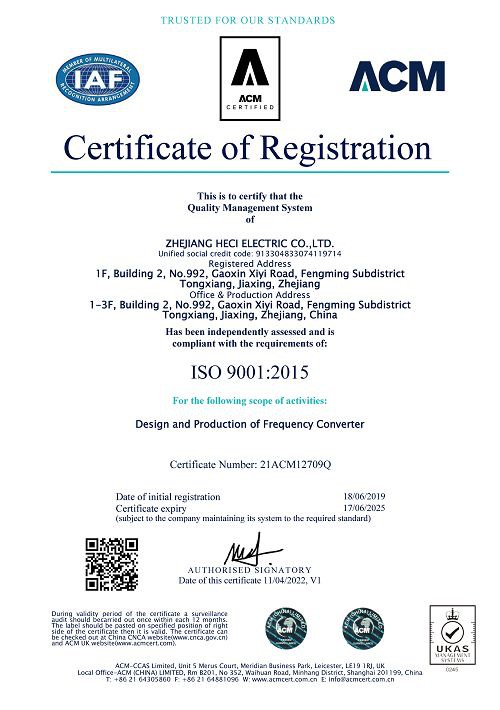
Certifications


FAQ
Q: What is single phase VFD?
Q: What is the difference between single phase VFD and three-phase VFD?
Q: Can you drive a single-phase motor from a VFD?
Q: Can you run a 3 phase VFD on single-phase?
Q: Can 1 VFD run multiple motors?
Q: What are the three types of VFD?
Q: Can all 3 phase motors run on a VFD?
Q: Does a VFD require a 3 phase motor?
Q: Does a VFD need to be grounded?
Q: Can a VFD be installed on any motor?
Q: Can I use a VFD on a single-phase motor?
Q: Does a VFD replace a motor starter?
Q: Where do you mount a VFD?
Q: How do you maintain a VFD drive?
Q: Can you run a VFD on single phase?
Q: Do VFDs require maintenance?
Q: How long do VFD drives last?
Q: What are the benefits of using a single phase VFD drive?
Q: What type of applications are ideal for a single phase VFD drive?
Q: What are the key features to look for when purchasing a single phase VFD drive?
Hot Tags: single phase vfd drive, China single phase vfd drive manufacturers, suppliers, factory, 2 2KW VFD, vfd in battery chargers, vfd in soldering machines, vfd in hospitality displays, vfd in communication antennas, vfd in mri machines