

Hey there! As a supplier of AC Control Drives, I've seen firsthand the amazing benefits that sensorless vector control brings to the table. In this blog, I'm gonna break down what sensorless vector control is and why it's a game - changer for AC Control Drives.
What is Sensorless Vector Control?
Before we dive into the benefits, let's quickly understand what sensorless vector control is. In simple terms, it's a control method used in AC drives to regulate the speed and torque of an AC motor. Unlike traditional control methods that rely on external sensors to measure the motor's position and speed, sensorless vector control uses advanced algorithms to estimate these parameters. This means no extra hardware is needed, which simplifies the system and cuts down on costs.
Benefits of Sensorless Vector Control in an AC Control Drive
1. Cost - Effectiveness
One of the most obvious benefits of sensorless vector control is its cost - effectiveness. When you don't need to install external sensors like encoders or resolvers, you save a significant amount of money. These sensors can be quite expensive, and their installation also adds to the overall cost. Plus, there's no need for regular maintenance of these sensors, which further reduces long - term costs. For example, if you're looking for a cost - effective solution for your industrial motor control, a 660V - 690V VFD with sensorless vector control can be a great choice. It offers high - performance motor control without the added expense of sensors.
2. Simplified Installation and Maintenance
Without the need for external sensors, the installation process of an AC Control Drive with sensorless vector control is much simpler. You don't have to worry about mounting the sensors correctly, running the cables, and calibrating them. This not only saves time during installation but also reduces the chances of installation errors.
In terms of maintenance, since there are no sensors to fail or wear out, the overall maintenance requirements are lower. You don't have to replace sensors periodically or deal with sensor - related faults. This means less downtime for your equipment, which is crucial for industrial applications where every minute of production counts. Whether you're using a 7.5KW VFD or a 15KW VFD, the simplified installation and maintenance make sensorless vector control a practical choice.
3. High - Performance Motor Control
Sensorless vector control provides excellent torque and speed control, even at low speeds. It can accurately estimate the motor's flux and torque, allowing for precise control of the motor's operation. This is especially important in applications where precise speed and torque control are required, such as conveyor systems, pumps, and fans.
For instance, in a conveyor system, you need to be able to control the speed of the conveyor belt accurately to ensure proper material handling. Sensorless vector control can adjust the motor's speed and torque in real - time, providing smooth and efficient operation. This high - performance control also helps in reducing energy consumption, as the motor operates at the optimal speed and torque for the given load.
4. Improved System Reliability
Since there are no external sensors, the overall system reliability is improved. Sensors can be prone to failure due to environmental factors such as dust, moisture, and vibration. A failed sensor can cause the entire system to malfunction, leading to production downtime and costly repairs.
With sensorless vector control, the risk of sensor - related failures is eliminated. The drive can continue to operate even in harsh environments without the worry of sensor failures. This makes it a reliable choice for industrial applications where reliability is a top priority.
5. Flexibility in Motor Selection
Sensorless vector control offers more flexibility when it comes to motor selection. You can use different types of AC motors with the same drive, as the control algorithm can adapt to the motor's characteristics. This means you're not limited to using motors with specific sensor requirements. Whether you have an old motor that you want to upgrade or a new motor with different specifications, a drive with sensorless vector control can handle it. This flexibility can save you money in the long run, as you don't have to replace the entire motor - drive system just because of a change in motor requirements.
6. Energy Efficiency
As mentioned earlier, sensorless vector control allows for precise control of the motor's speed and torque. This means the motor can operate at the most energy - efficient point for the given load. In many industrial applications, motors often run at a fixed speed, even when the load is variable. This leads to wasted energy.
With sensorless vector control, the drive can adjust the motor's speed according to the load, reducing energy consumption. For example, in a pump application, the drive can slow down the pump motor when the demand for water is low, saving a significant amount of energy. This not only reduces your energy bills but also has a positive impact on the environment.

Conclusion
In conclusion, sensorless vector control in an AC Control Drive offers a wide range of benefits, from cost - effectiveness and simplified installation to high - performance motor control and energy efficiency. As a supplier of AC Control Drives, I've seen these benefits translate into real - world advantages for our customers.
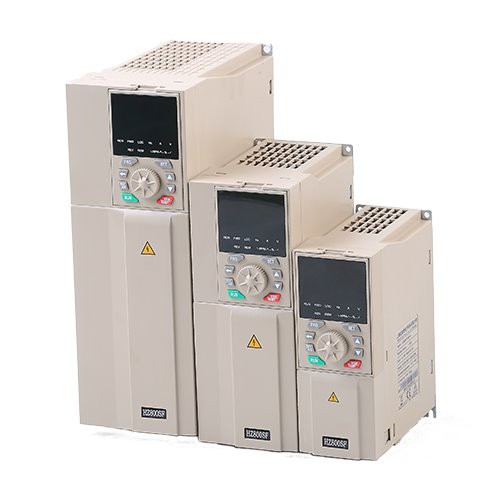
If you're in the market for an AC Control Drive and want to take advantage of these benefits, I encourage you to reach out to us. We can help you find the right drive for your specific application, whether it's a 660V - 690V VFD, a 7.5KW VFD, or a 15KW VFD. Contact us today to start the procurement process and see how sensorless vector control can improve your motor control system.
References
- Boldea, I., & Nasar, S. A. (1999). Electric Drives: An Integrative Approach. CRC Press.
- Krause, P. C., Wasynczuk, O., & Sudhoff, S. D. (2013). Analysis of Electric Machinery and Drive Systems. Wiley.