

As a supplier of 1.5KW Variable Frequency Drives (VFDs), I often encounter inquiries about the carrier frequency of these devices. Carrier frequency is a crucial parameter in VFDs, influencing various aspects of their performance and application. In this blog post, I will delve into what the carrier frequency of a 1.5KW VFD is, its significance, and how it impacts the operation of the drive and the connected equipment.
Understanding Carrier Frequency in VFDs
Before we discuss the carrier frequency of a 1.5KW VFD specifically, let's first understand what carrier frequency means in the context of VFDs. A VFD is an electronic device that controls the speed of an electric motor by varying the frequency and voltage supplied to it. It uses Pulse Width Modulation (PWM) technique to convert a fixed - frequency, fixed - voltage power supply into a variable - frequency, variable - voltage output.
The carrier frequency in a VFD is the frequency at which the PWM pulses are generated. It is typically much higher than the output frequency of the VFD. For example, while the output frequency of a VFD can range from a few Hertz to several hundred Hertz to control the motor speed, the carrier frequency can be in the range of a few kilohertz to tens of kilohertz.
Why Carrier Frequency Matters
The carrier frequency has several important implications for the performance of a 1.5KW VFD and the motor it drives:
1. Motor Noise
One of the most noticeable effects of carrier frequency is on motor noise. A higher carrier frequency generally results in less audible noise from the motor. This is because the PWM pulses with a higher frequency are closer together, which smooths out the current waveform supplied to the motor. As a result, the motor operates more quietly. However, increasing the carrier frequency also has its drawbacks, such as increased power losses in the VFD.
2. Power Losses
Higher carrier frequencies lead to increased switching losses in the VFD's power semiconductor devices, such as Insulated Gate Bipolar Transistors (IGBTs). These losses are due to the energy dissipated during the on - off switching transitions of the semiconductor devices. As the carrier frequency increases, the number of switching events per second also increases, resulting in higher power losses. This can lead to higher operating temperatures in the VFD and reduced overall efficiency.
3. Motor Heating
The carrier frequency can also affect motor heating. A lower carrier frequency may cause higher harmonic currents in the motor, which can lead to additional heating. These harmonic currents are caused by the non - sinusoidal nature of the PWM output waveform. On the other hand, a very high carrier frequency can also cause increased heating in the motor due to the skin effect and proximity effect, which increase the effective resistance of the motor windings at high frequencies.
4. Cable Length
The carrier frequency is also related to the maximum allowable cable length between the VFD and the motor. A higher carrier frequency can cause more voltage reflections along the cable, which can lead to overvoltage at the motor terminals. Therefore, for longer cable lengths, a lower carrier frequency may be required to avoid damage to the motor and the VFD.

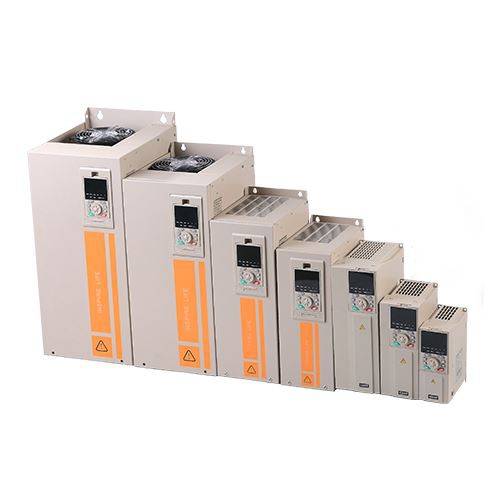
Typical Carrier Frequency Range for 1.5KW VFDs
For 1.5KW VFDs, the typical carrier frequency range is usually between 2kHz and 16kHz. The specific carrier frequency that is optimal for a particular application depends on several factors, including the type of motor, the required noise level, the cable length, and the desired efficiency.
In general, if noise is a major concern, such as in a quiet indoor environment, a higher carrier frequency (e.g., 8kHz - 16kHz) may be selected. However, if efficiency is the top priority, or if the cable length is long, a lower carrier frequency (e.g., 2kHz - 4kHz) may be more appropriate.
Selecting the Right Carrier Frequency for Your 1.5KW VFD
When selecting the carrier frequency for a 1.5KW VFD, it is important to consider the specific requirements of your application. Here are some steps to help you make the right choice:
1. Assess the Noise Requirements
If the motor is located in an environment where noise is a concern, such as an office, a hospital, or a residential area, choose a higher carrier frequency to reduce motor noise. You can start with a carrier frequency of around 8kHz and adjust it based on the actual noise level.
2. Evaluate the Cable Length
If the cable length between the VFD and the motor is long (e.g., more than 50 meters), a lower carrier frequency may be necessary to prevent voltage reflections and overvoltage at the motor terminals. In such cases, a carrier frequency of 2kHz - 4kHz may be suitable.
3. Consider the Motor Type
Different types of motors may have different sensitivities to carrier frequency. For example, some high - efficiency motors may be more sensitive to harmonic currents, and a higher carrier frequency may be required to reduce these harmonics. Consult the motor manufacturer's specifications for guidance on the recommended carrier frequency range.
4. Balance Efficiency and Performance
Keep in mind that there is a trade - off between efficiency and performance when it comes to carrier frequency. A higher carrier frequency may improve motor performance in terms of noise and harmonic content, but it will also increase power losses in the VFD. Therefore, you need to find the right balance based on your application's requirements.
Our 1.5KW VFDs and Carrier Frequency
At our company, we offer a range of 1.5KW VFDs that allow users to adjust the carrier frequency according to their specific needs. Our VF Control VFD provides a wide range of carrier frequency options, enabling you to optimize the performance of your motor in different applications. Whether you need a quiet operation for an indoor environment or high efficiency for a long - cable installation, our VFDs can be configured to meet your requirements.
In addition, our Outdoor VFD is designed to withstand harsh environmental conditions while maintaining reliable performance. The carrier frequency can be adjusted to ensure stable operation of the motor even in challenging outdoor settings.
Our VFD Variable Frequency Drive is manufactured with high - quality components and advanced technology, ensuring excellent performance and durability. We also provide technical support to help you select the right carrier frequency and configure the VFD for your specific application.
Conclusion
The carrier frequency of a 1.5KW VFD is a critical parameter that affects the performance, noise level, efficiency, and reliability of the motor and the drive system. By understanding the significance of carrier frequency and considering the specific requirements of your application, you can select the optimal carrier frequency to achieve the best results.
If you are in the market for a 1.5KW VFD and need assistance in choosing the right product or configuring the carrier frequency, please feel free to contact us. Our team of experts is ready to help you find the perfect solution for your needs. We look forward to discussing your project and working with you to ensure the success of your motor control application.
References
- "Variable Frequency Drives: Principles, Operation, and Applications" by Ben Hogan
- Manufacturer's manuals for various 1.5KW VFDs
- Technical papers on motor control and PWM techniques