

Hey there! As a supplier of 11KW VFDs (Variable Frequency Drives), I often get asked about the PID control function. So, I thought I'd break it down for you in this blog post.
What's PID Control Anyway?
PID stands for Proportional - Integral - Derivative. It's a control algorithm that's used in a whole bunch of industrial applications to regulate a process variable, like temperature, pressure, or speed. In the context of a 11KW VFD, PID control helps to maintain a specific output value by adjusting the frequency of the drive.
Let's start with the "P" in PID, which is the Proportional part. The proportional term is based on the current error between the setpoint (the desired value) and the actual value of the process variable. For example, if you're using a 11KW VFD to control the speed of a motor and the setpoint is 1500 RPM, but the actual speed is 1400 RPM, there's an error of 100 RPM. The proportional gain multiplies this error to determine how much the output of the VFD should be adjusted. A higher proportional gain means a larger adjustment, but it can also lead to overshoot and instability if it's set too high.
Next up is the "I", or the Integral part. The integral term takes into account the cumulative error over time. If there's a persistent error, like a small difference between the setpoint and the actual value that doesn't go away, the integral term will gradually increase the output of the VFD to correct it. This helps to eliminate steady - state errors, but it can also cause the system to respond slowly or become unstable if the integral gain is set incorrectly.
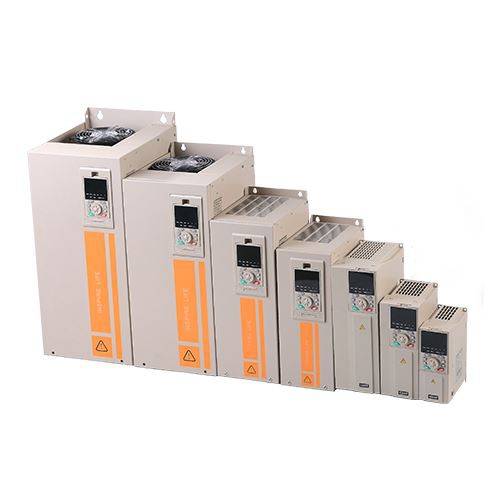

Finally, we have the "D", the Derivative part. The derivative term is based on the rate of change of the error. It predicts how the error is going to change in the future and adjusts the output of the VFD accordingly. For example, if the error is increasing rapidly, the derivative term will add a correction to try to slow down the change. This helps to improve the stability and response time of the system, especially when there are sudden changes in the process variable.
How Does PID Control Work in a 11KW VFD?
In a 11KW VFD, the PID control function is used to regulate the output frequency based on the input from a feedback sensor. Let's say you're using the VFD to control the flow rate of a pump. You'd have a flow sensor that measures the actual flow rate and sends this information back to the VFD. The VFD then compares the actual flow rate with the setpoint and uses the PID algorithm to calculate the appropriate frequency adjustment.
When you first start the system, the VFD will try to quickly reach the setpoint. The proportional term will make a large initial adjustment, and the integral term will start to accumulate the error. As the system gets closer to the setpoint, the derivative term will help to smooth out the response and prevent overshoot. Once the system is at the setpoint, the integral term will keep the output stable by compensating for any small, persistent errors.
Benefits of Using PID Control in a 11KW VFD
There are several benefits to using PID control in a 11KW VFD. First of all, it improves the accuracy of the system. By constantly adjusting the output frequency based on the feedback from the sensor, the VFD can maintain the process variable at the setpoint with a high degree of precision. This is especially important in applications where even small variations can have a big impact, like in chemical processing or food production.
Secondly, PID control increases the efficiency of the system. By optimizing the output of the VFD, it can reduce energy consumption. For example, if you're using a VFD to control the speed of a fan, the PID control function can adjust the speed based on the actual demand, so the fan doesn't run at full speed all the time.
Another benefit is that it enhances the stability of the system. The PID algorithm helps to dampen out any oscillations or fluctuations in the process variable, making the system more reliable and less likely to break down.
Applications of 11KW VFD with PID Control
The 11KW VFD with PID control can be used in a wide range of applications. In the HVAC (Heating, Ventilation, and Air Conditioning) industry, it can be used to control the speed of fans and pumps to maintain a constant temperature or pressure in a building. For example, in a large office building, the VFD can adjust the speed of the cooling pumps based on the actual cooling load, saving energy and improving comfort.
In the water treatment industry, a 11KW VFD with PID control can be used to regulate the flow rate of water in a treatment plant. This ensures that the right amount of water is being treated at all times, improving the quality of the treated water.
In the manufacturing industry, it can be used to control the speed of conveyor belts, mixers, and other equipment. This helps to improve the productivity and quality of the manufacturing process.
Where to Find More VFD Solutions
If you're interested in learning more about VFDs, you can check out these links: VFD Control Drive, Outdoor VFD, and Inverter Drive. These pages provide more information about different types of VFDs and their applications.
Let's Talk Business
If you're in the market for a 11KW VFD with PID control, I'd love to have a chat with you. Whether you're looking to upgrade your existing system or start a new project, I can help you find the right solution for your needs. Just reach out, and we can discuss your requirements and how my 11KW VFDs can fit into your operations.
References
- Dorf, R. C., & Bishop, R. H. (2017). Modern Control Systems. Pearson.
- Ogata, K. (2010). Modern Control Engineering. Prentice Hall.