

As a supplier of 2.2KW Variable Frequency Drives (VFDs), I often encounter questions from customers regarding various aspects of these devices. One of the most frequently asked questions is about the response time of a 2.2KW VFD. In this blog post, I will delve into what response time means in the context of VFDs, factors that influence it, and how it impacts the performance of the 2.2KW VFDs we supply.
Understanding Response Time in VFDs
Response time in a VFD refers to the time it takes for the drive to adjust its output frequency and voltage in response to a change in the input command. This change could be a variation in the speed setpoint, torque reference, or other control signals. A fast response time is crucial as it allows the VFD to quickly adapt to changing load conditions and maintain the desired performance of the motor.
For a 2.2KW VFD, the response time is typically measured in milliseconds. It encompasses two main types of responses: dynamic response and static response.
Dynamic Response
Dynamic response is the ability of the VFD to quickly adjust to sudden changes in the load or setpoint. For example, when a motor is driving a conveyor belt and there is a sudden increase in the load due to more items being placed on the belt, the VFD needs to increase the output power rapidly to maintain the speed. A fast dynamic response ensures that the motor can handle these sudden changes without significant speed fluctuations.
Static Response
Static response, on the other hand, is related to the VFD's ability to accurately maintain the set output values under steady - state conditions. When the load is constant, the VFD should be able to keep the motor running at the exact speed and torque specified by the user. Any deviation from the set values is an indication of a poor static response.
Factors Influencing the Response Time of a 2.2KW VFD
Several factors can affect the response time of a 2.2KW VFD. Understanding these factors is essential for both suppliers and customers to optimize the performance of the VFD.
Control Algorithm
The control algorithm used in the VFD is one of the most critical factors. Advanced control algorithms, such as vector control, can provide better dynamic and static responses compared to simpler scalar control methods. Vector control allows the VFD to independently control the torque and flux of the motor, enabling it to respond more quickly to changes in load and setpoint.
Microcontroller Performance
The microcontroller inside the VFD is responsible for processing the control signals and generating the appropriate output commands. A high - performance microcontroller with a fast processing speed can execute the control algorithms more quickly, resulting in a shorter response time.
Power Circuit Design
The design of the power circuit, including the inverter and rectifier sections, also plays a role. A well - designed power circuit can efficiently convert the input power to the desired output voltage and frequency. It should be able to handle rapid changes in current and voltage without significant losses or delays.
Load Characteristics
The nature of the load connected to the VFD can have a significant impact on the response time. For example, a highly inertial load, such as a large flywheel, will require more time for the VFD to accelerate or decelerate compared to a low - inertia load. Similarly, a load with a high starting torque requirement may also affect the response time during startup.
Importance of Response Time in Different Applications
The response time of a 2.2KW VFD is crucial in various applications, and its significance varies depending on the specific requirements of the application.

Industrial Automation
In industrial automation, where precision and speed are essential, a fast response time is critical. For example, in a robotic arm application, the VFD needs to quickly adjust the motor speed to ensure accurate movement of the arm. Any delay in the response time can lead to positioning errors and reduced productivity.
HVAC Systems
In Heating, Ventilation, and Air Conditioning (HVAC) systems, the response time of the VFD affects the comfort and energy efficiency of the building. A fast - responding VFD can quickly adjust the fan or pump speed in response to changes in temperature or pressure, ensuring optimal operation of the system while saving energy.
Outdoor VFD Applications
For outdoor applications, such as water pumping stations or solar tracking systems, the VFD needs to be able to adapt to changing environmental conditions. A fast response time allows the VFD to adjust the motor speed based on factors like water flow rate or sunlight intensity, ensuring reliable operation in outdoor settings.
Our 2.2KW VFDs and Response Time
At our company, we take great pride in the performance of our 2.2KW VFDs, especially when it comes to response time. Our VFDs are equipped with advanced vector control algorithms and high - performance microcontrollers, which enable them to provide excellent dynamic and static responses.
We have conducted extensive testing on our VFDs to ensure that they meet the highest standards of response time. In real - world applications, our customers have reported that our 2.2KW VFDs can quickly adapt to changes in load and setpoint, resulting in improved motor performance and energy efficiency.
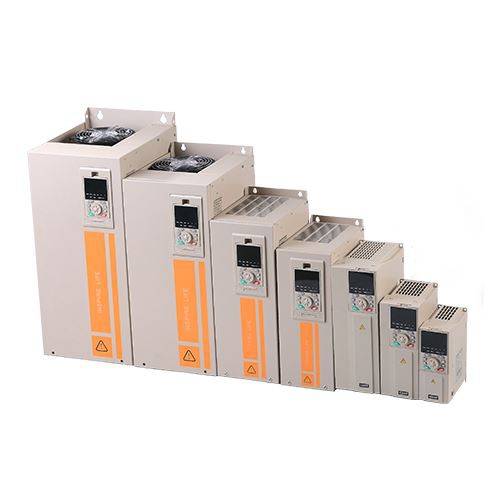
If you are looking for a VFD For Motors with a fast response time, our 2.2KW VFDs are an excellent choice. They are suitable for a wide range of applications, from small industrial machines to HVAC systems.
Comparison with Other Power - Rated VFDs
It is also interesting to compare the response time of our 2.2KW VFDs with other power - rated VFDs, such as the 18.5KW VFD. Generally, larger power - rated VFDs may have a slightly longer response time due to the higher power requirements and larger load capacities. However, our design and engineering team have optimized the control algorithms and power circuits of our VFDs to minimize these differences.
While the 18.5KW VFD may need to handle more significant power changes, our technology ensures that it still provides a fast and reliable response. The principles of response time, such as dynamic and static responses, apply to both the 2.2KW and 18.5KW VFDs, but the specific values may vary based on the power rating and load characteristics.
Contact Us for Your VFD Needs
If you are in the market for a 2.2KW VFD or any other power - rated VFD, we invite you to contact us for a detailed discussion. Our team of experts can provide you with more information about the response time of our VFDs, as well as other technical specifications and application suitability. We are committed to providing high - quality VFDs that meet your specific requirements and help you achieve optimal motor performance.
References
- "Variable Frequency Drives: Principles, Applications, and Troubleshooting" by Russell G. Prime
- "Power Electronics Handbook" by Muhammad H. Rashid
- Technical documentation from leading VFD manufacturers.